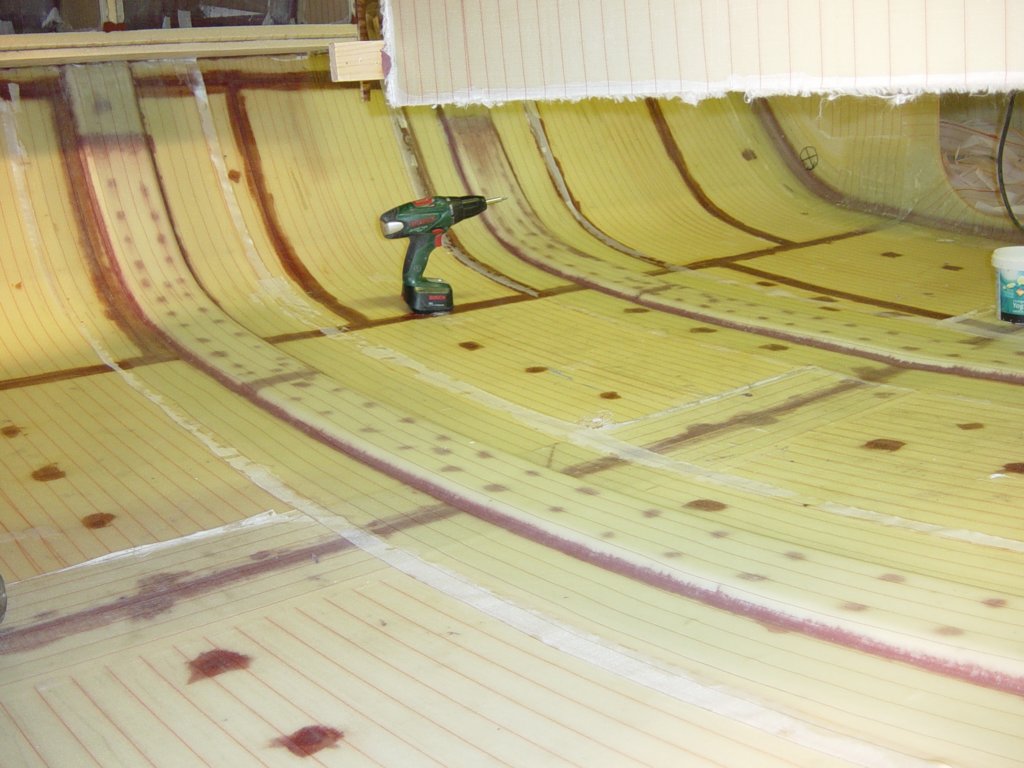
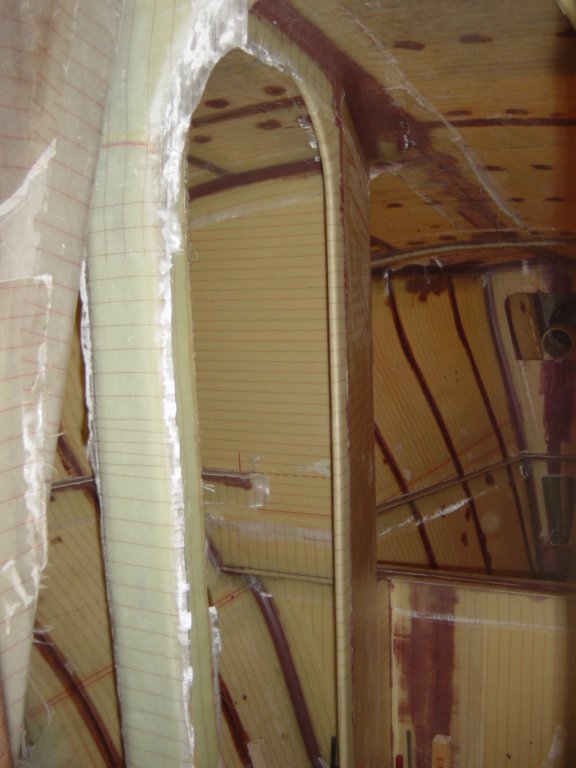
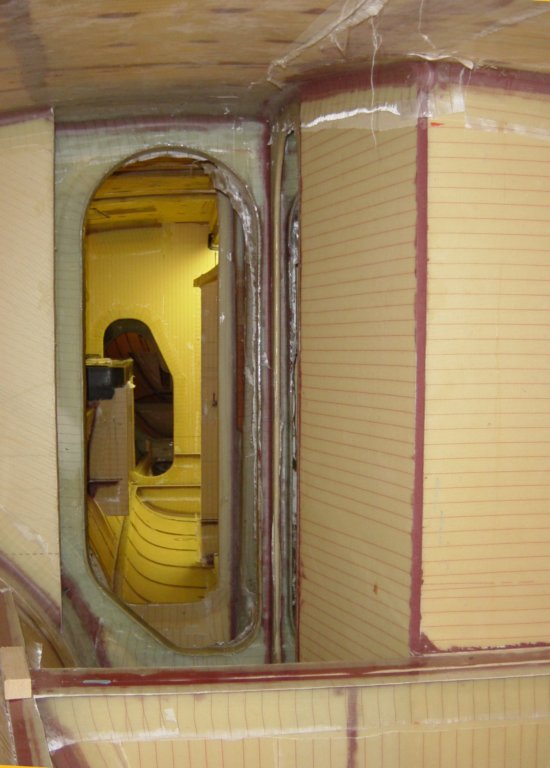
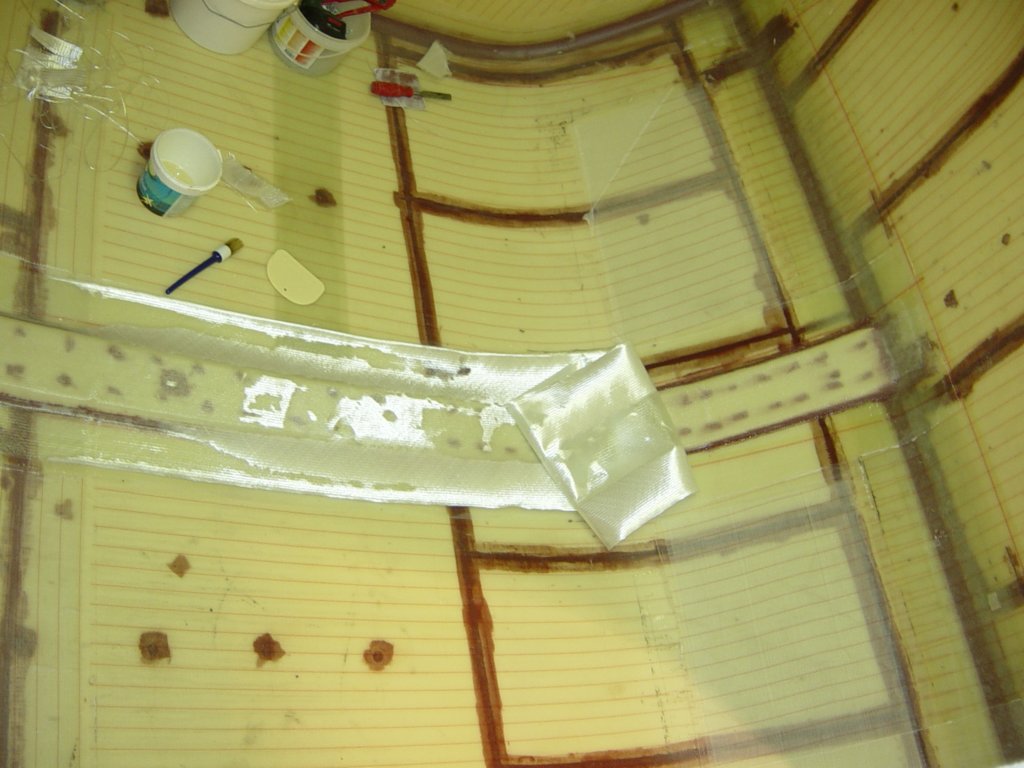
With the main hull still upside down, this stage is ideal for preparing structural fillets and flanges that support the interior layout. Gravity works in favour, access is excellent, and accuracy is easier to achieve.
“Upside down” interior work
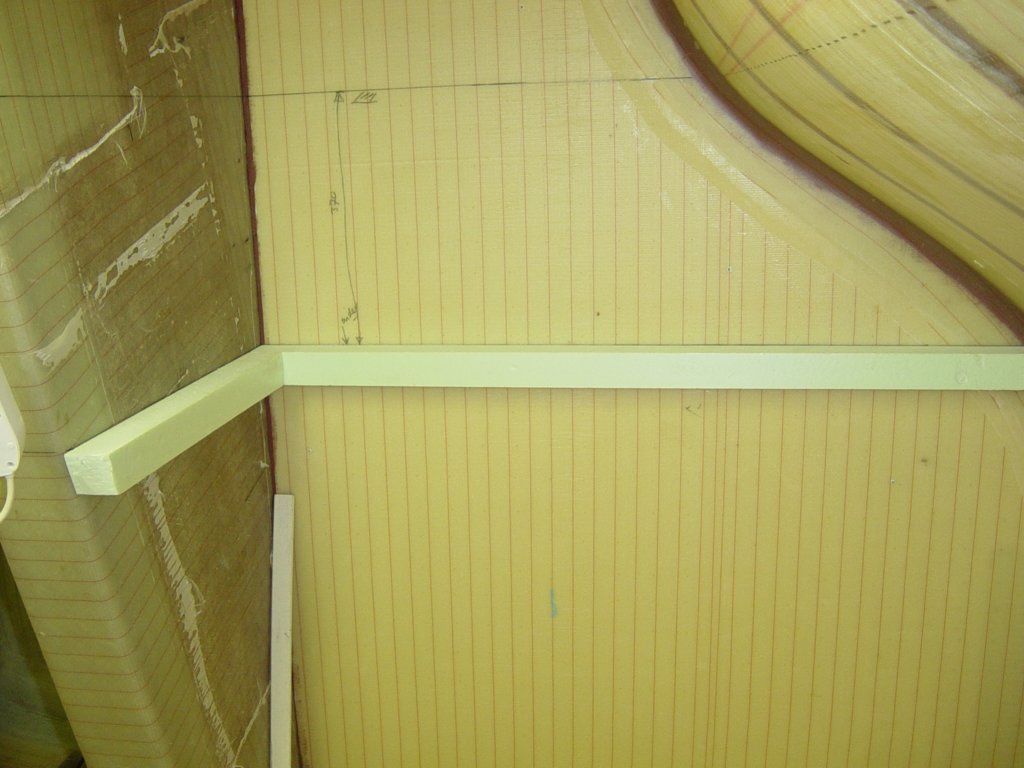
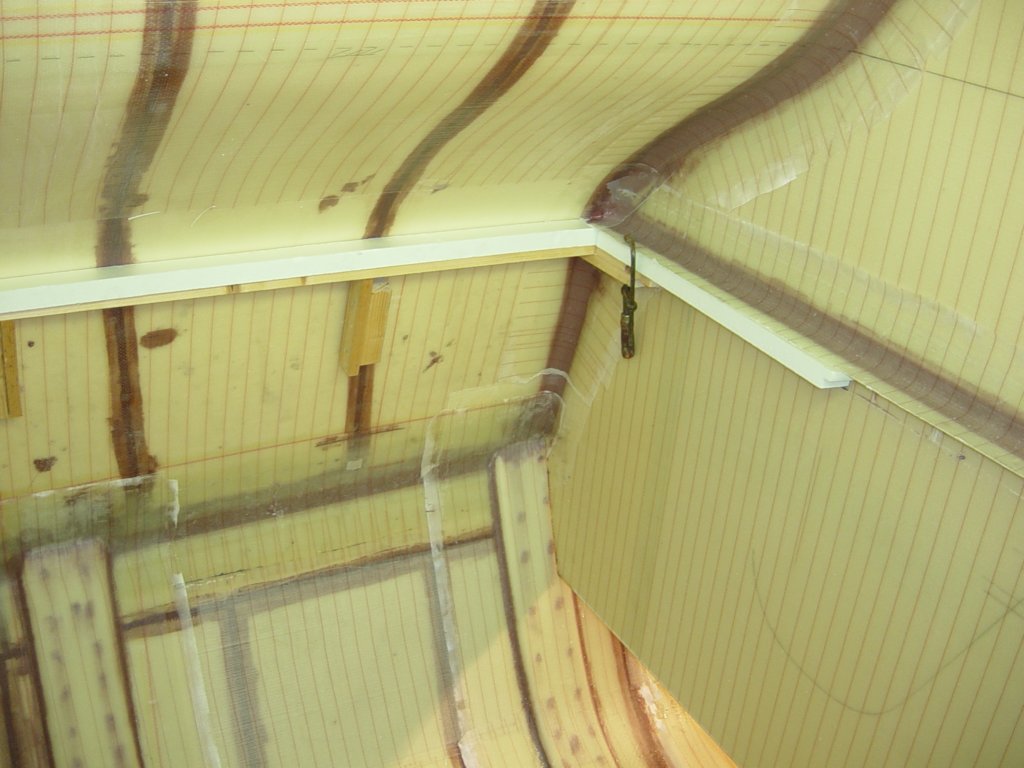
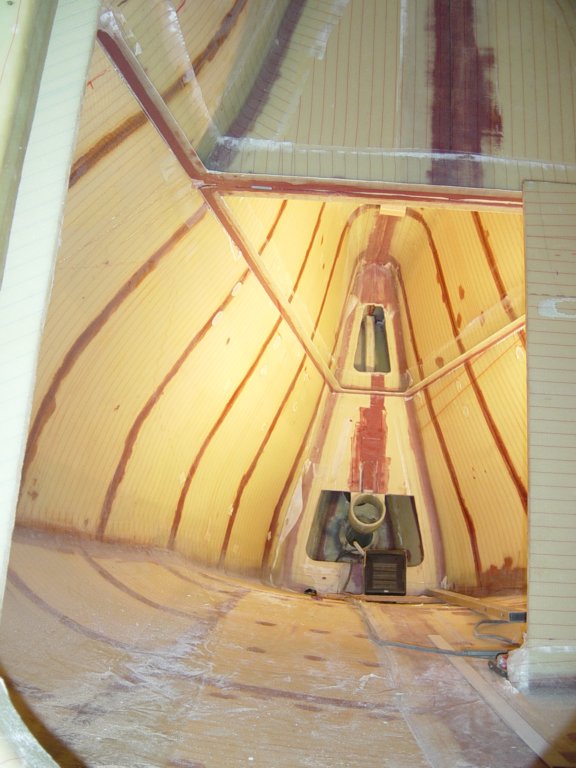
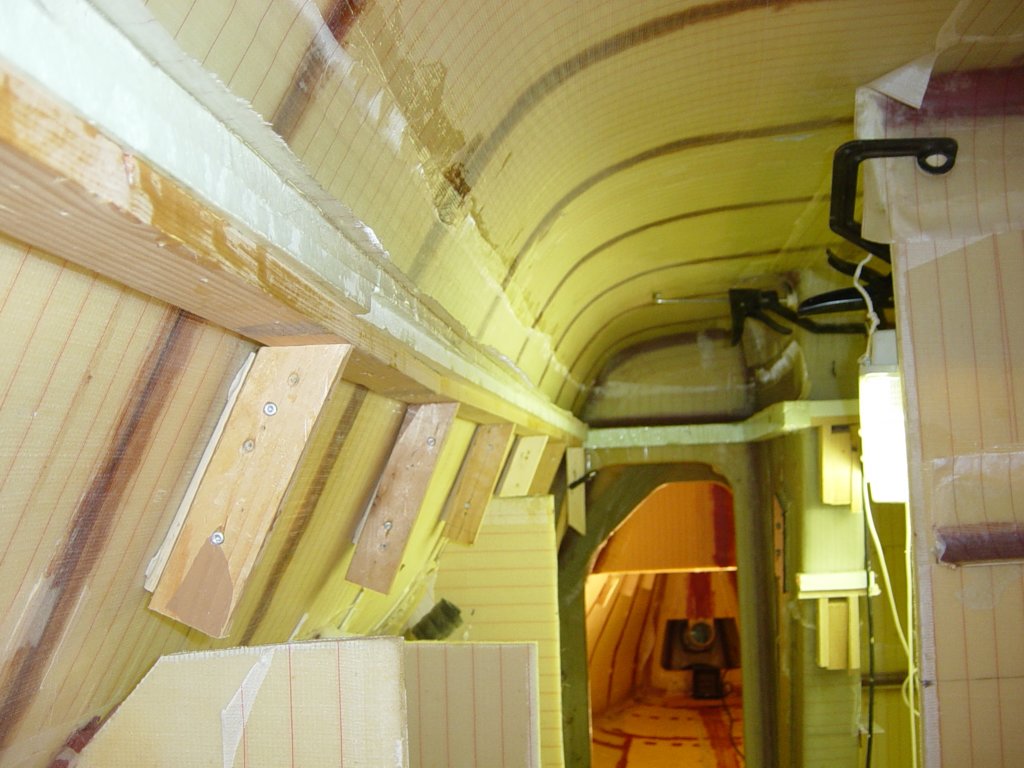
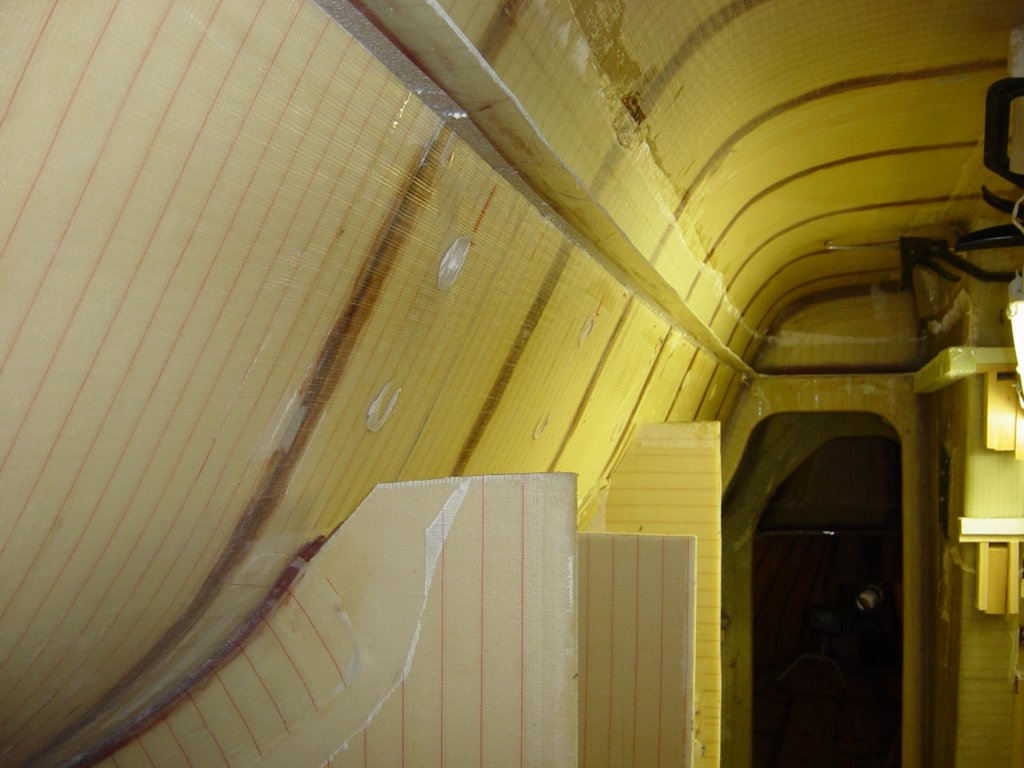
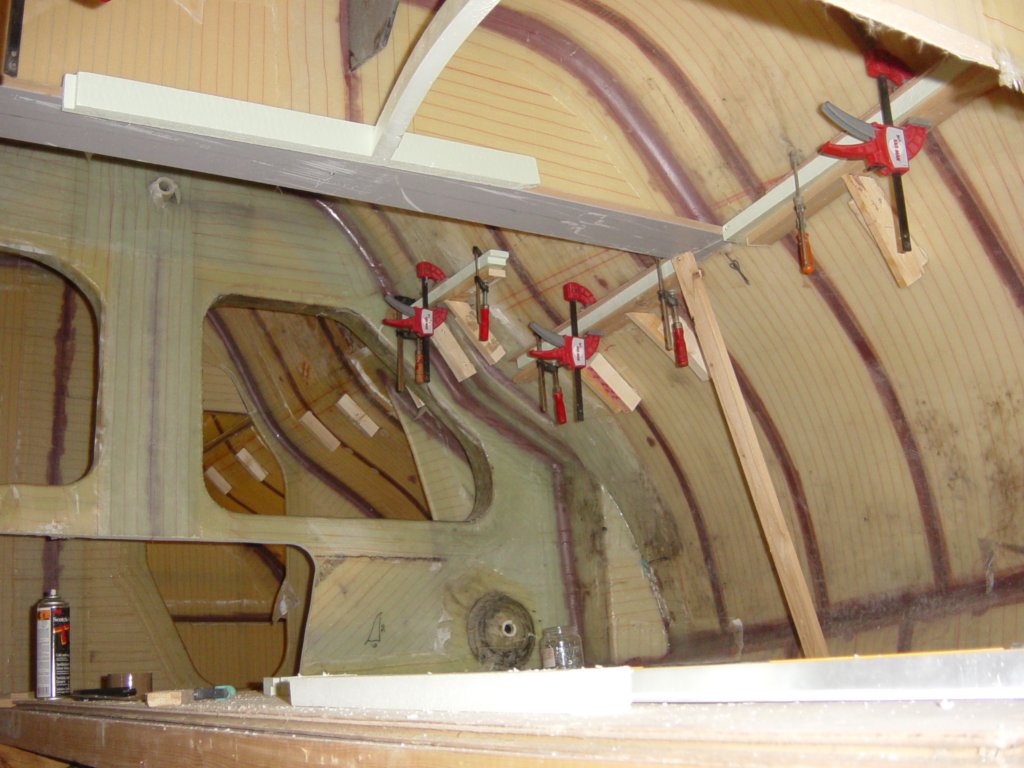
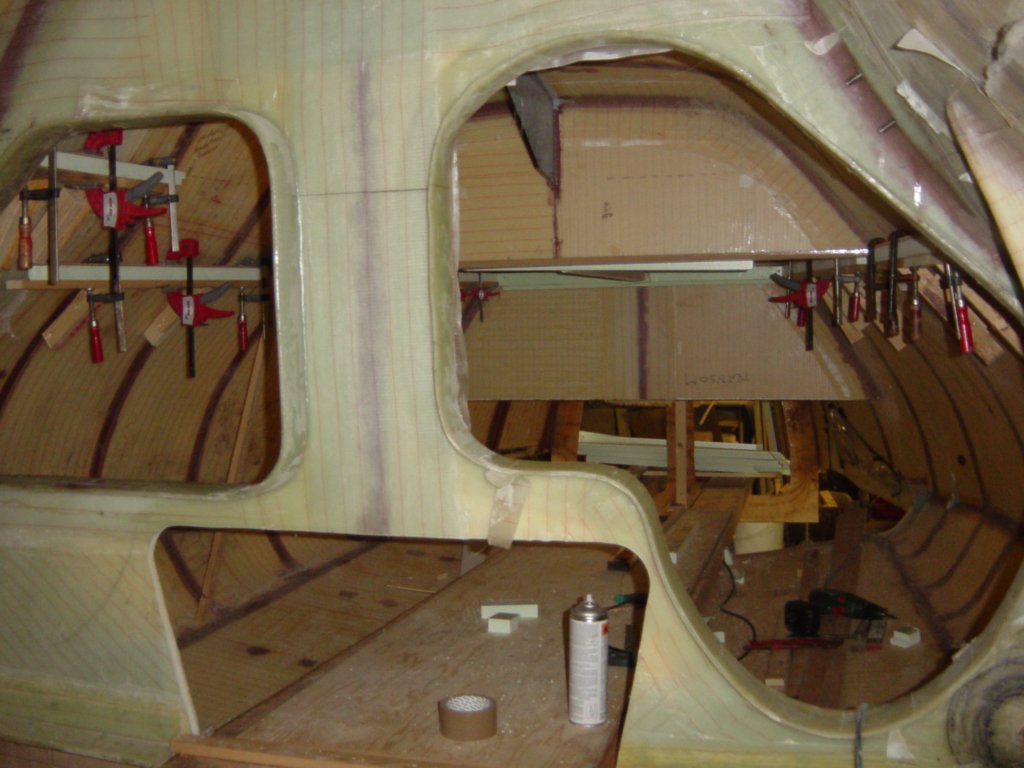
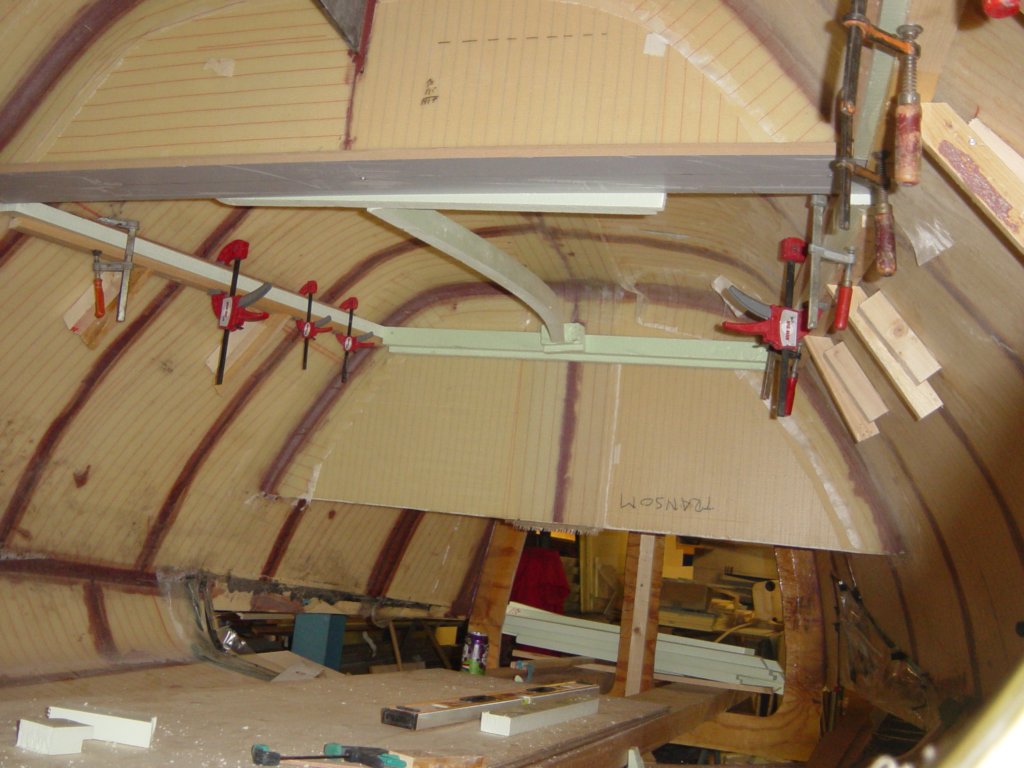
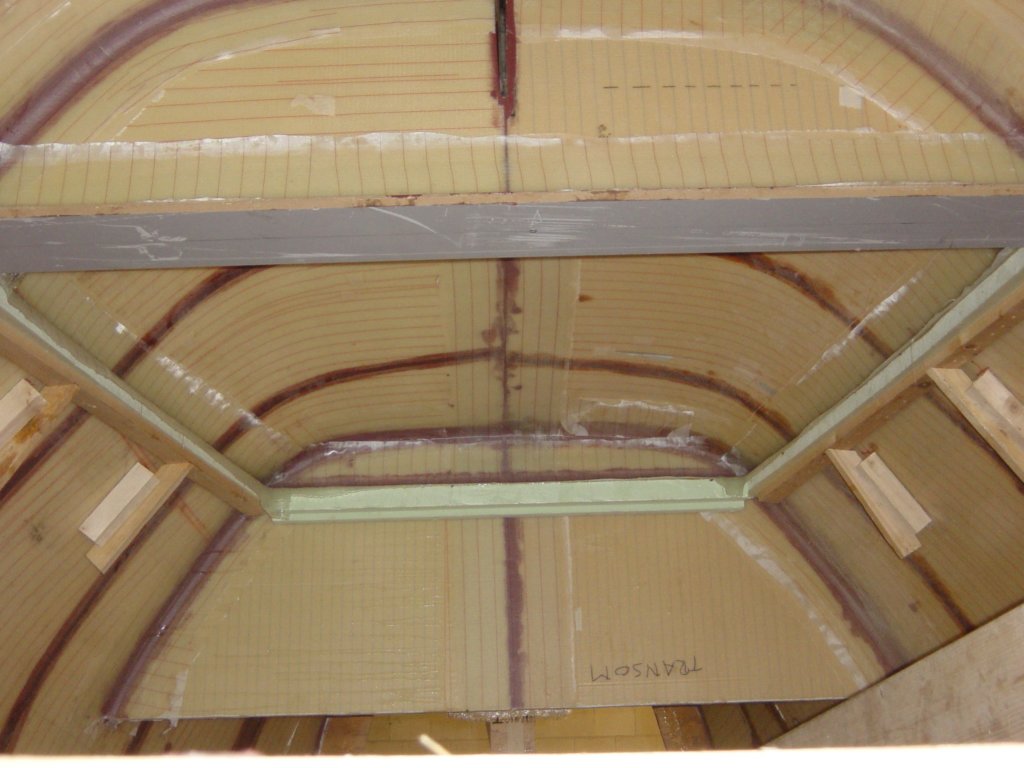
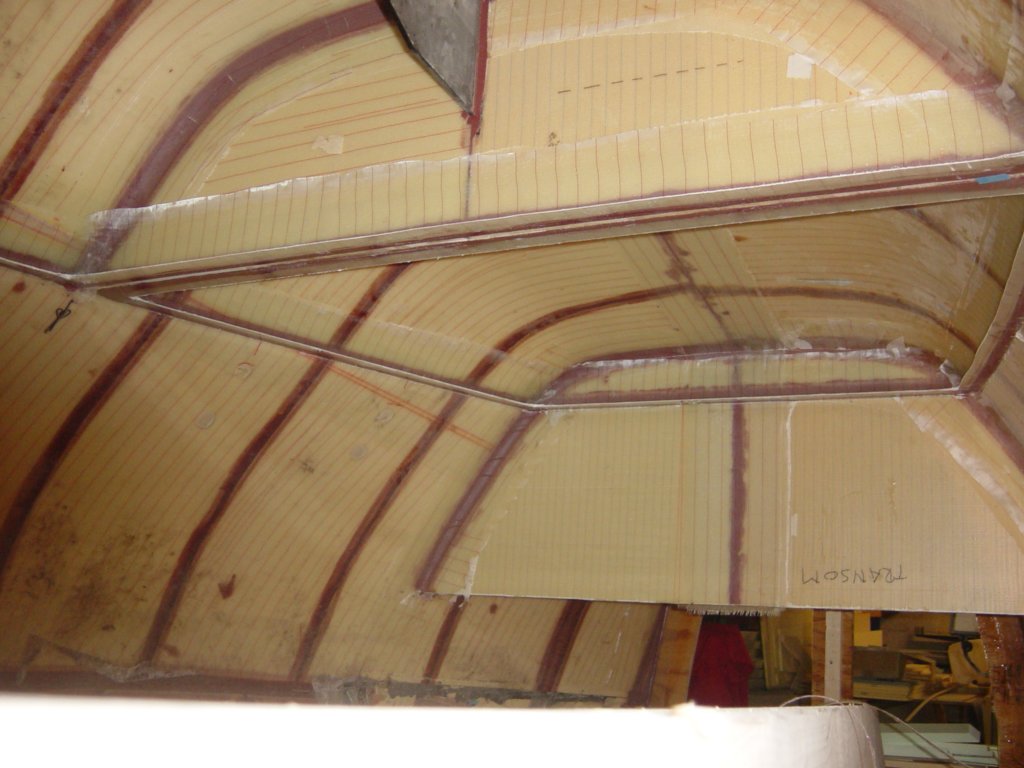
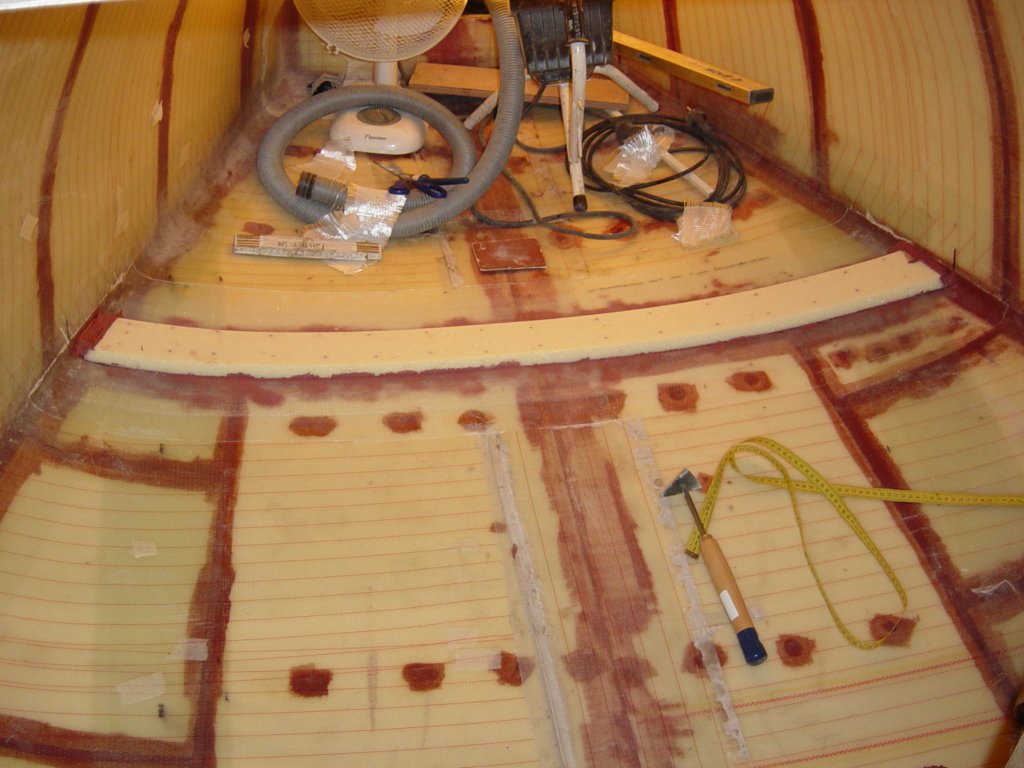
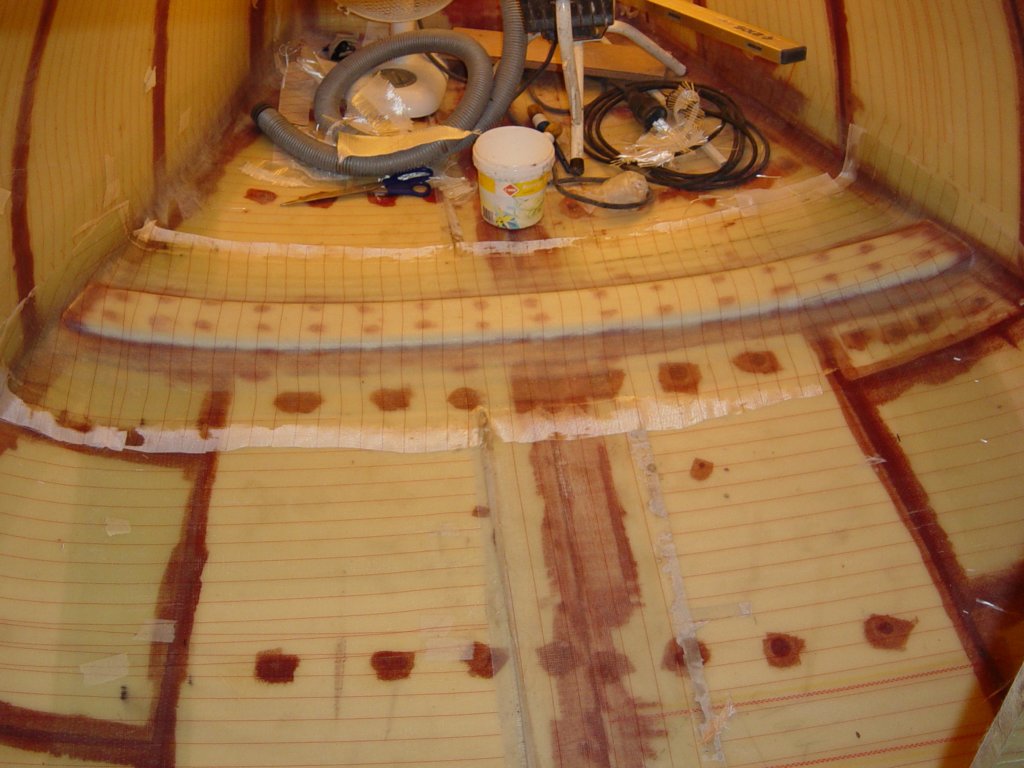
While the hull is still in an upside down position, it is a convenient moment to make the fillets and flanges that will support the horizontal interior elements, such as the cabin floors, settees, bunks, and chart table.
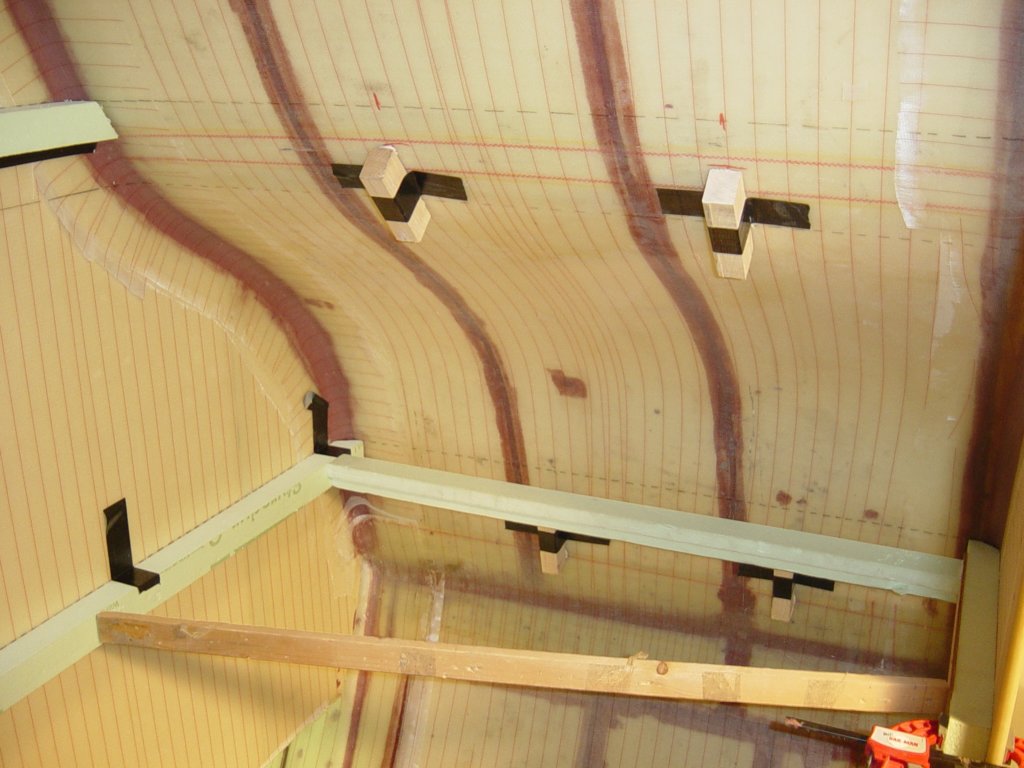
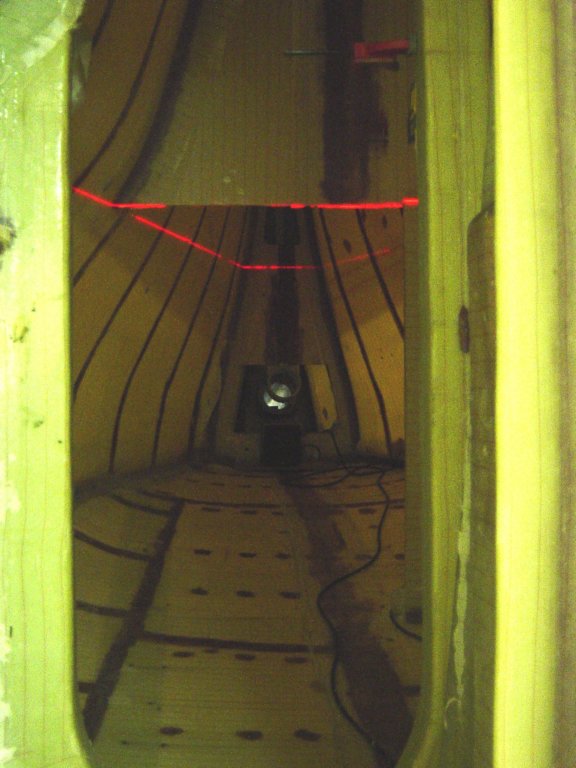
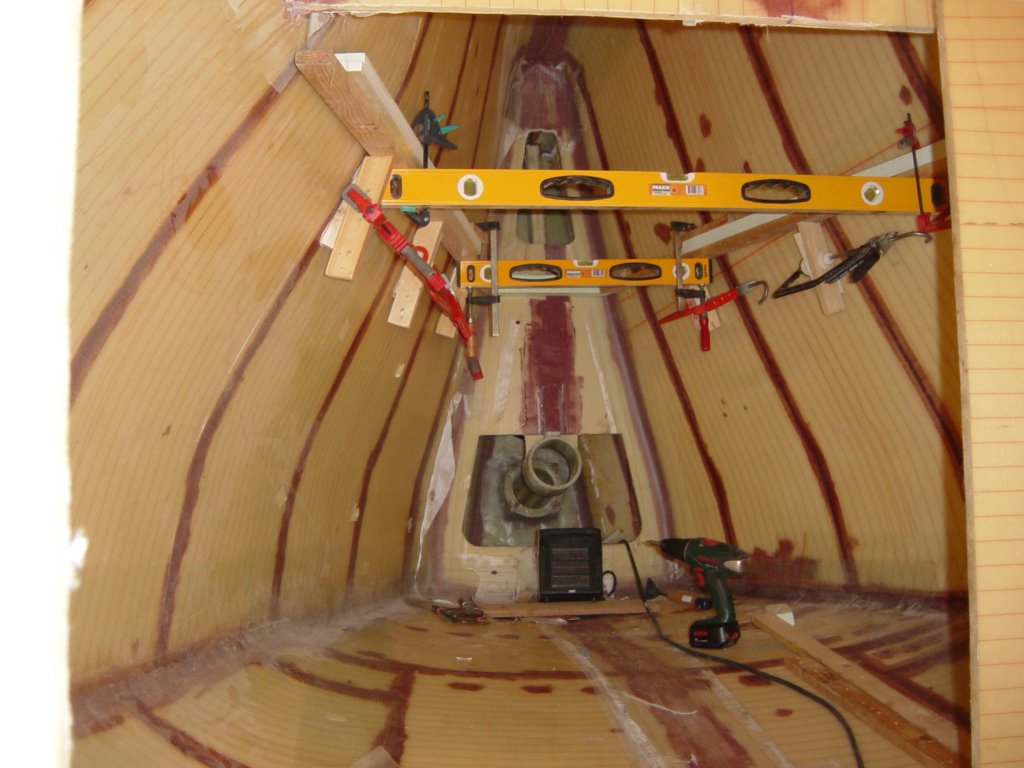
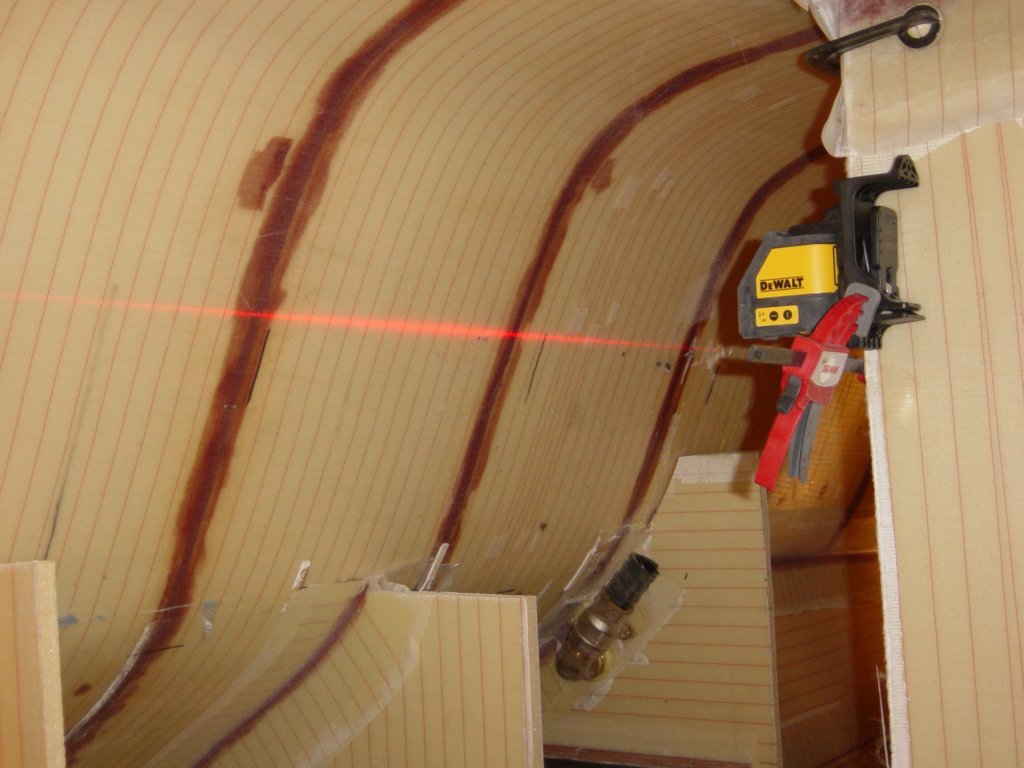
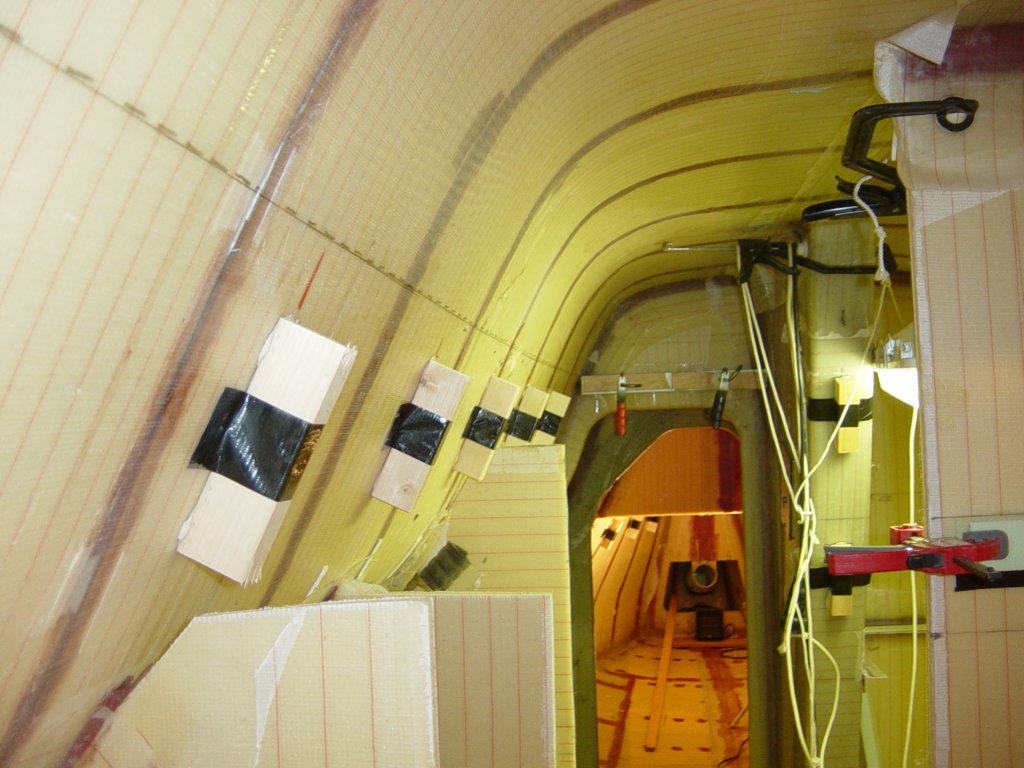
Looking for a material that is able to follow the hull shape while at the same time remaining horizontal, I found Styrodur insulation foam to be very suitable. All positions are marked using a laser, and the moulds are formed from Styrodur supported by temporary wooden spacers. Due to its low weight, the Styrodur is easy to position and can be fixed quickly using 3M spray glue.
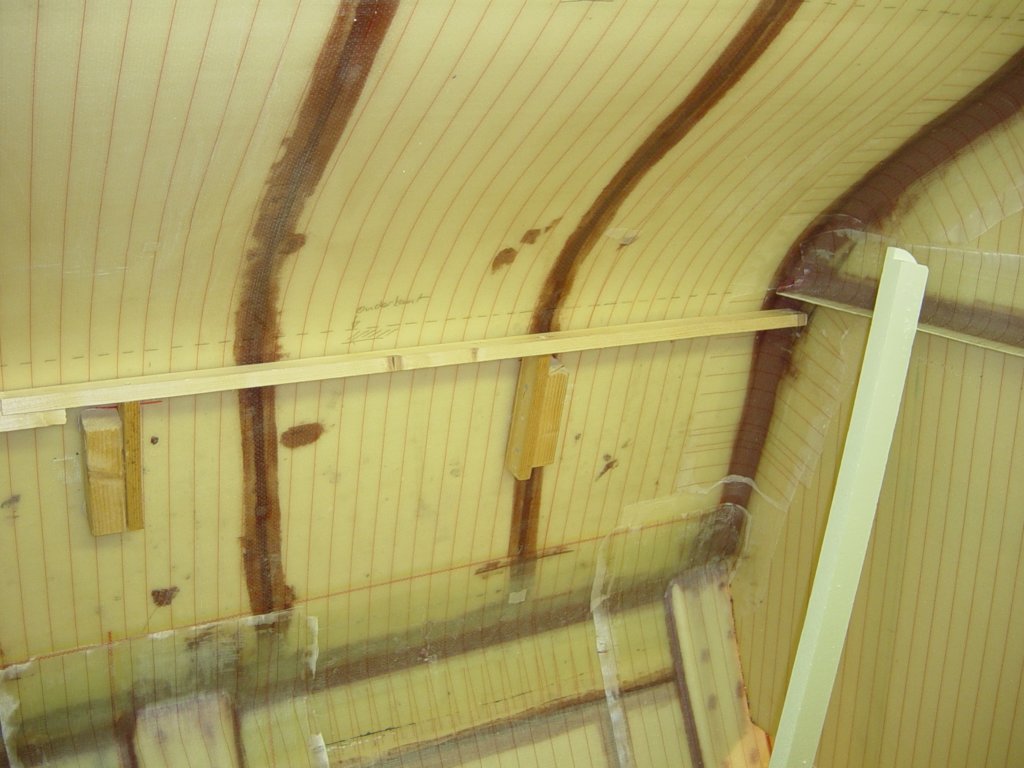
This stage is also ideal for installing the cabin roof reinforcements on the inside. Working on my knees is considerably easier than working overhead once the hull is upright.
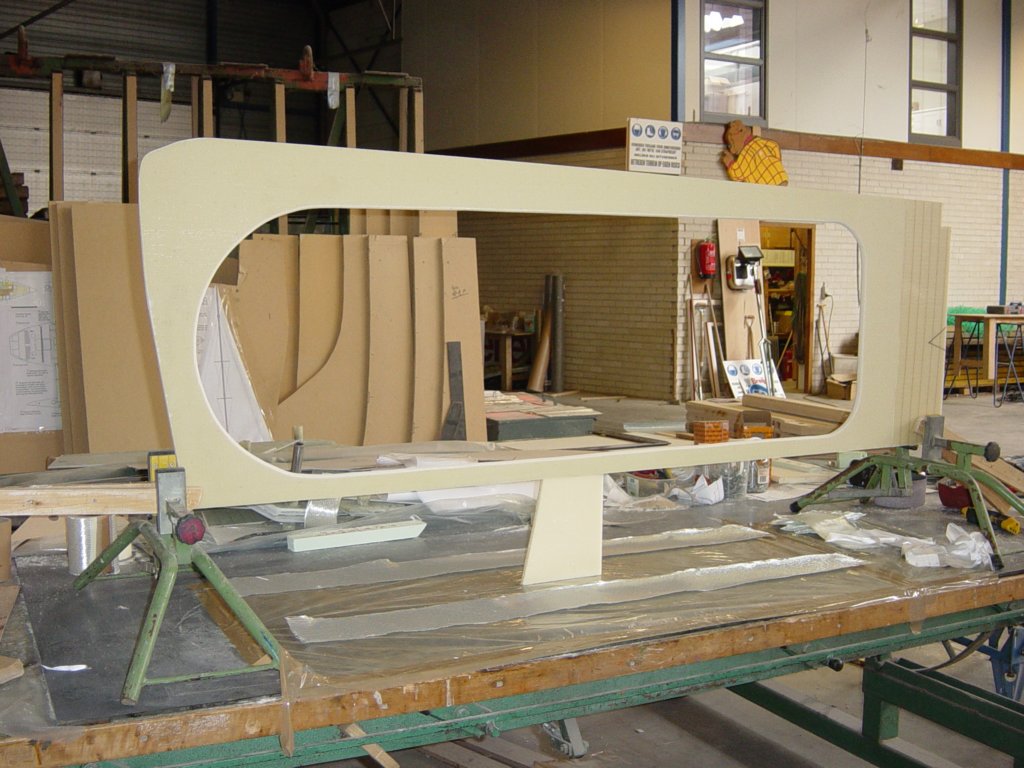
This photo gallery (23 images) shows the interior structural work carried out while the hull is upside down, including cabin roof reinforcements, laser-aligned Styrodur moulds, and the fabrication of fillets for floors, bunks, settees, and deck beams.