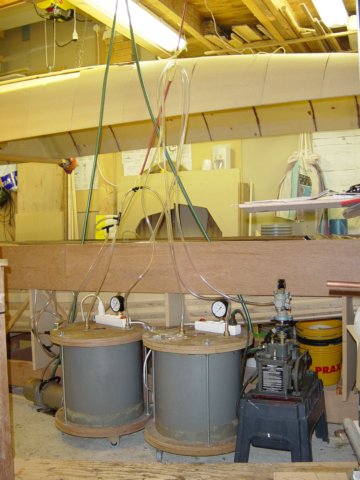
Two small pumps, good traps, and ruthless leak control: a reliable vacuum setup is not about power, but about knowing when something is wrong.
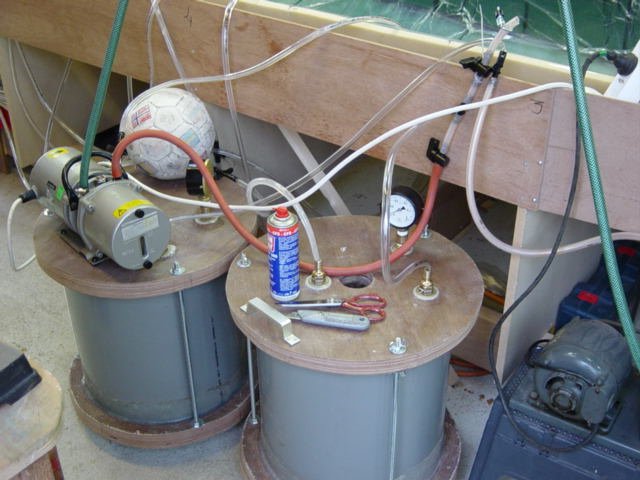
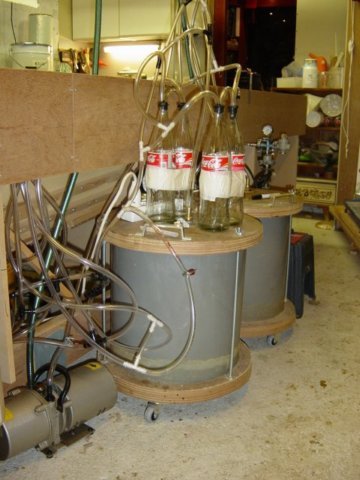
Vacuum pump and resin trap setup
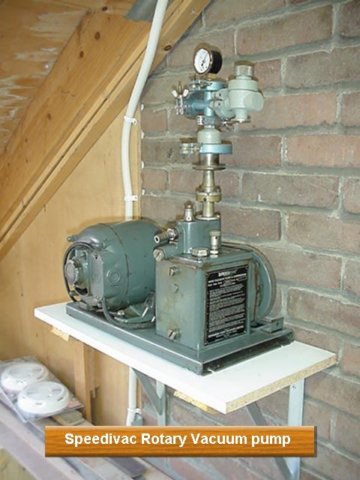
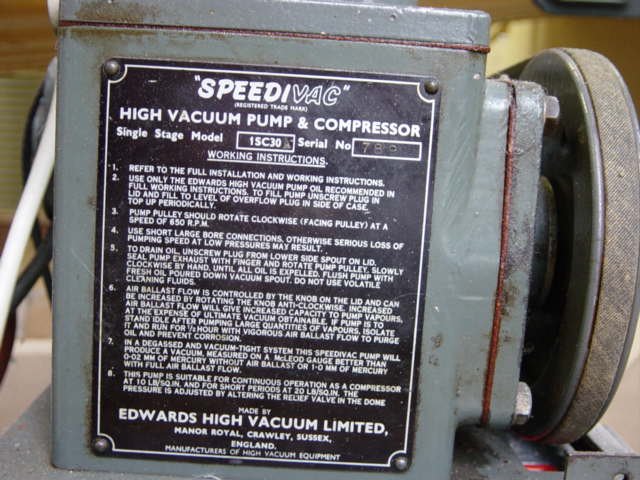
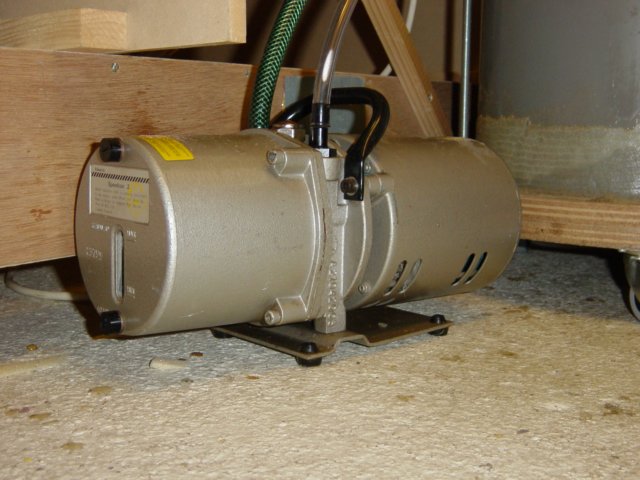
I use two small oil-filled rotary pumps (both capable of achieving deep vacuum): one fast-running pump (in a former life used for maintaining medical MRI equipment) and one slow-running, almost antique pump. After a long career in a scientific environment, this pump is now on its second multihull project. The slow pump can run continuously without complaint. The fast pump can also run for extended periods, but it gets very hot—which I don’t like when it’s unattended. The only real concern is to close the vacuum line to the pump before switching off, or to fully release the vacuum first. Otherwise the oil may migrate into the resin trap. Not a disaster, just a messy waste of vacuum oil.
Airtightness is crucial. I cannot afford any leakage, because it can ruin the laminate by creating an air-bubble track from leak point to vent point. This is one advantage of a small pump: if there is a leak, the pump simply won’t achieve a good vacuum. That also explains why big pumps deserve a warning label—large capacity can still pull “acceptable” vacuum while you remain unaware of a leak somewhere in the system. More on that in the All About Vacuum chapter.
Note 1: In this early phase of learning vacuum infusion—using the relatively straightforward float build as a perfect training ground—I was still slightly nervous about hidden leaks. Later I learned that leaks discovered during the infusion can often be solved on the spot, either by improving the seal or, if that fails, by adding an extra vacuum port at the problem area. That is where having a second pump becomes genuinely useful.
Note 2: At this stage I was very happy with this pump setup. As the build progressed, the system was gradually refined and optimised further.
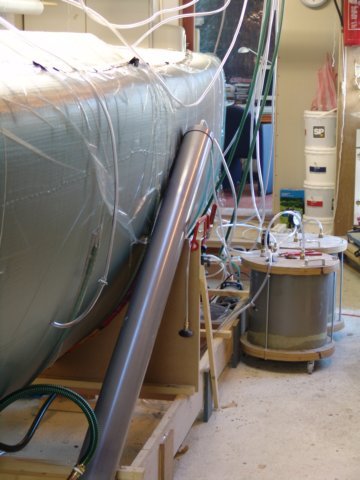
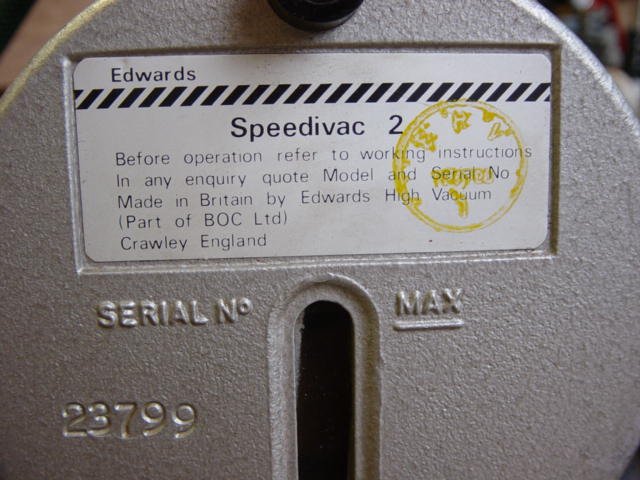
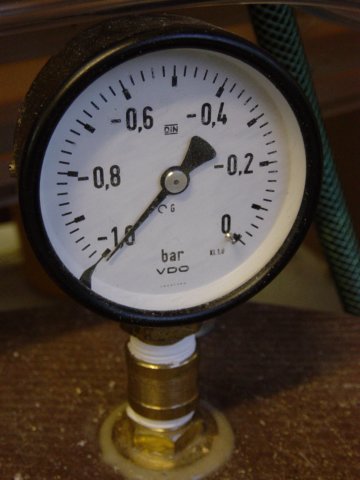
This photo gallery (9 images) shows the parallel pump and resin-trap layout, a few trap-extension experiments (some better than others), and the key components: pumps, specifications, and the vacuum gauge under full vacuum.