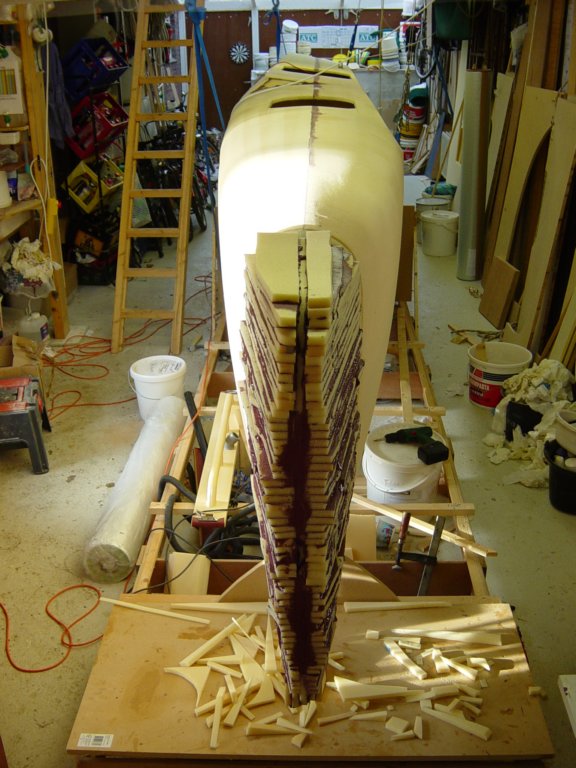
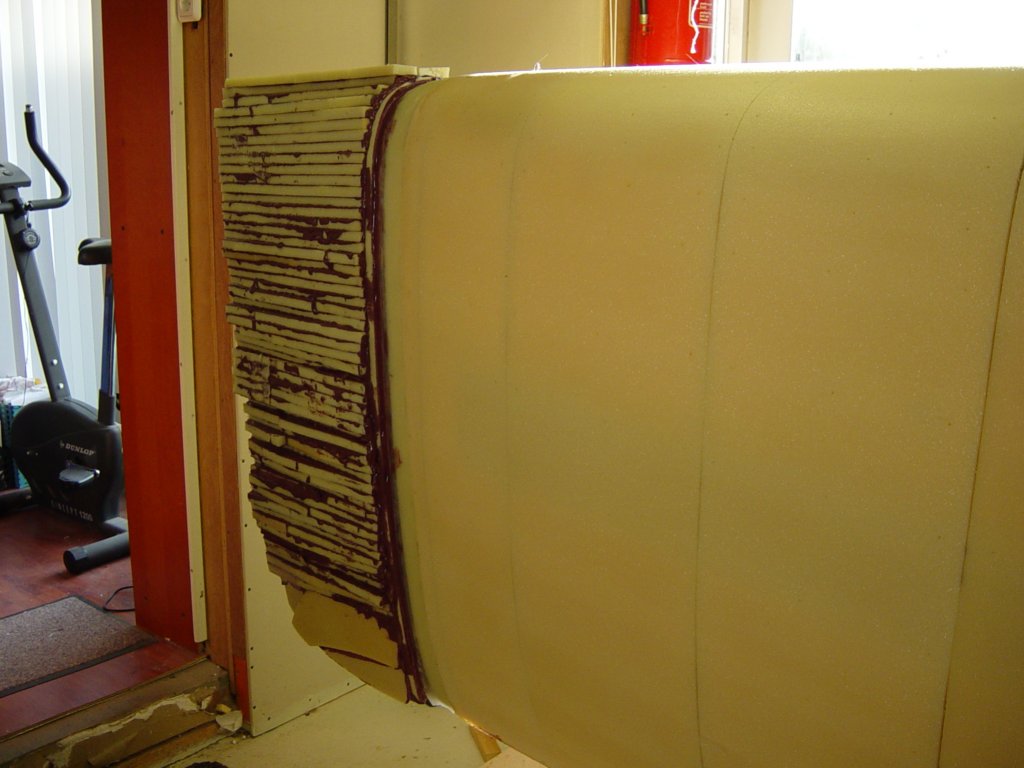
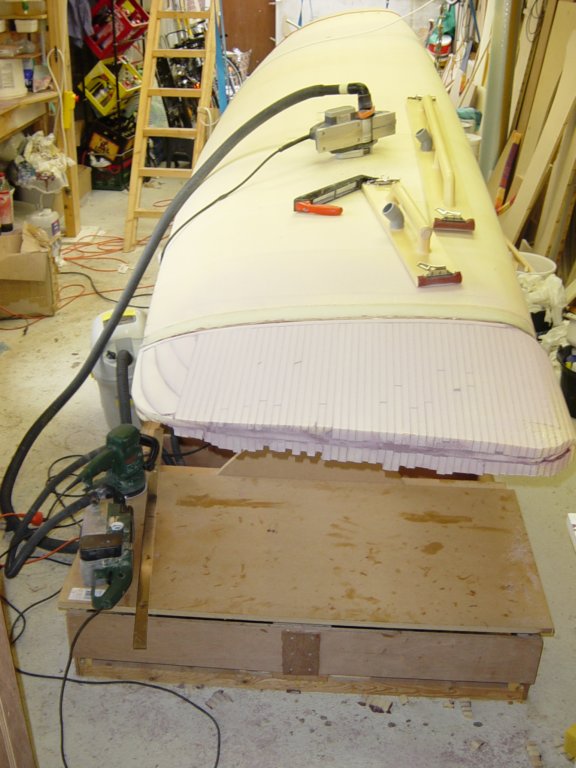
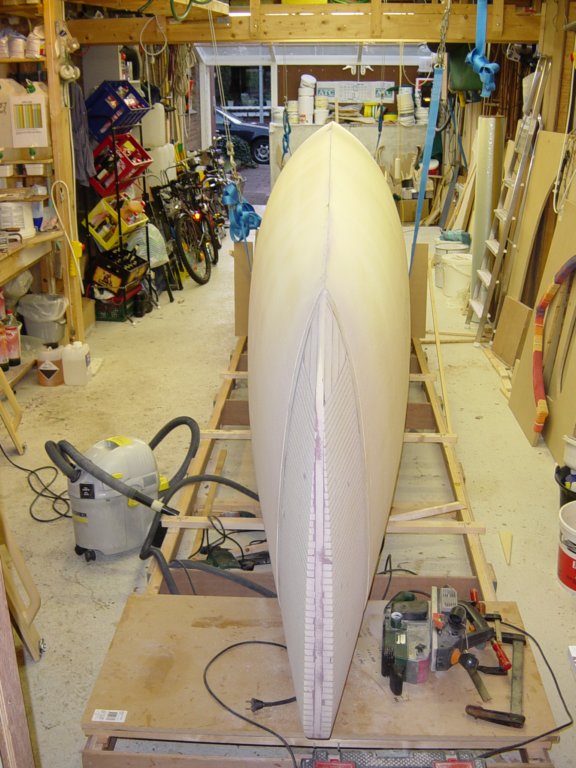
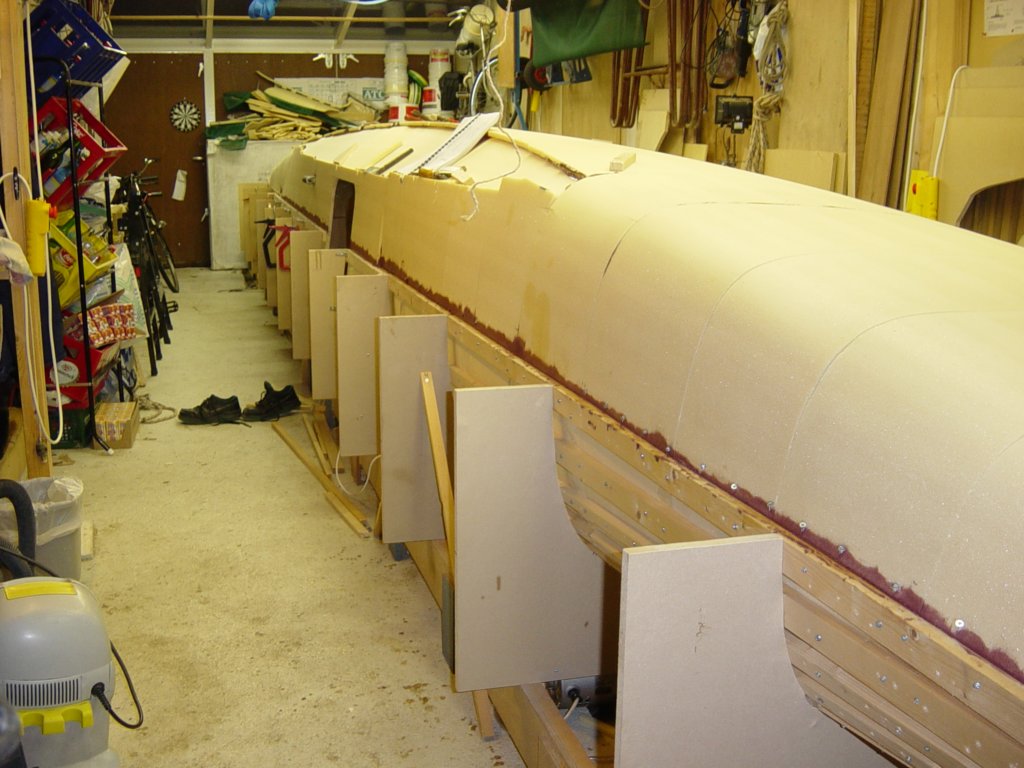
The moment when two separate hull halves finally become a complete float—alignment, bonding, and a long sequence of inside work before the structure can stand on its own.
Port float assembly
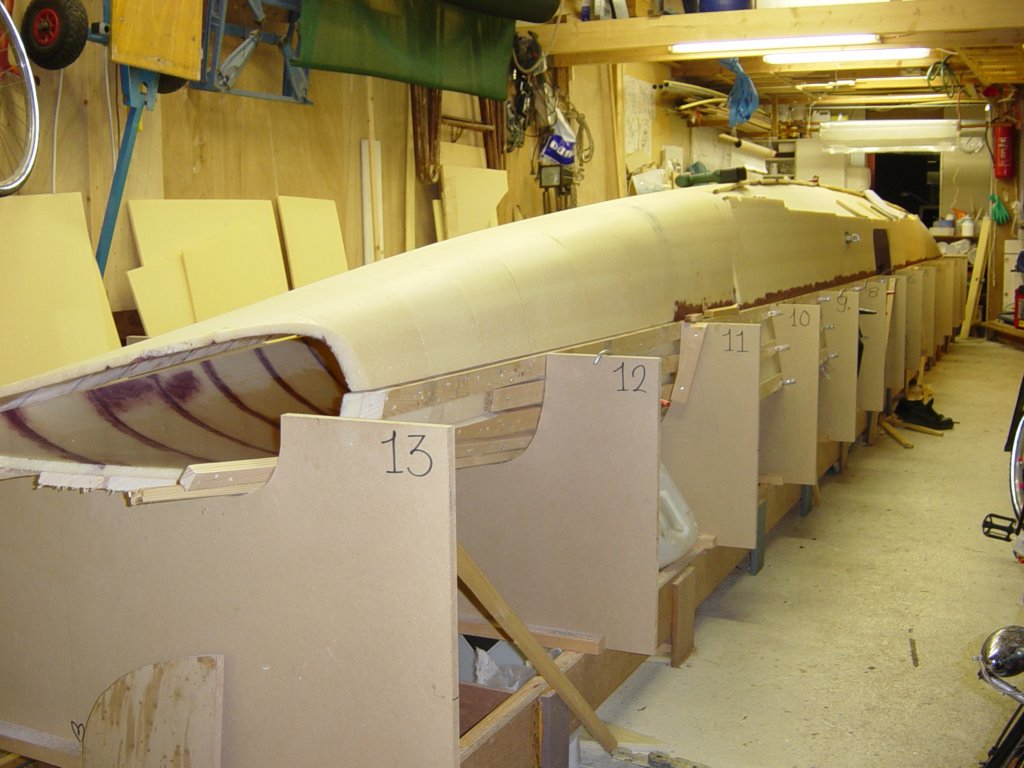
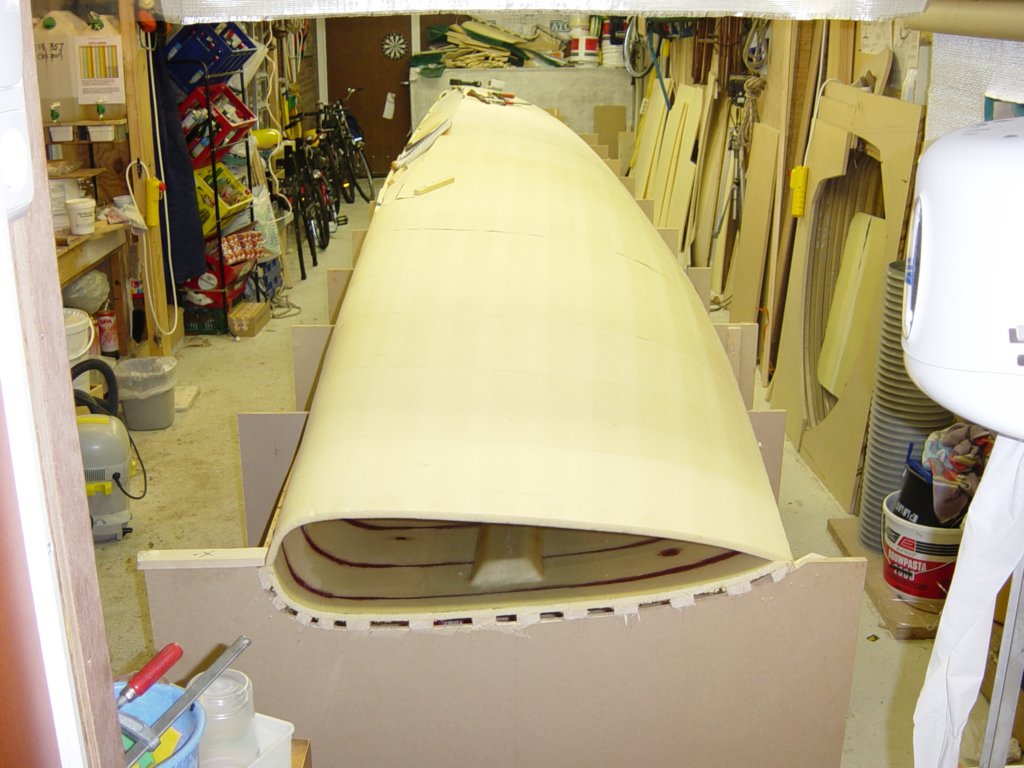
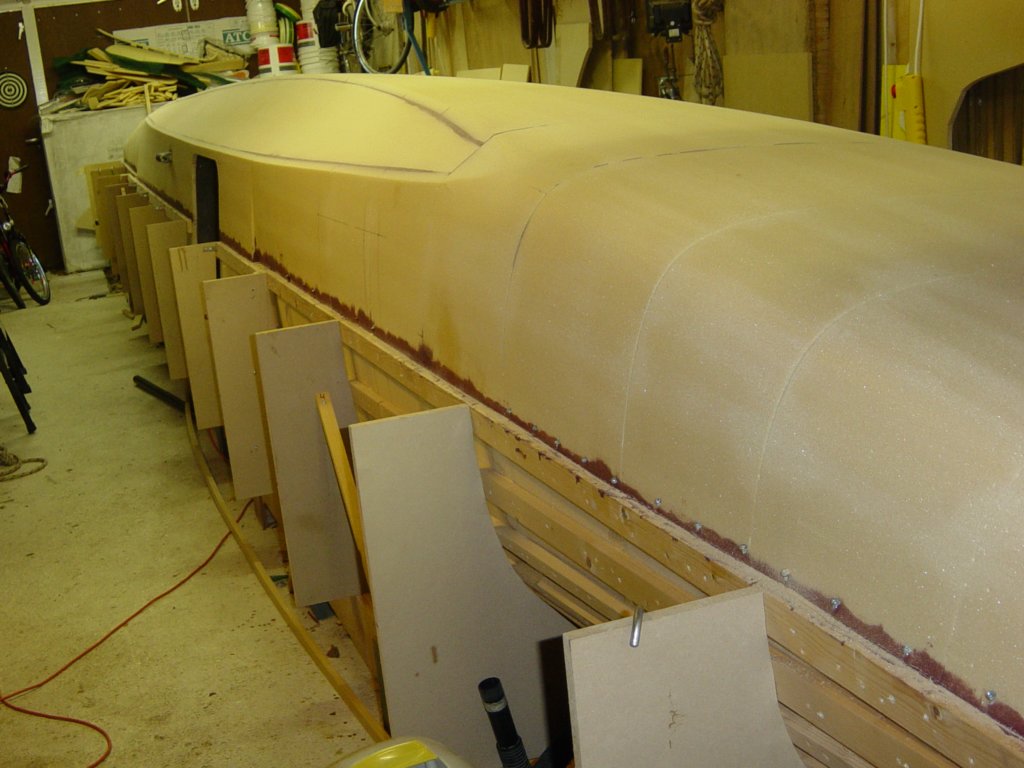
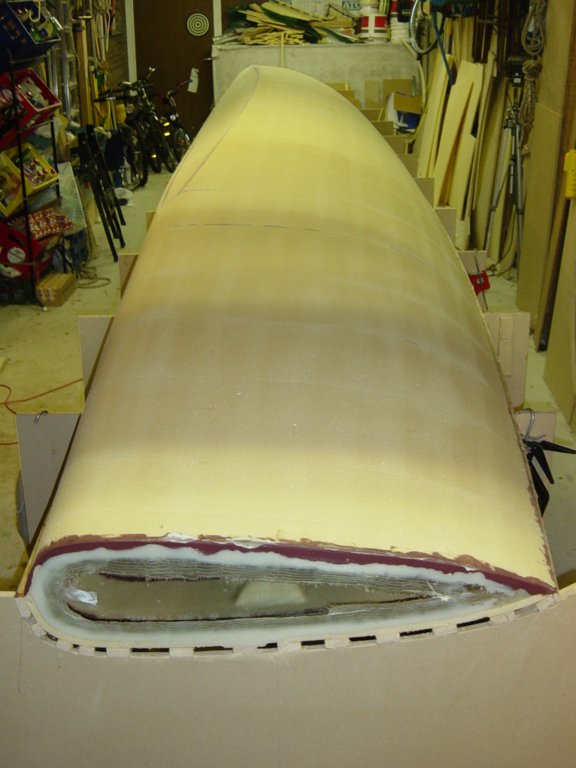
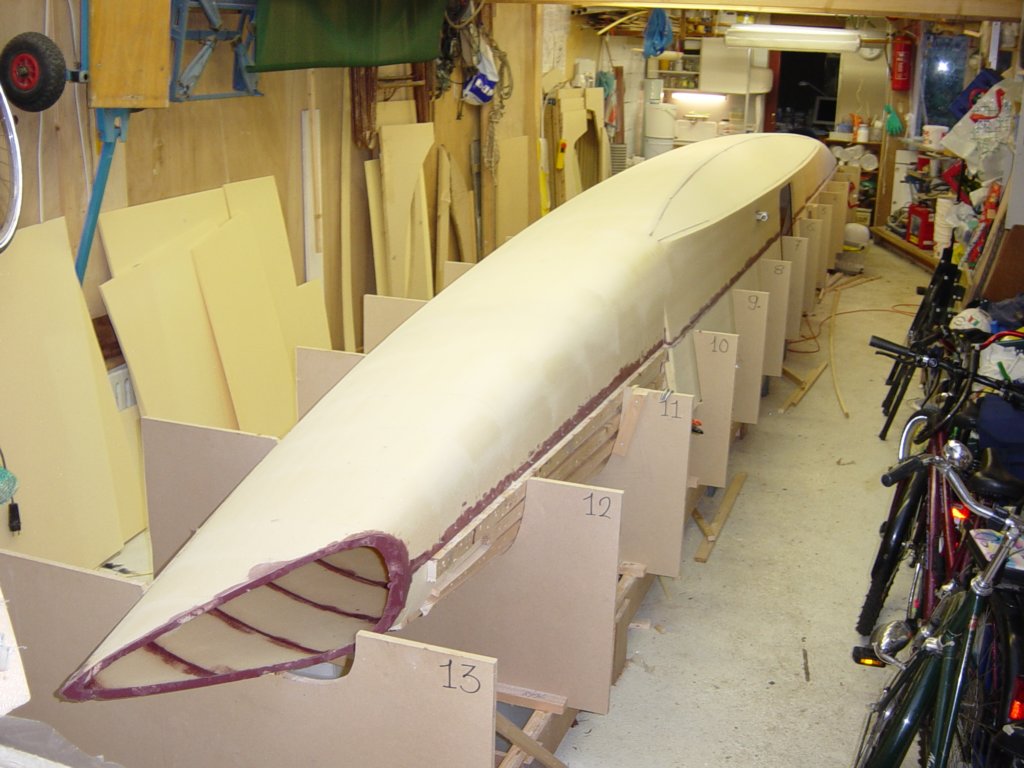
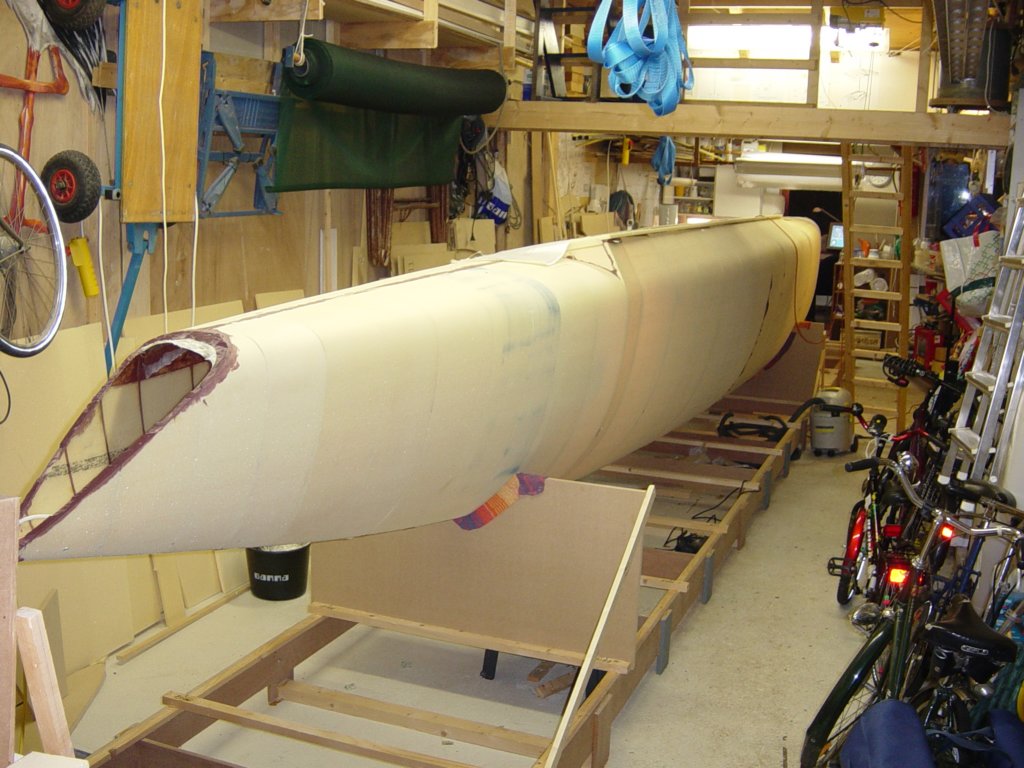
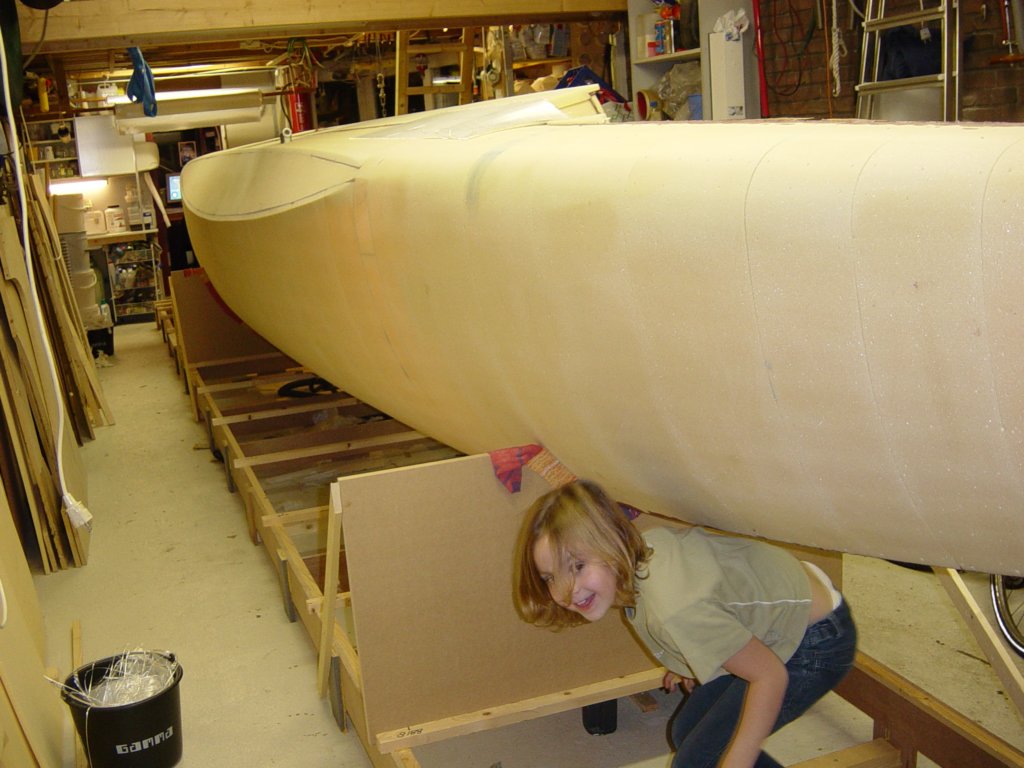
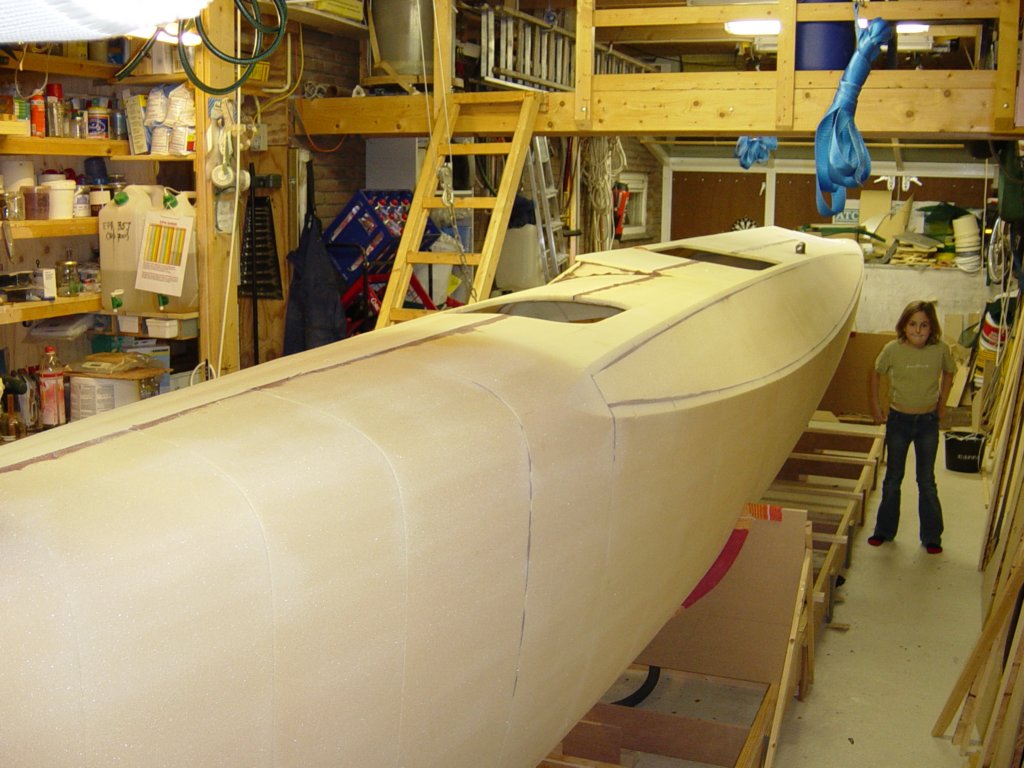
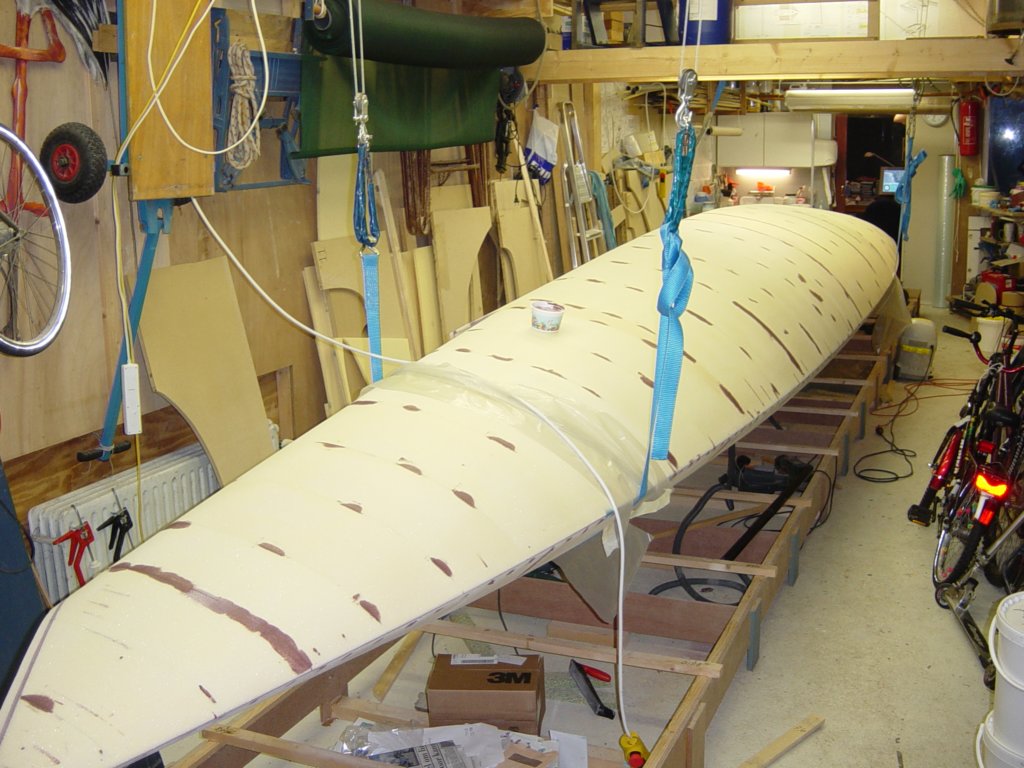
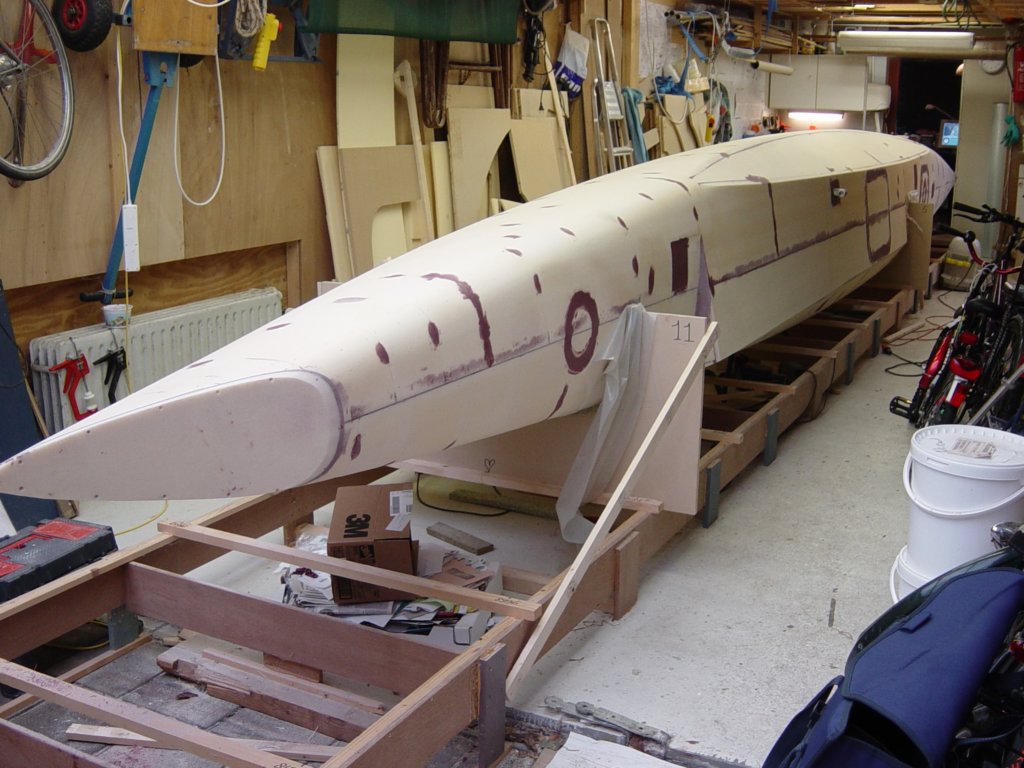
Now the real transformation starts: the two hull halves are joined to become a complete float. A satisfying milestone—visually rewarding and good for morale.
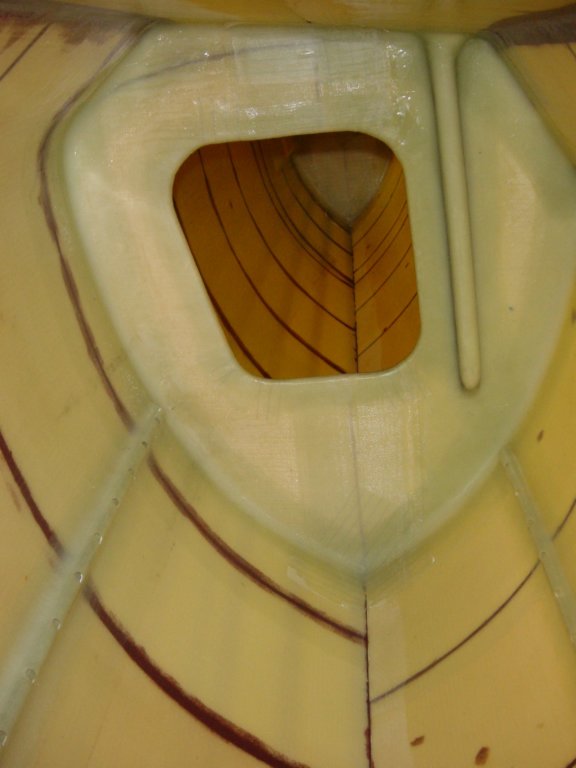
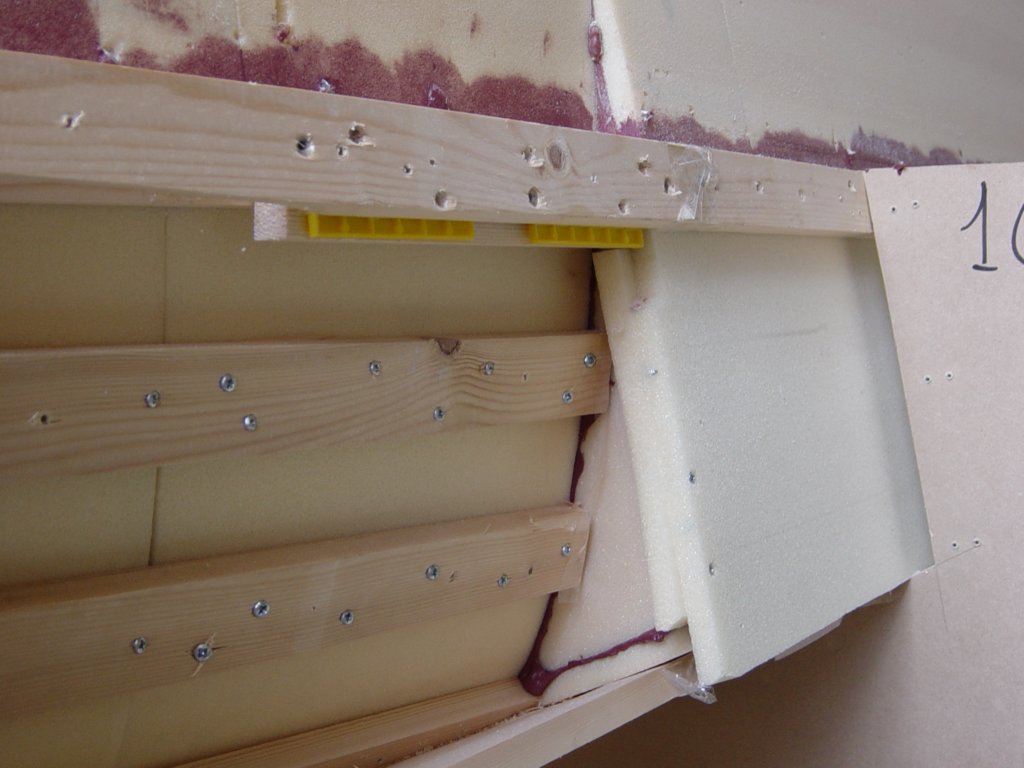
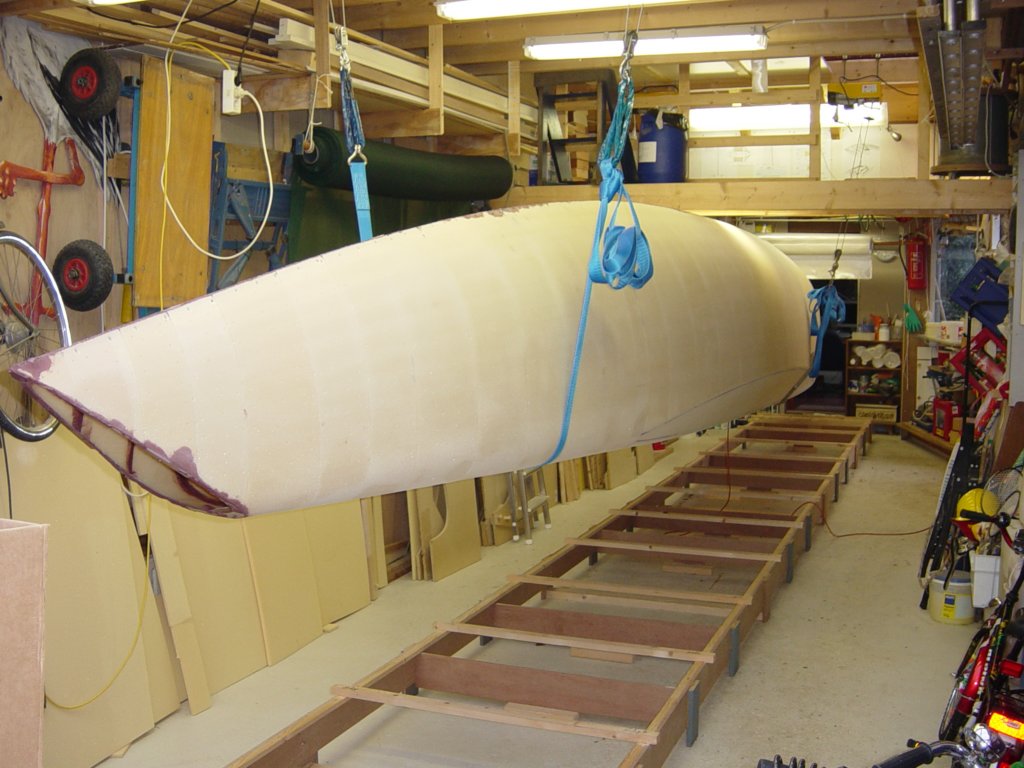
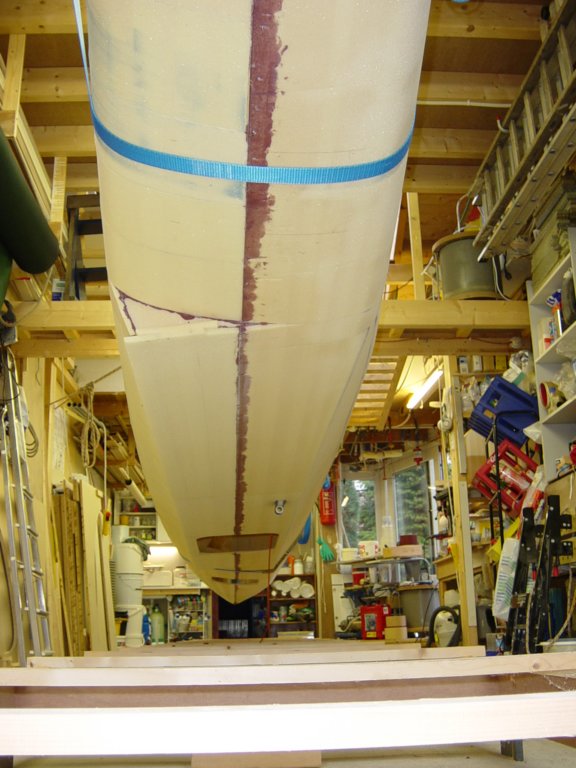
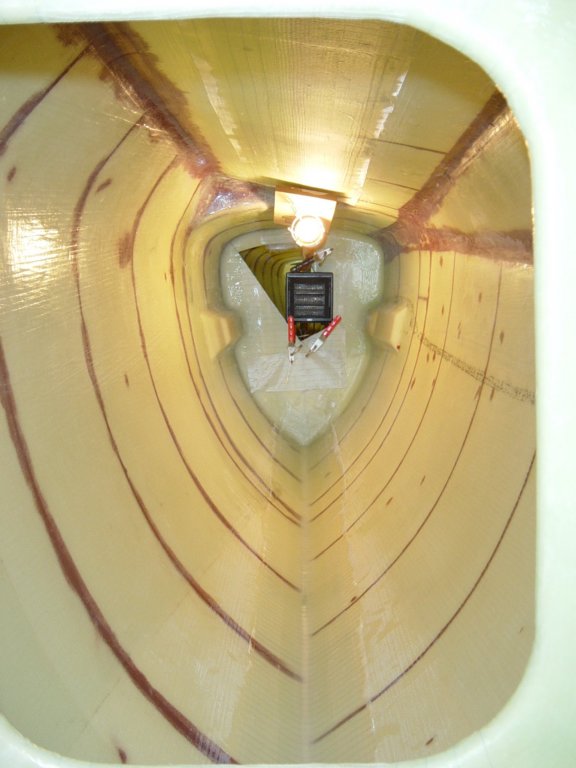
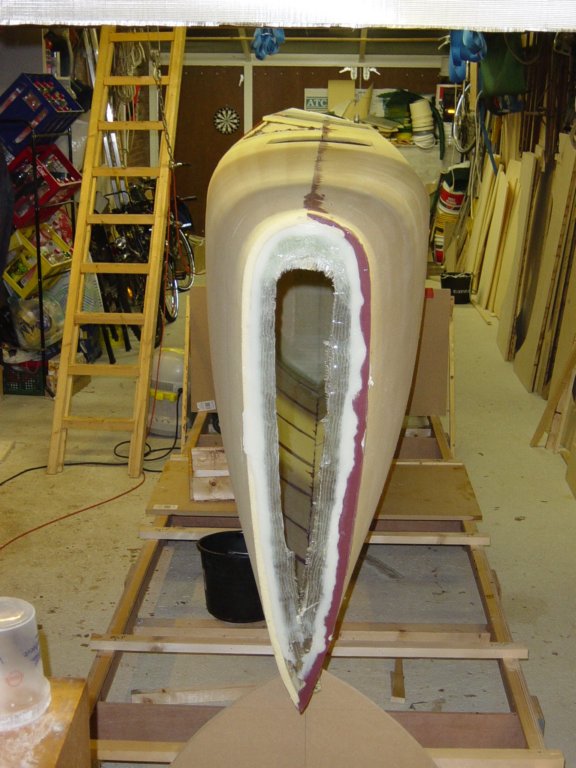
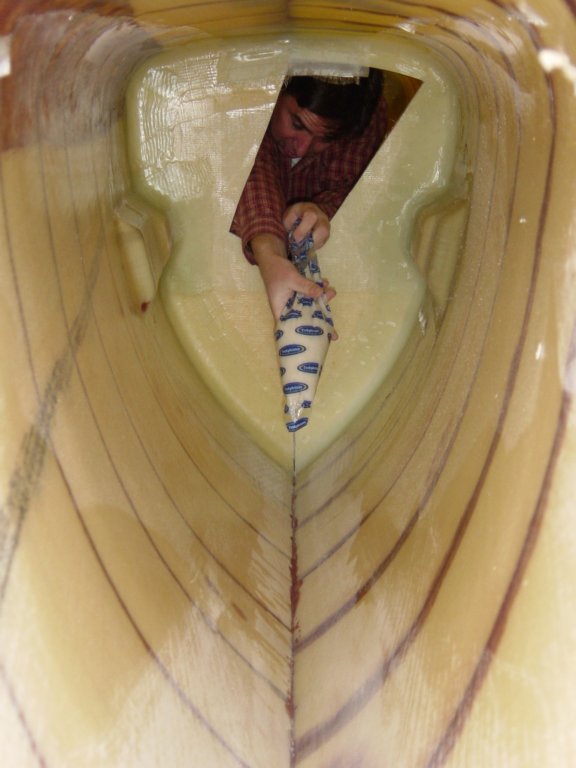
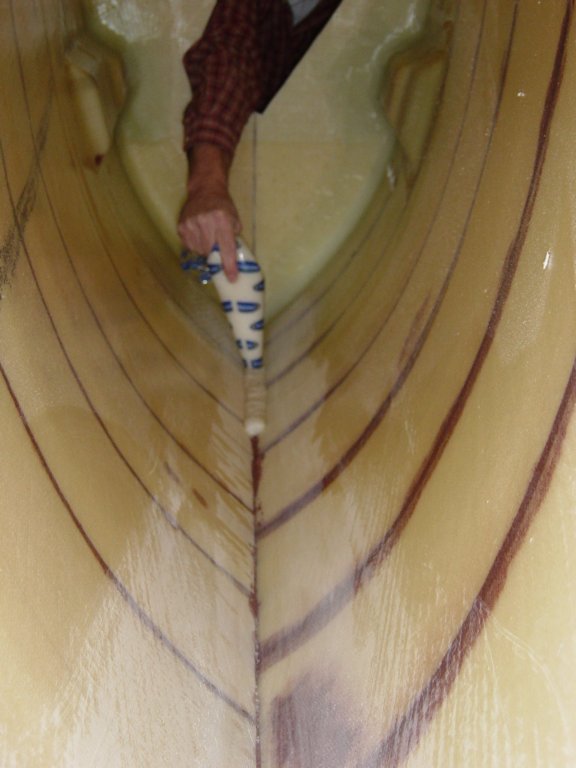
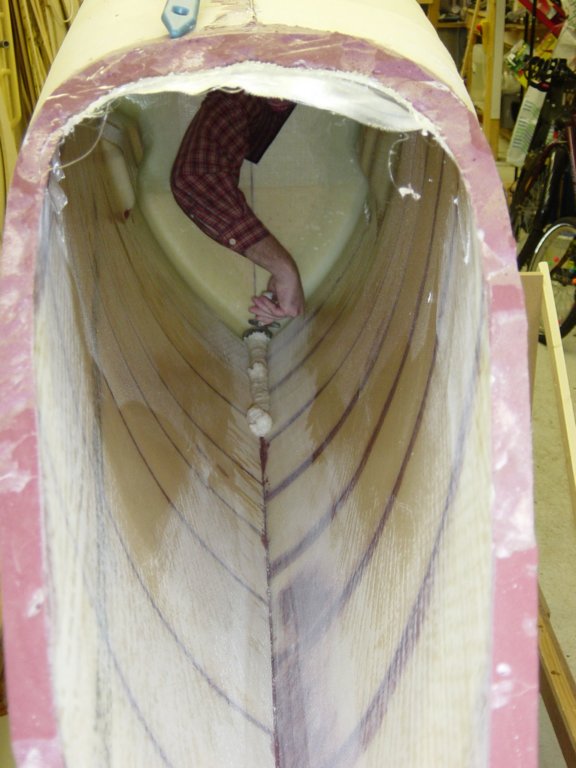
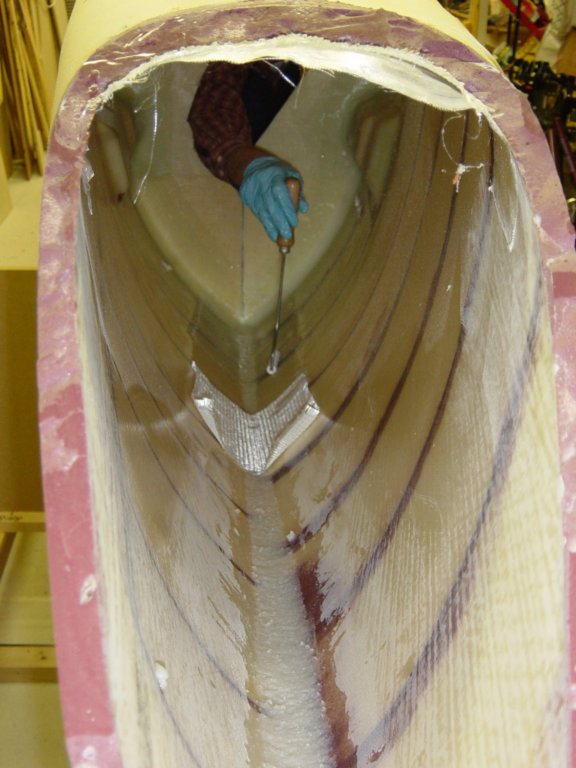
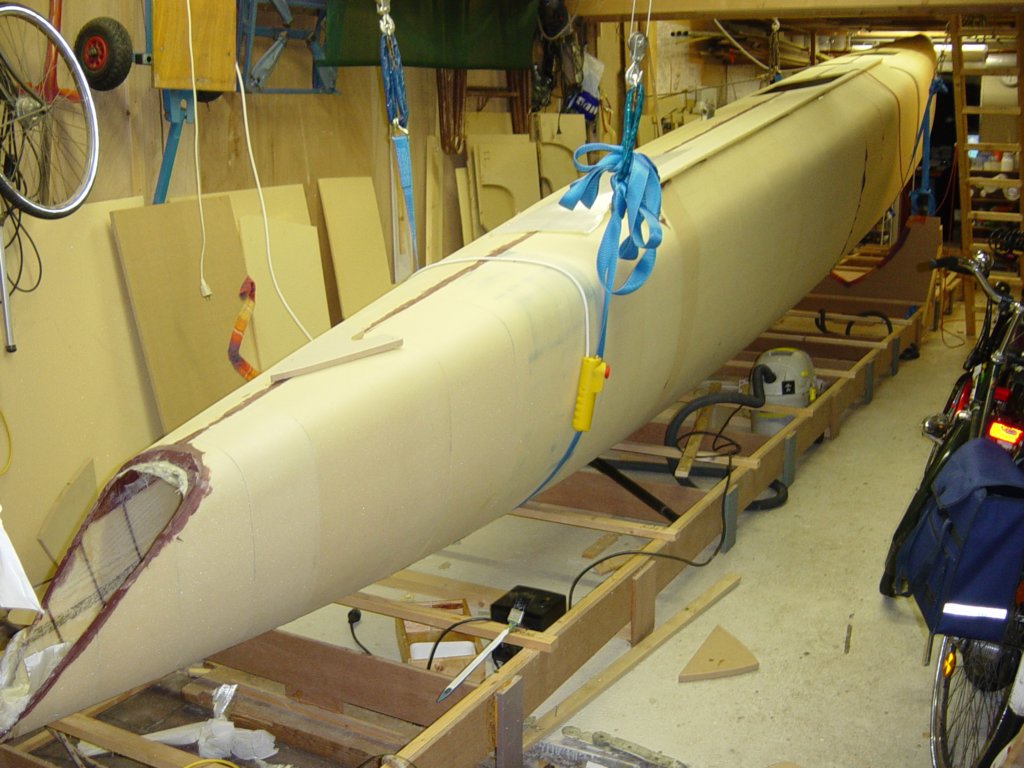
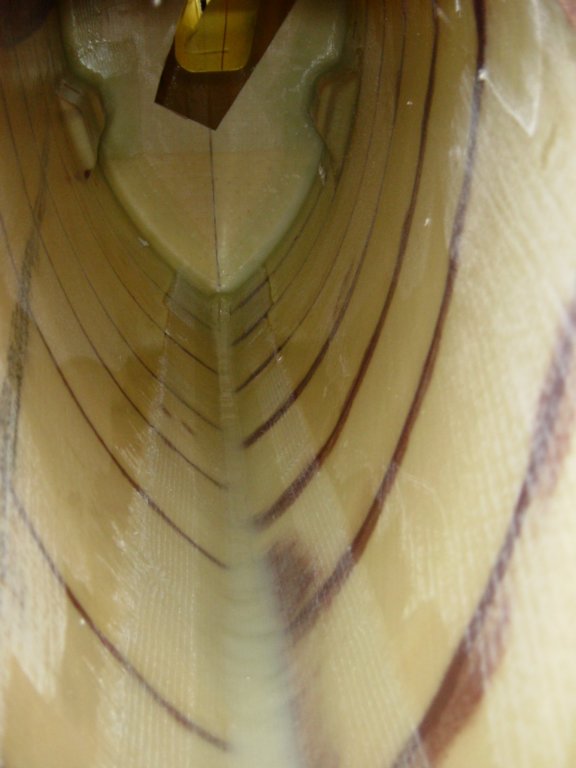
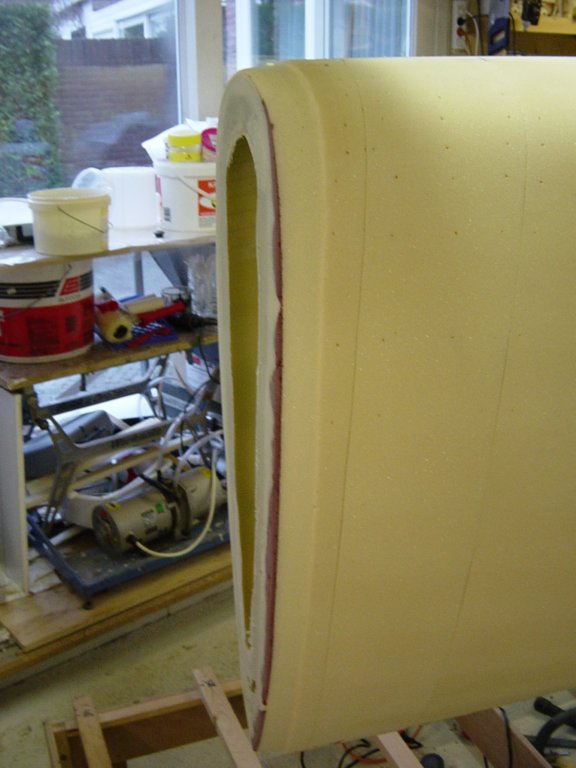
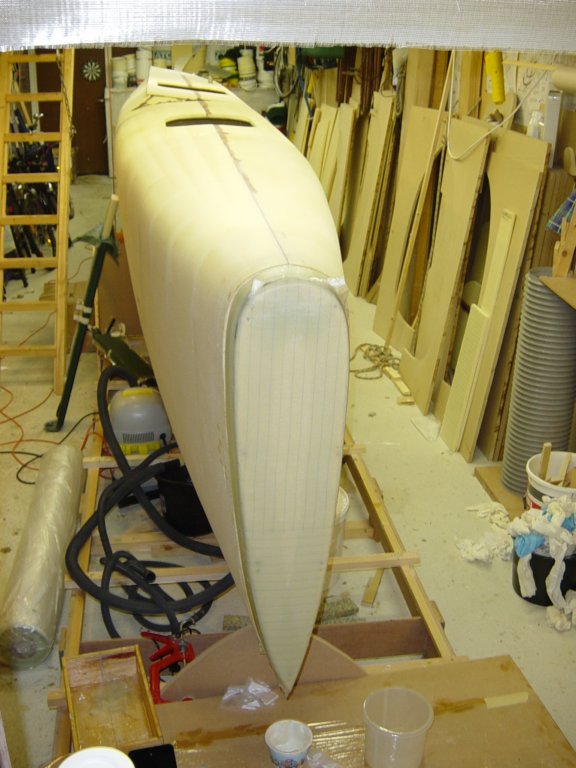
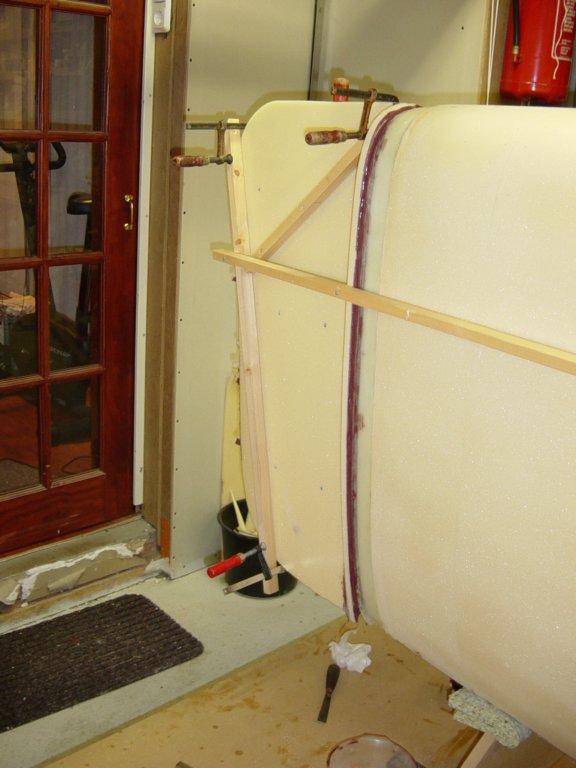
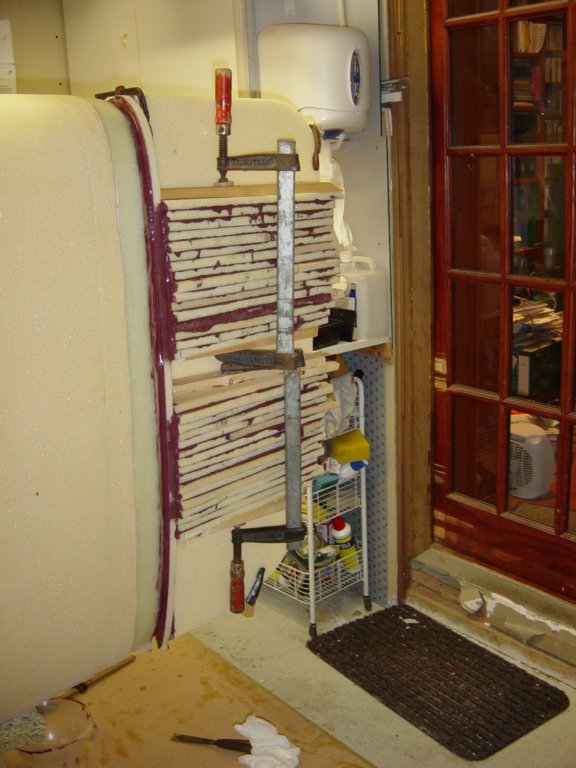
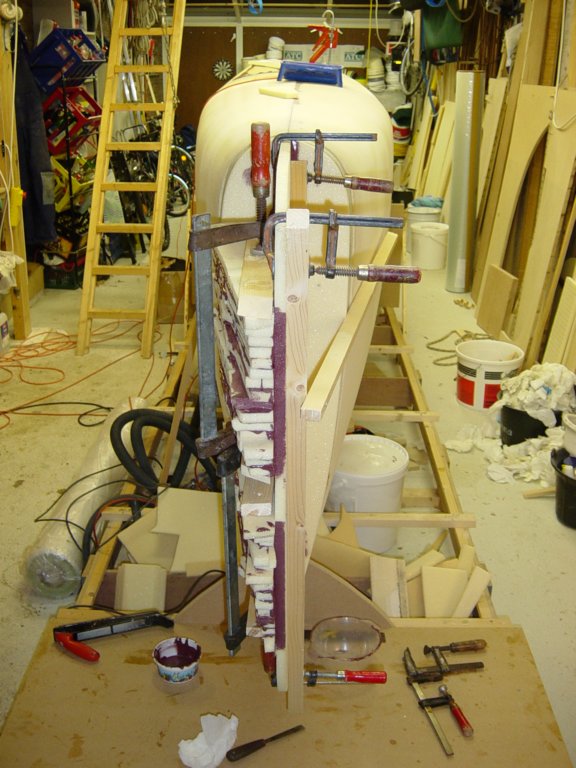
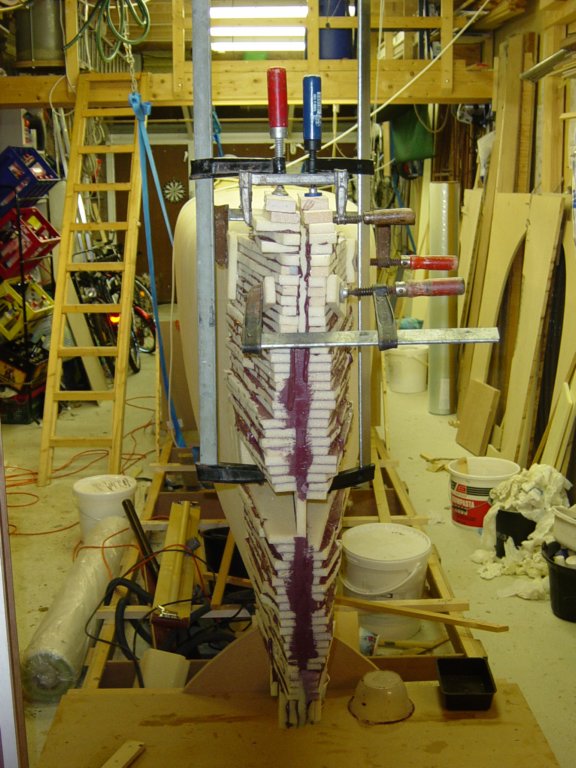
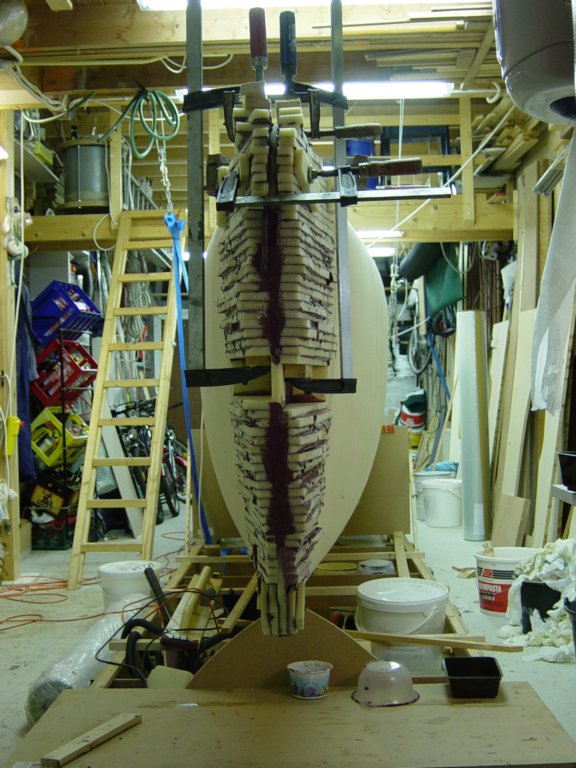
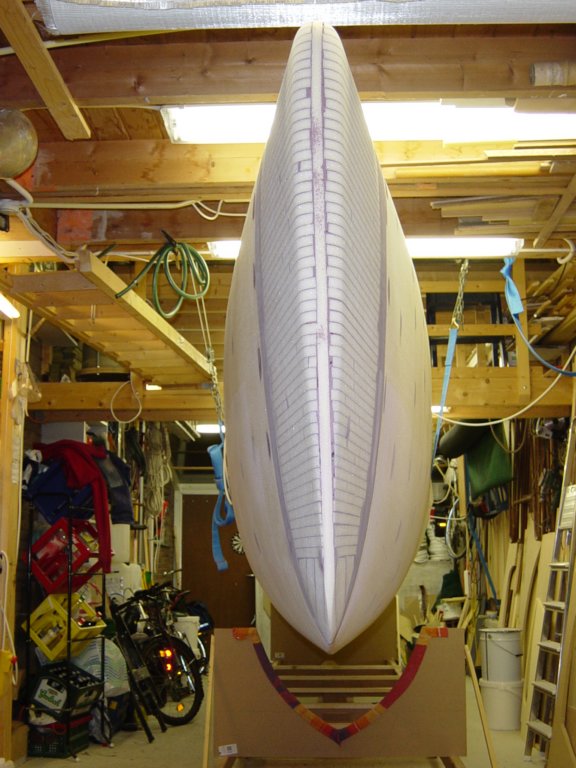
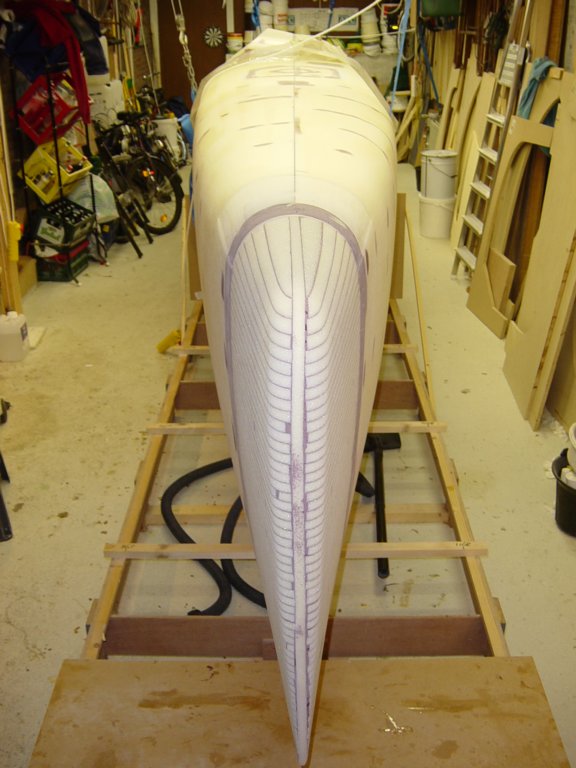
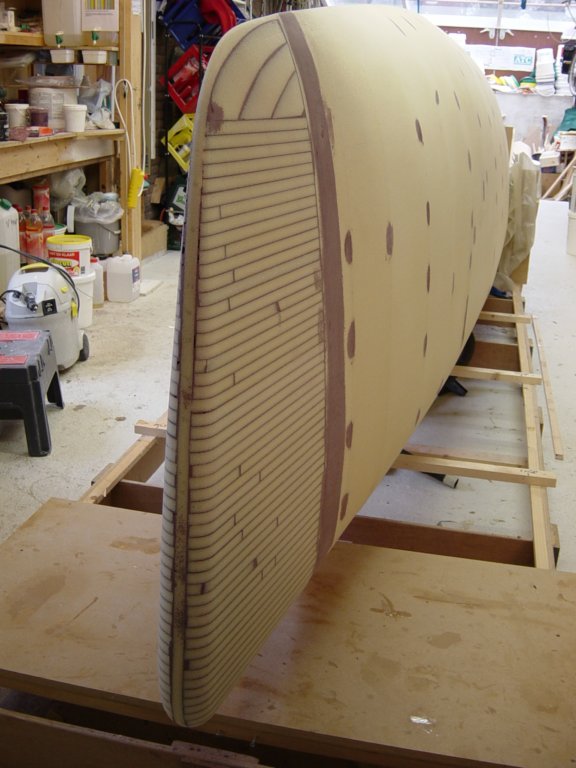
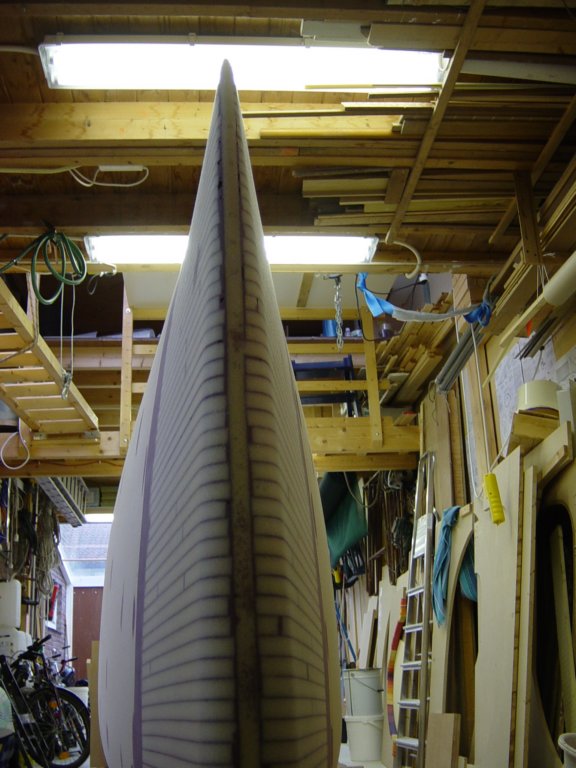
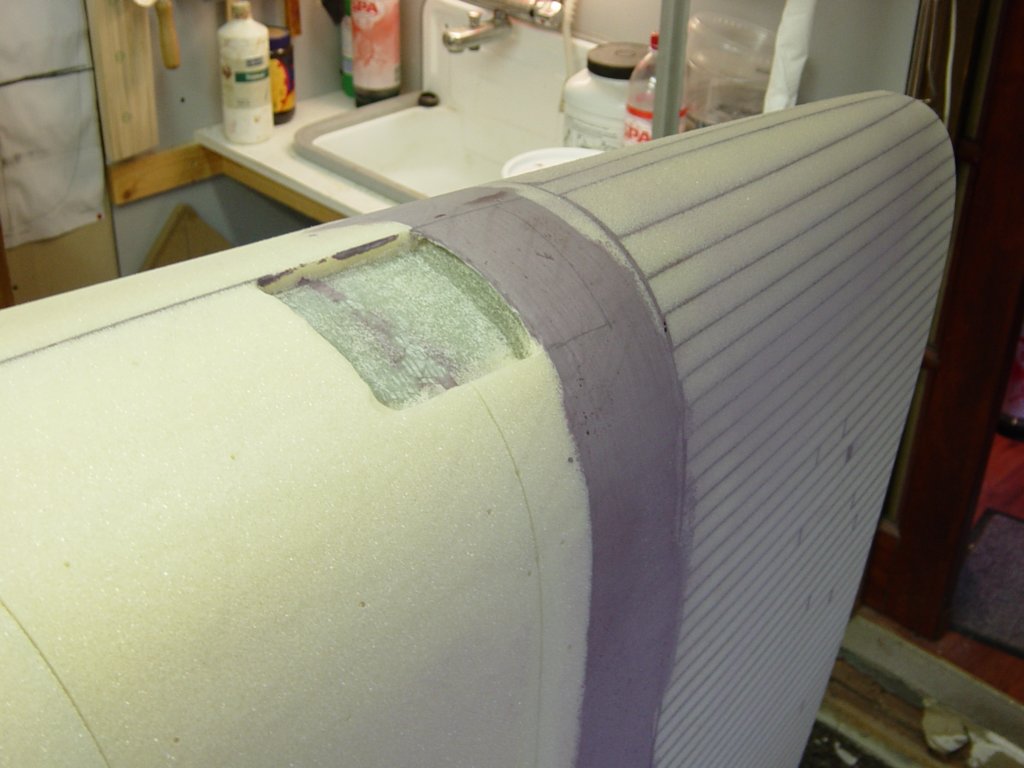
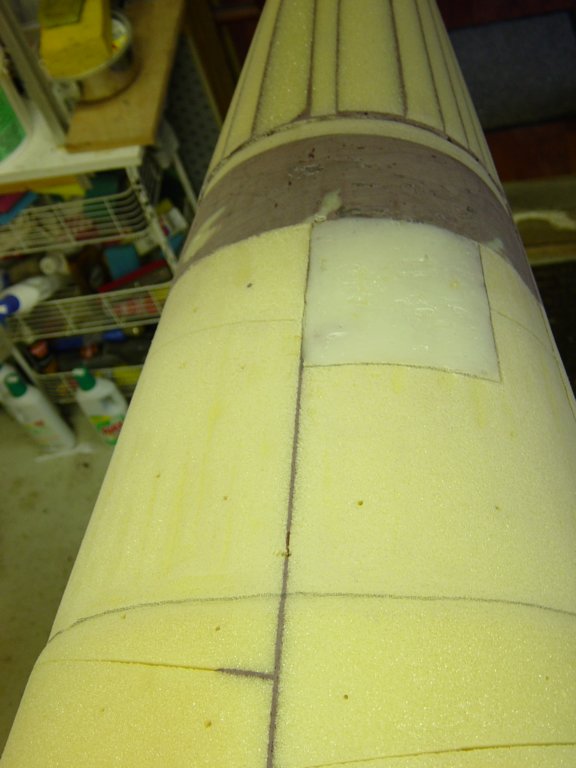
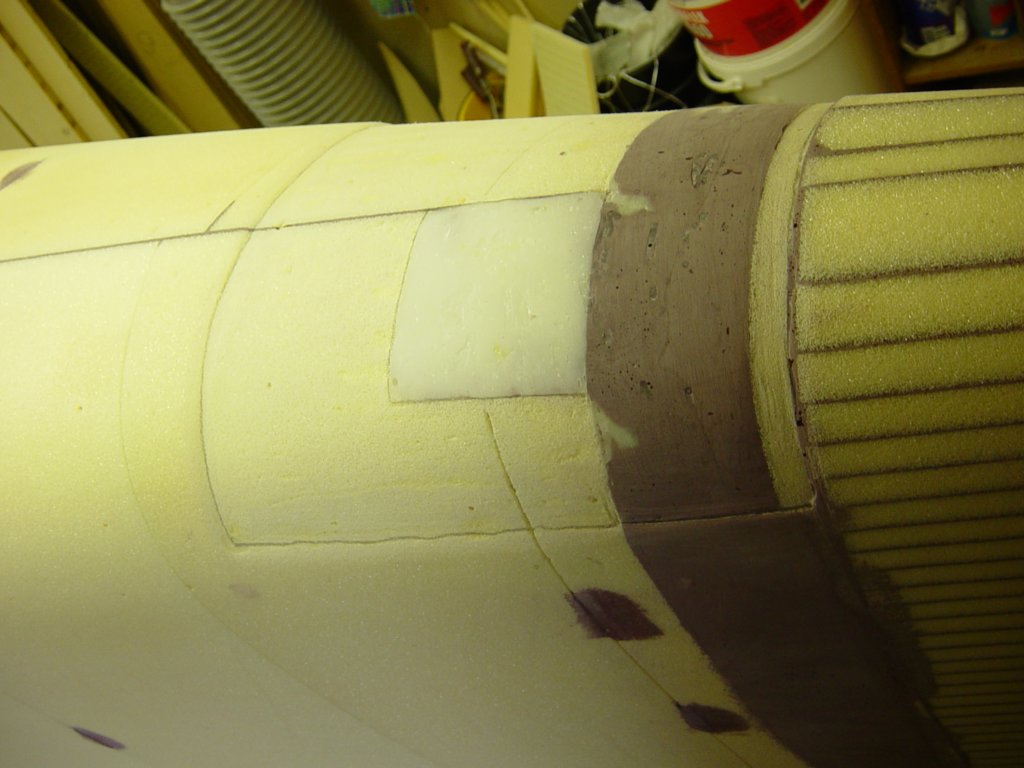
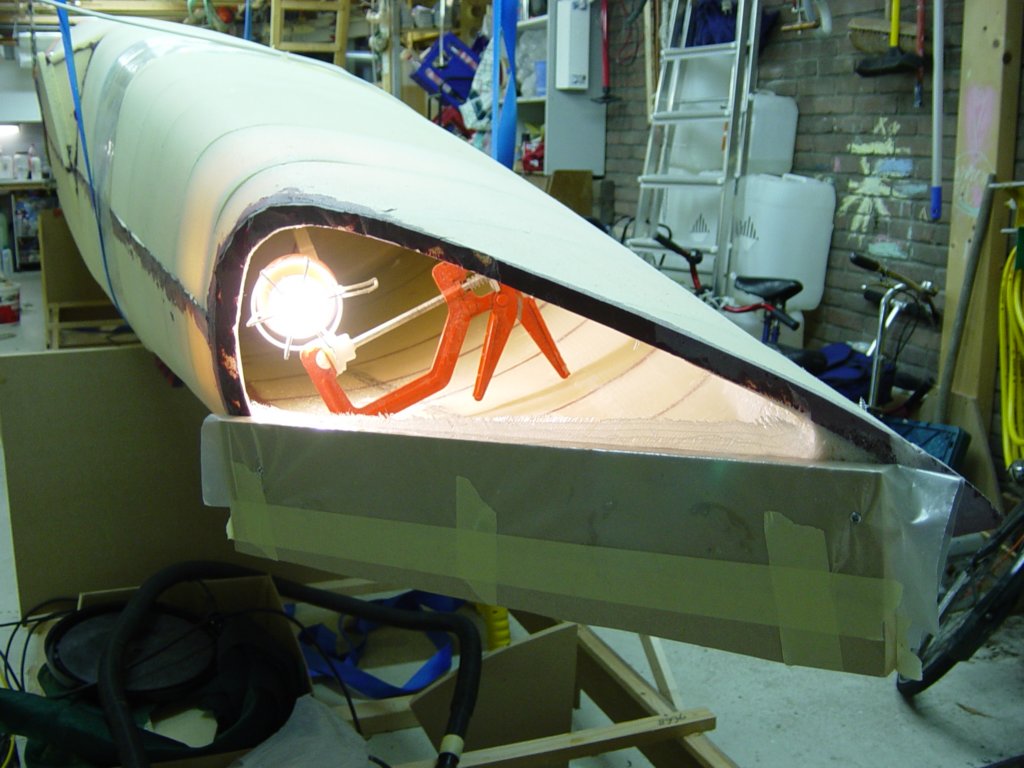
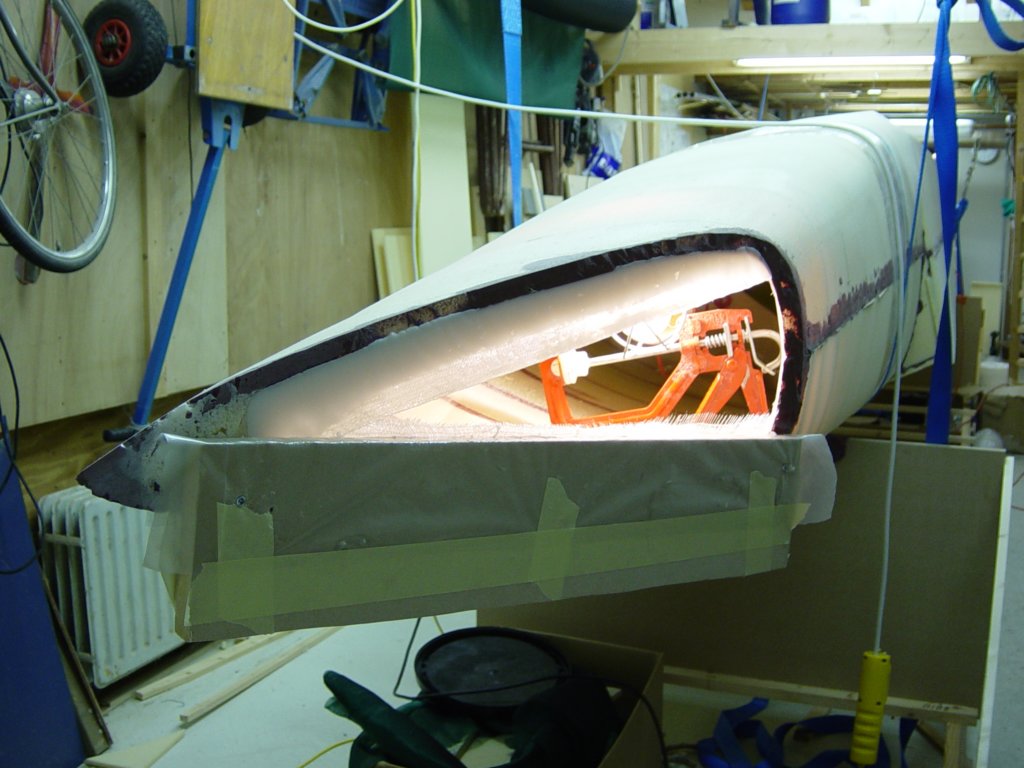
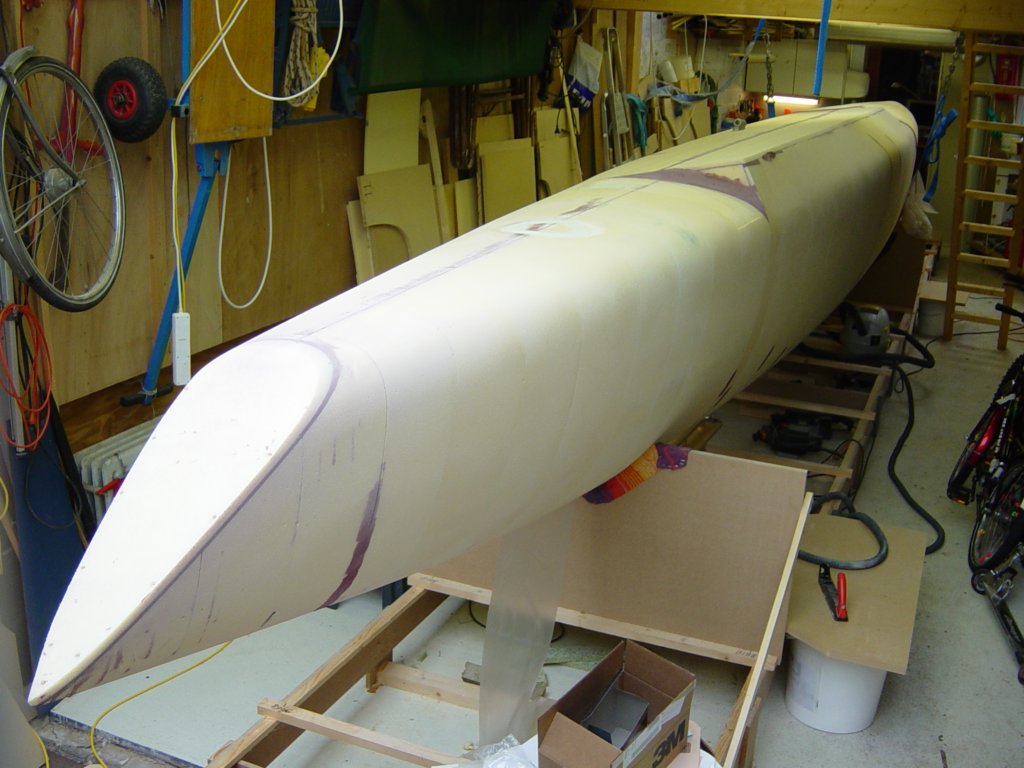
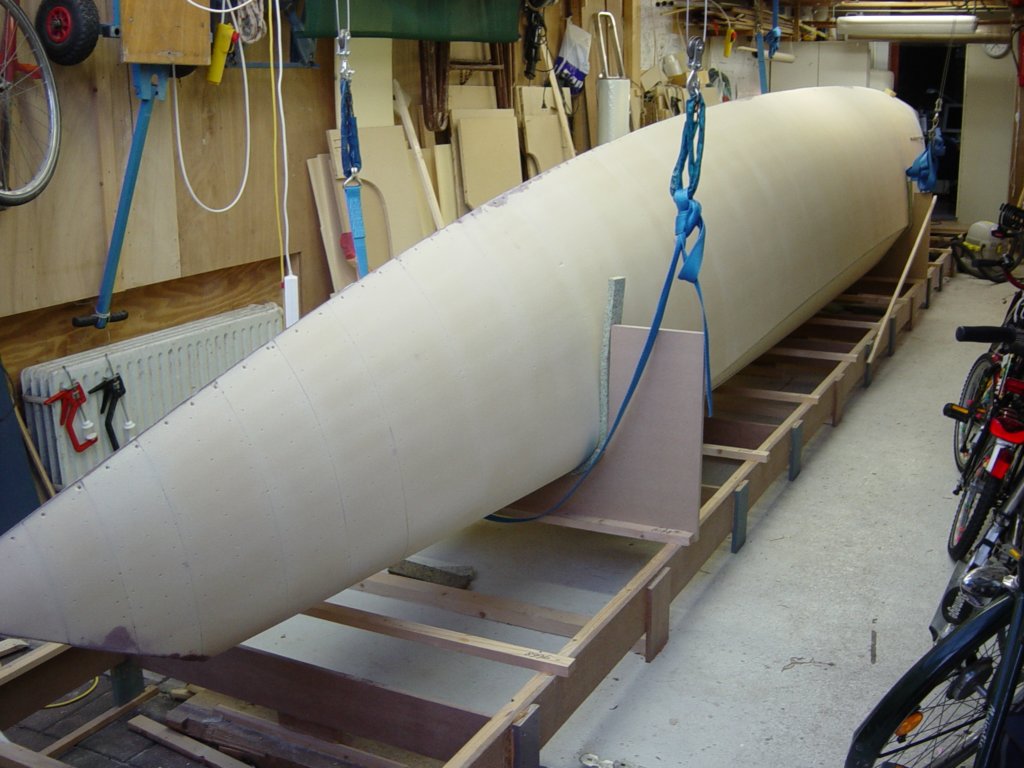
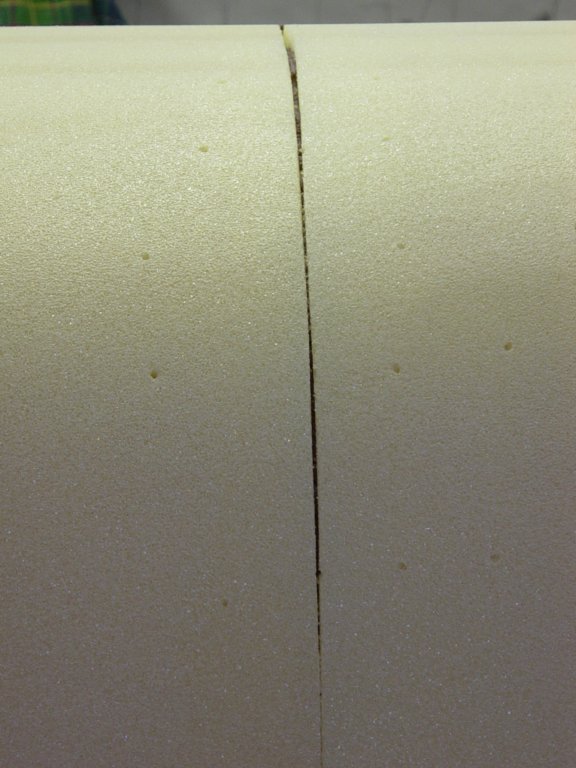
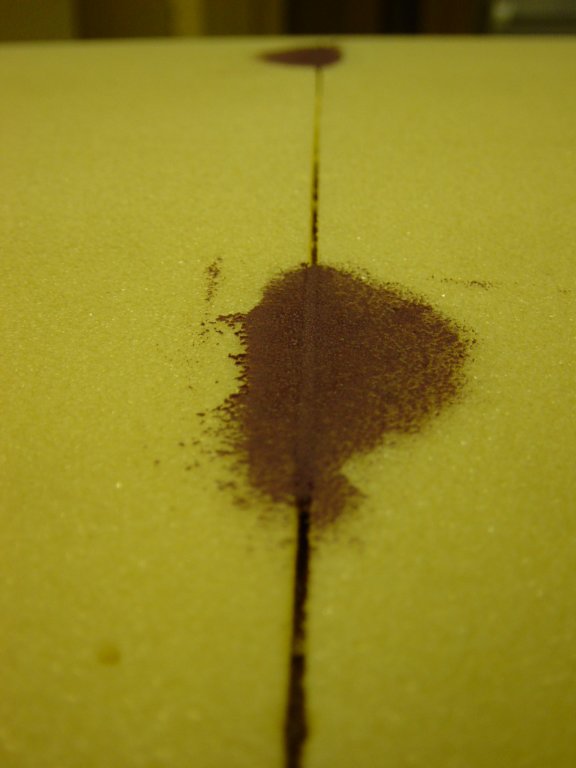
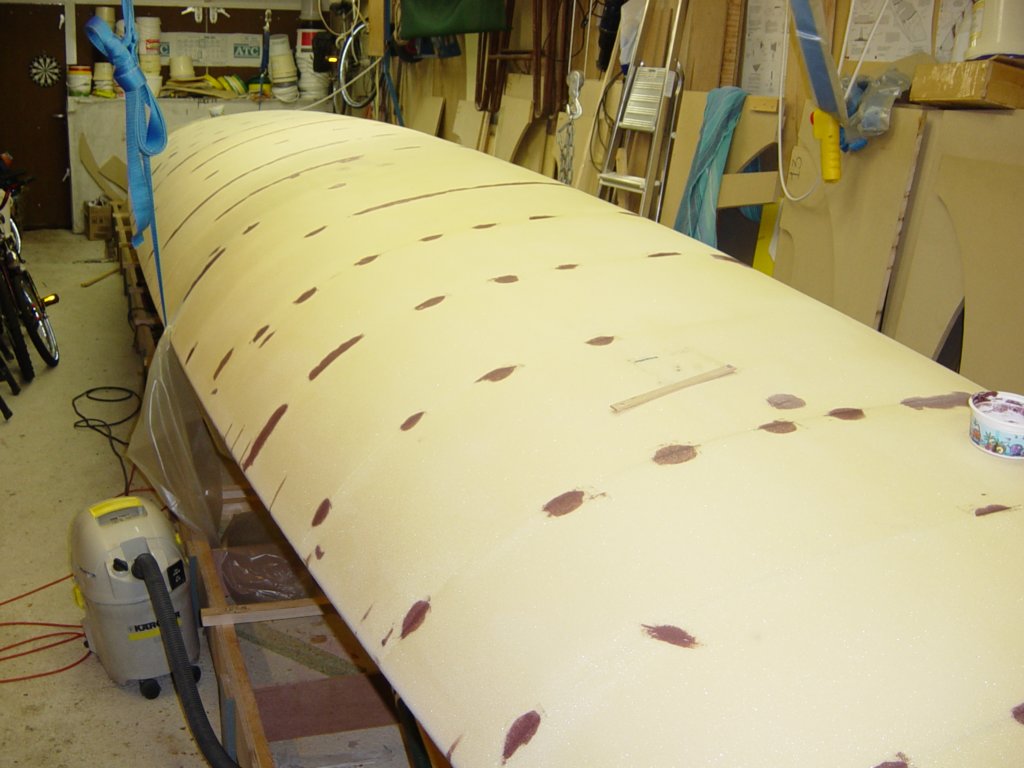
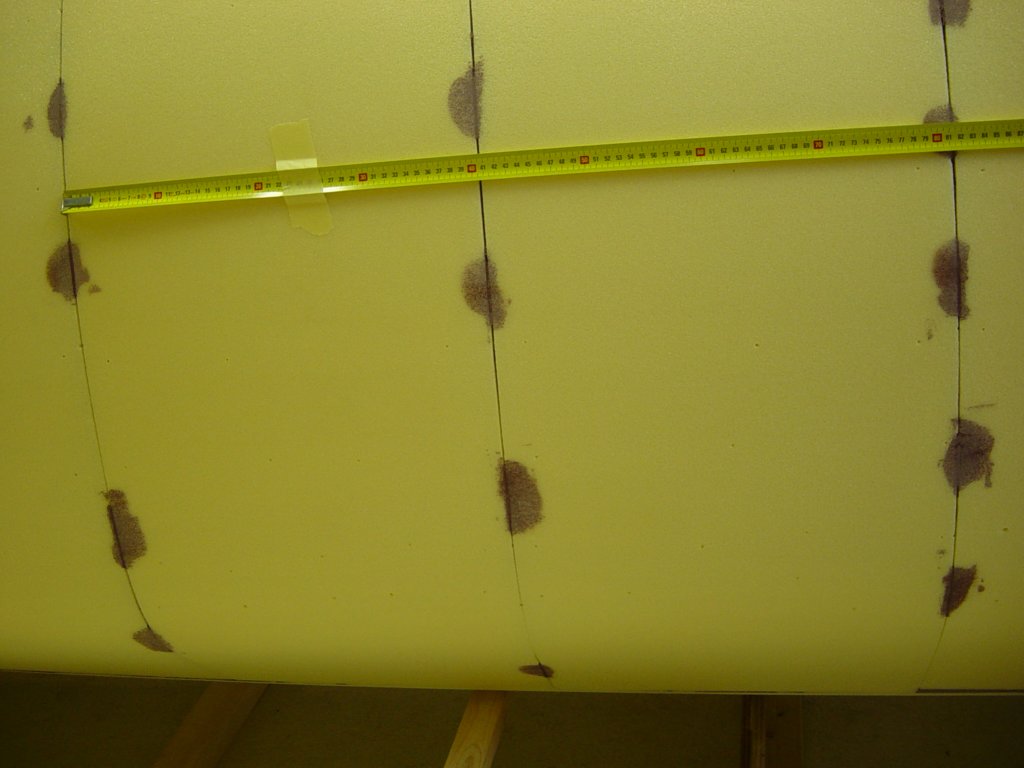
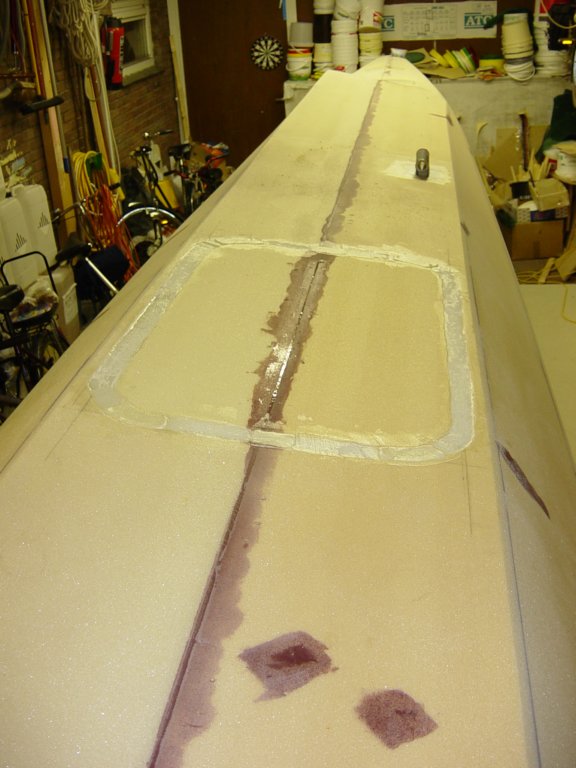
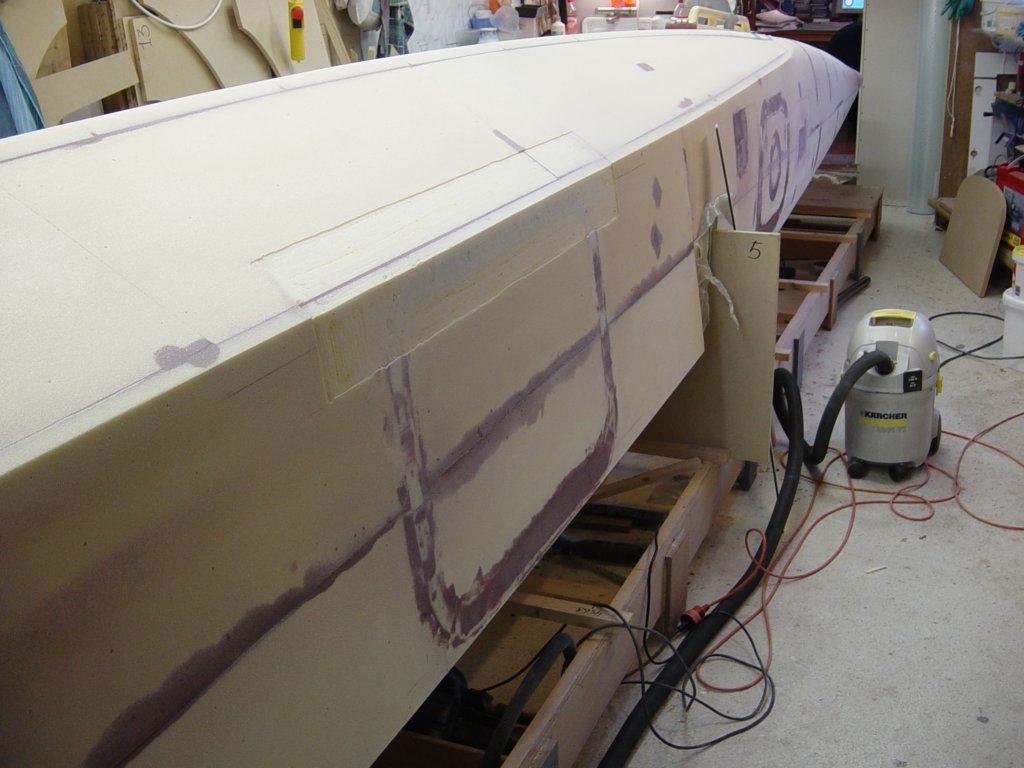
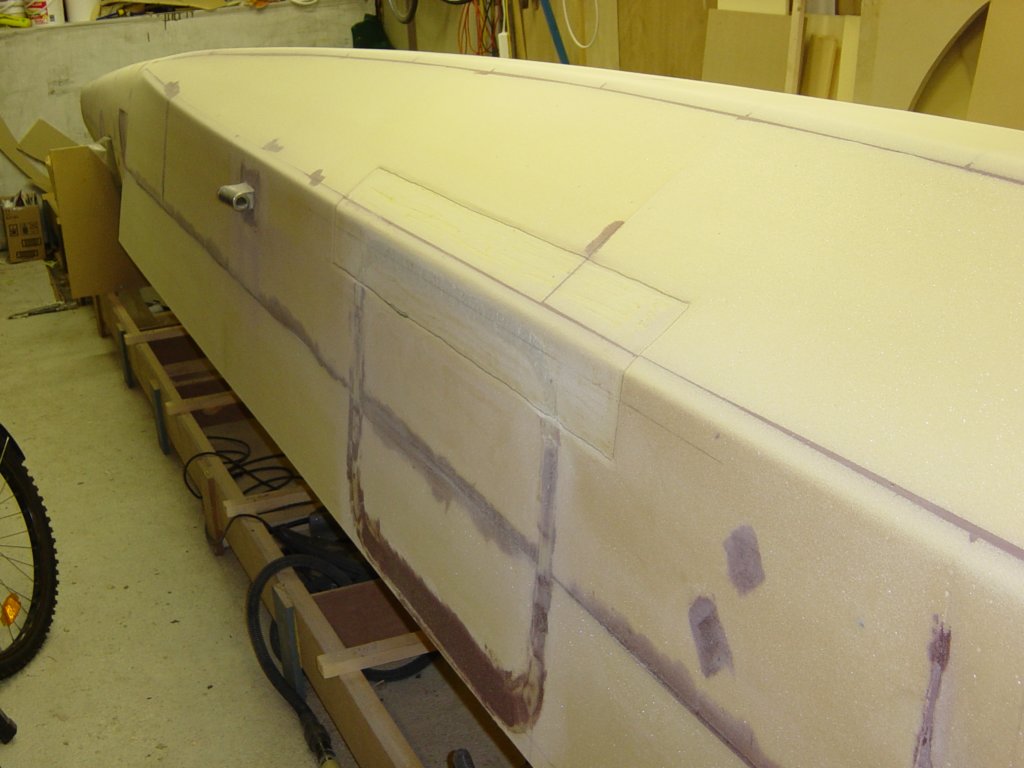
The lower hull half remains in the frames to preserve its correct shape, while the upper hull half—unsupported between the bulkheads—naturally deviates slightly. Once aligned accurately at bow, stern, and bulkhead stations, this is not a real problem. With a few temporary screws, the upper half is easily pulled into the correct shape. After applying bog between the halves and taping the bulkheads internally, the joined hull is already strong enough to be released from the frames. Turned into a convenient working position, it becomes possible to laminate the keel and deck seams from the inside. At moments like these, I am particularly happy with the four electric hoists in the ceiling, which allow me to lift and rotate the hull on my own.
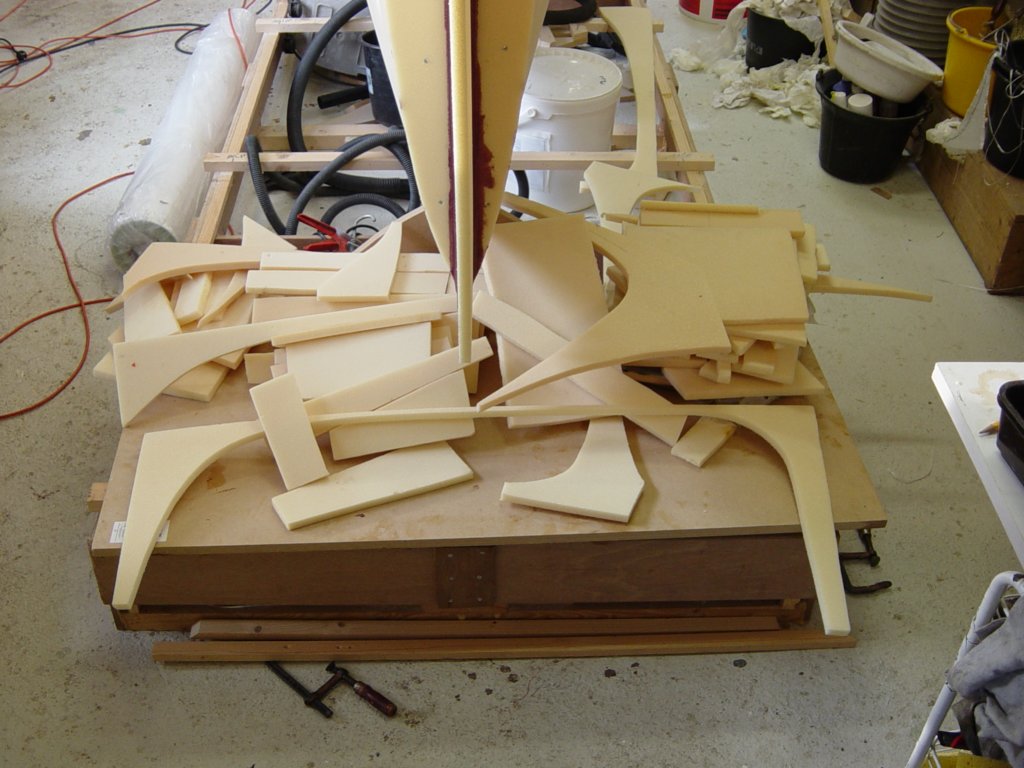
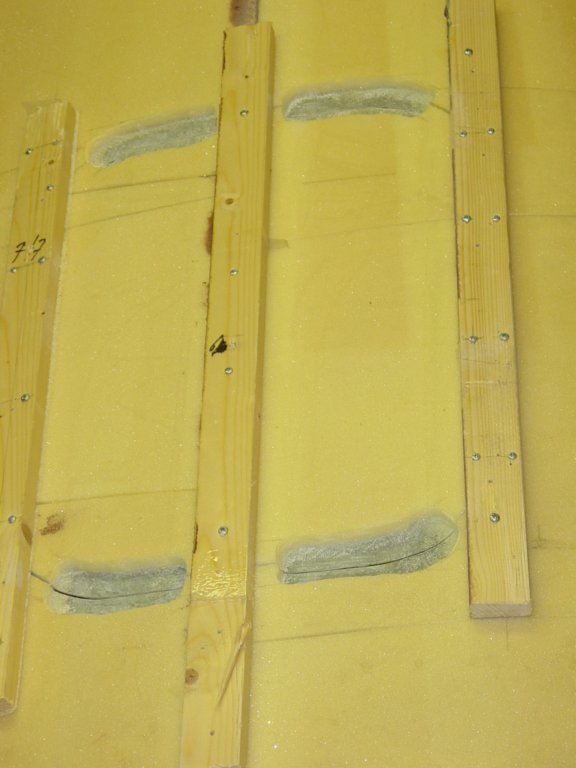
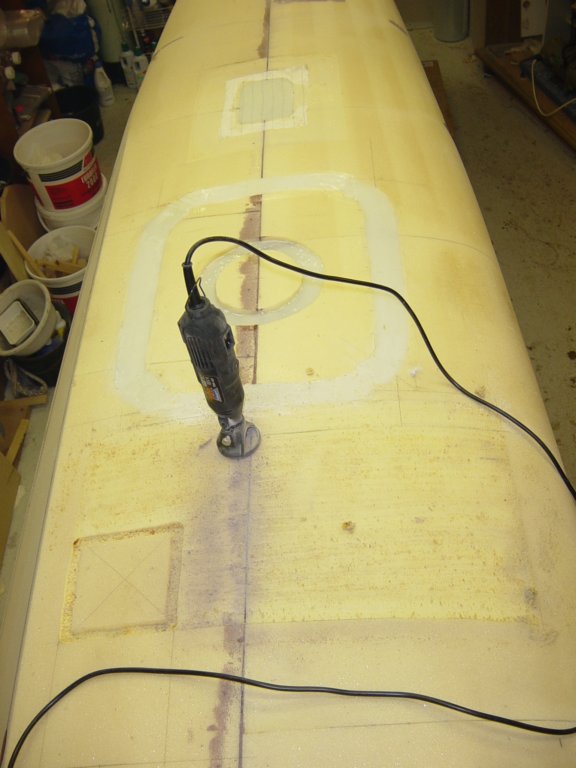
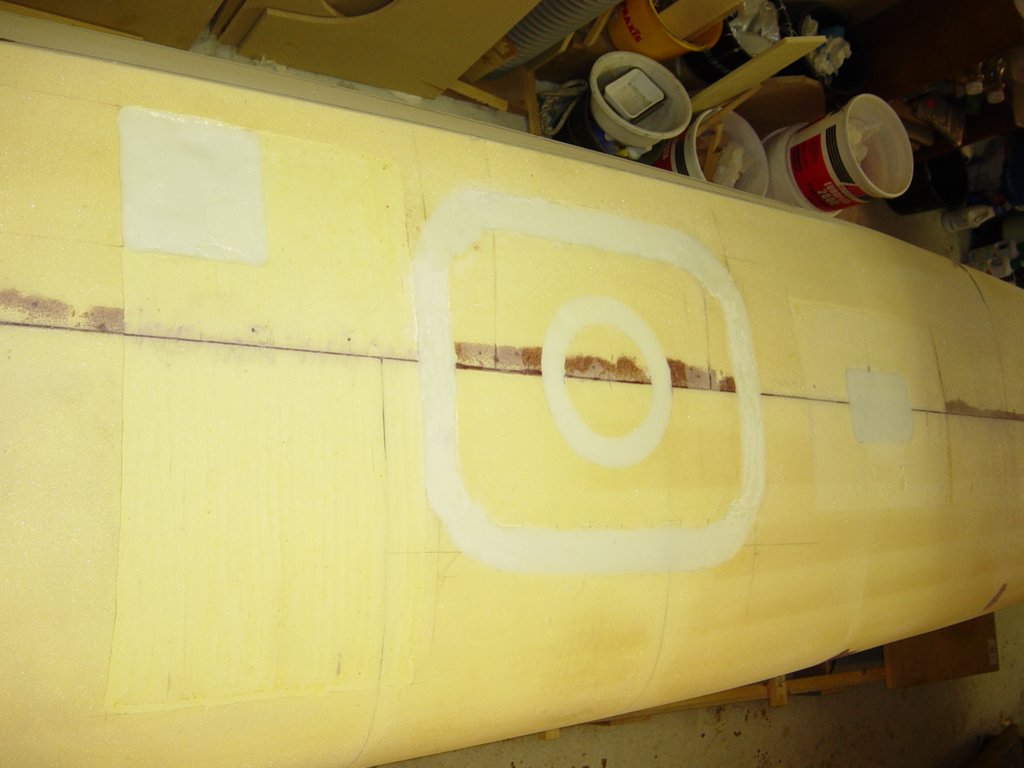
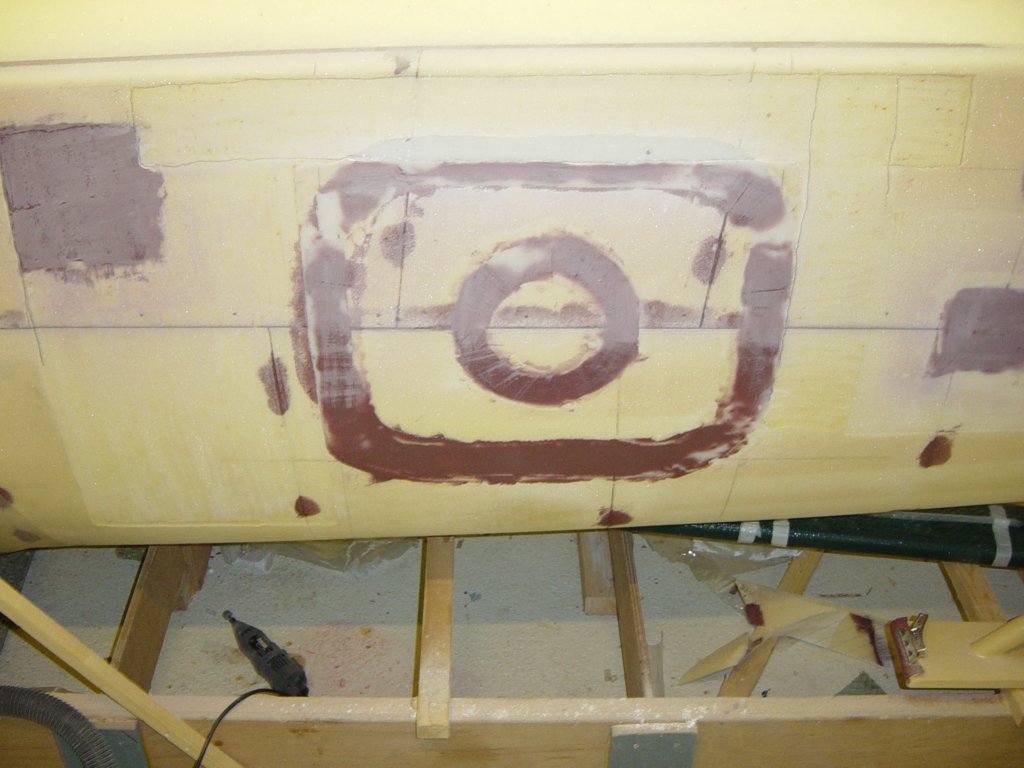
This photo gallery (57 images) documents the full assembly of the port float: aligning and joining the hull halves, internal taping of keel and deck seams, closing bow and stern, shaping the sacrificial bow, and preparing the foam hull for final infusion.