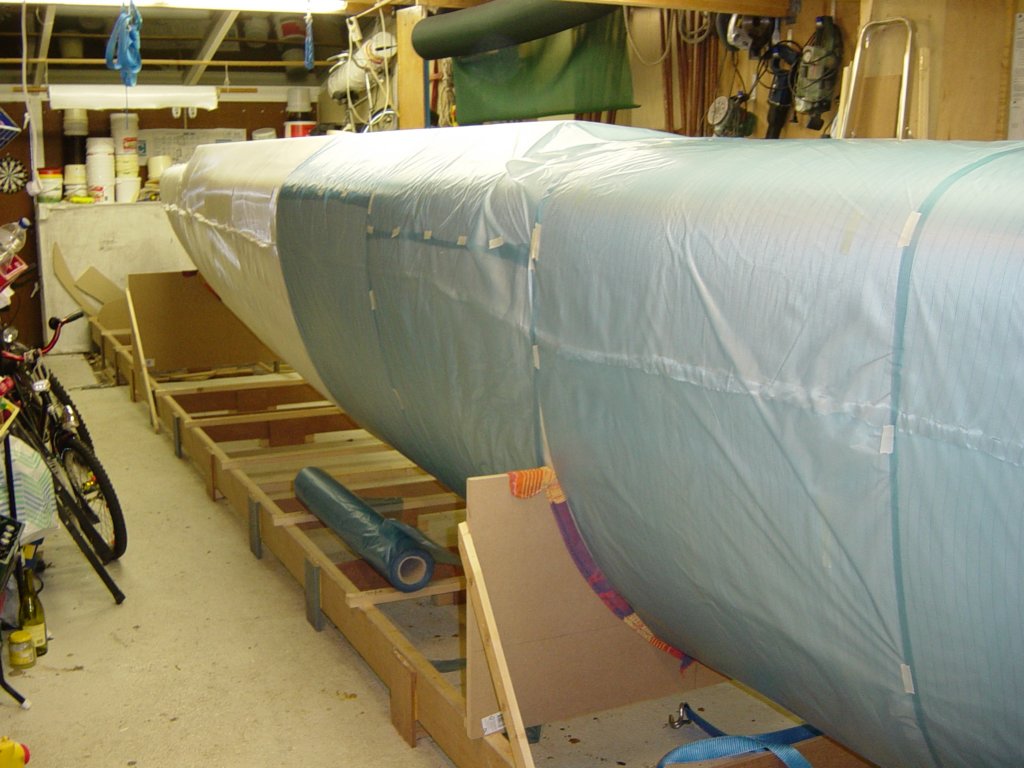
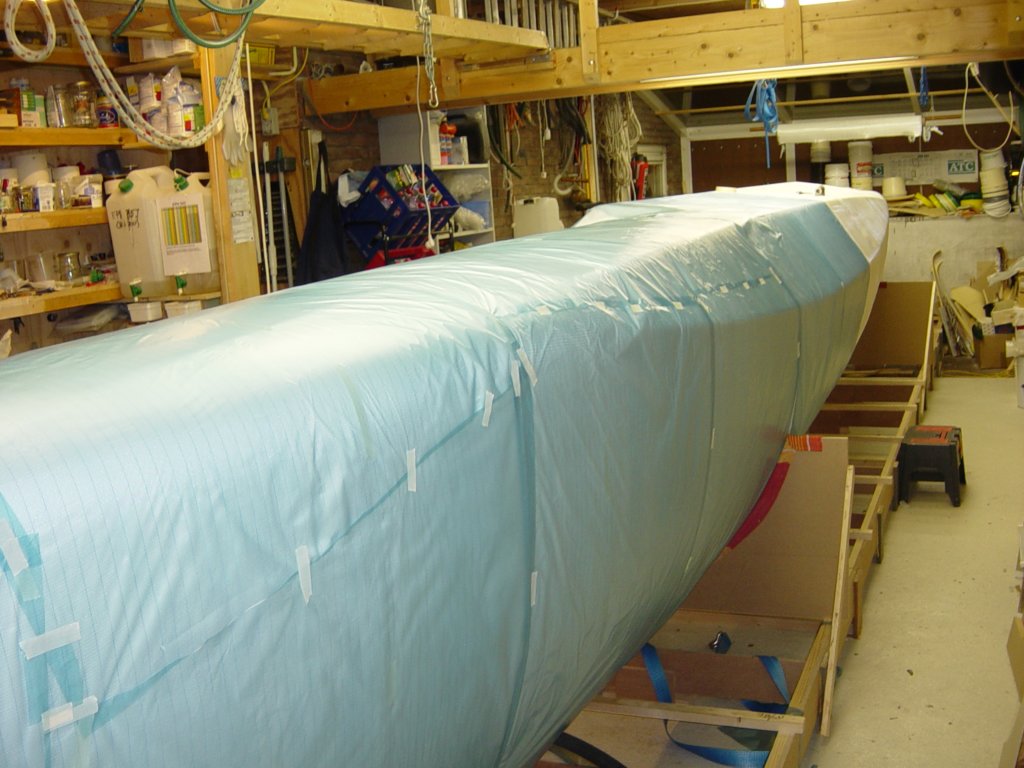
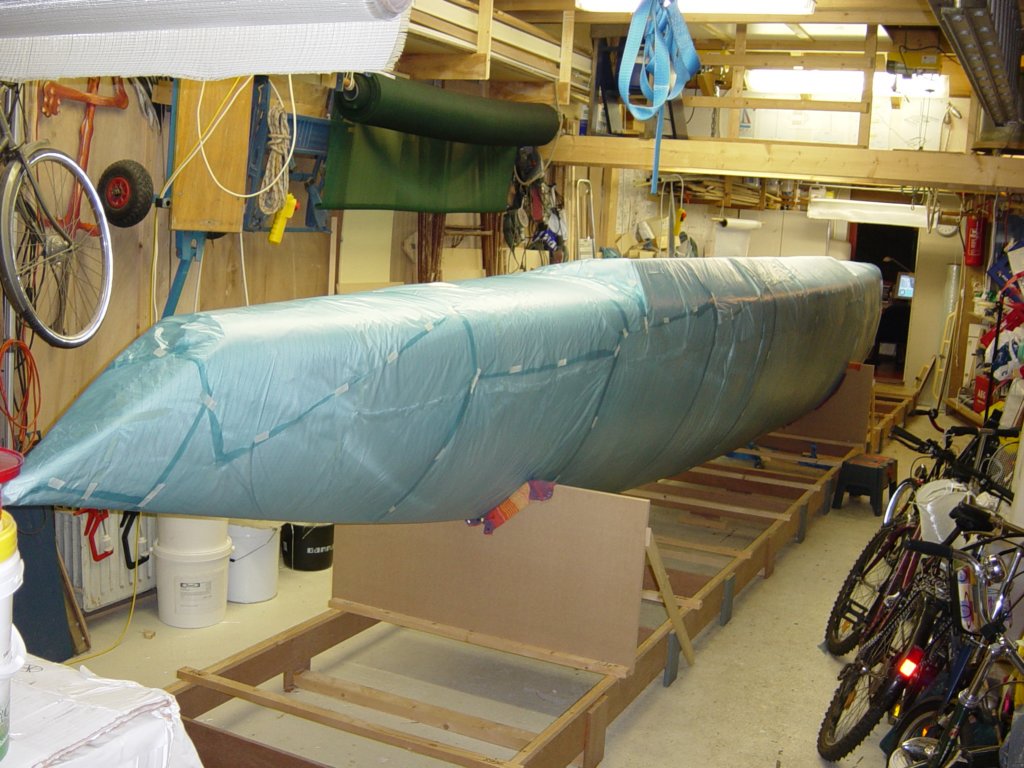
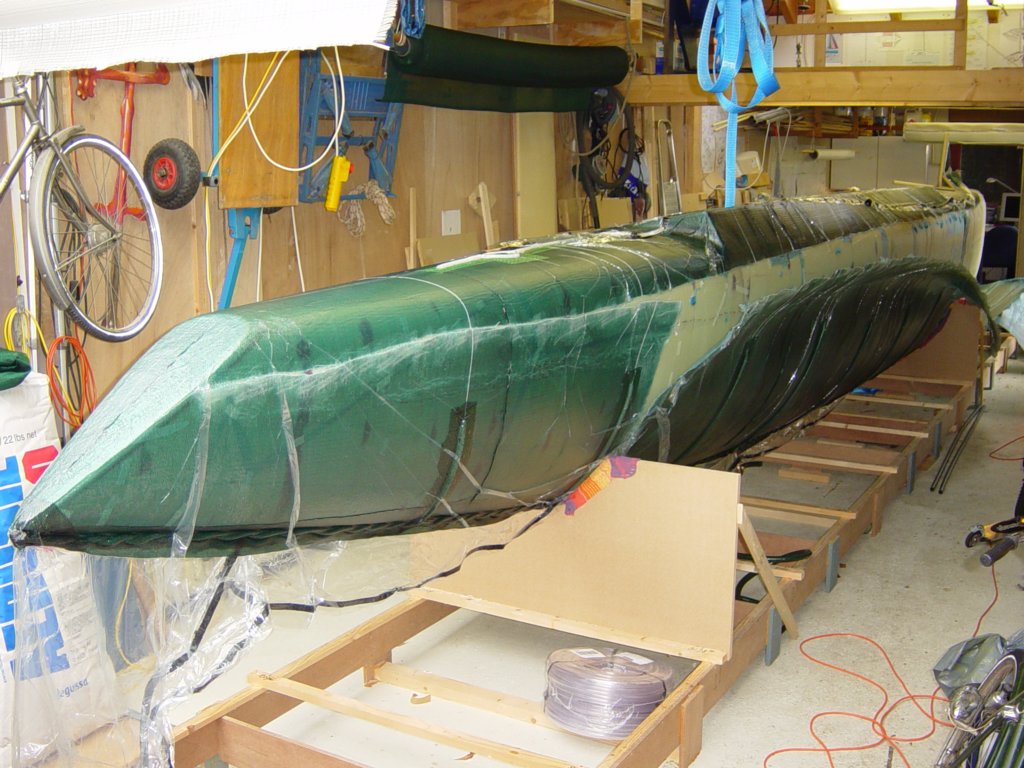
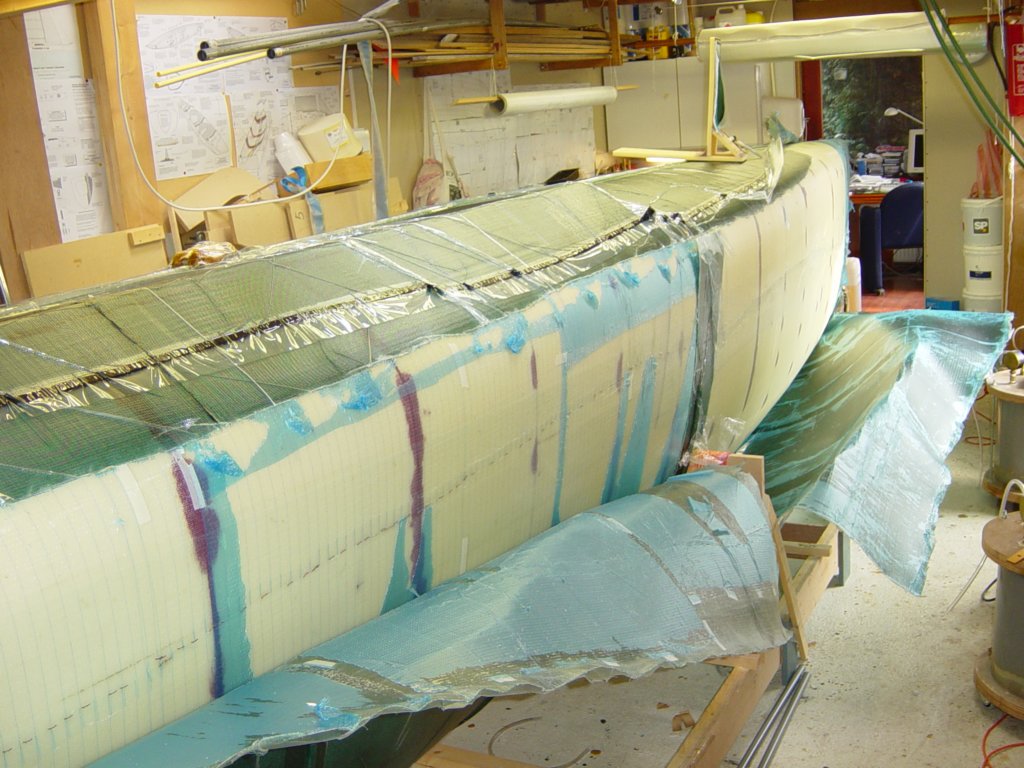
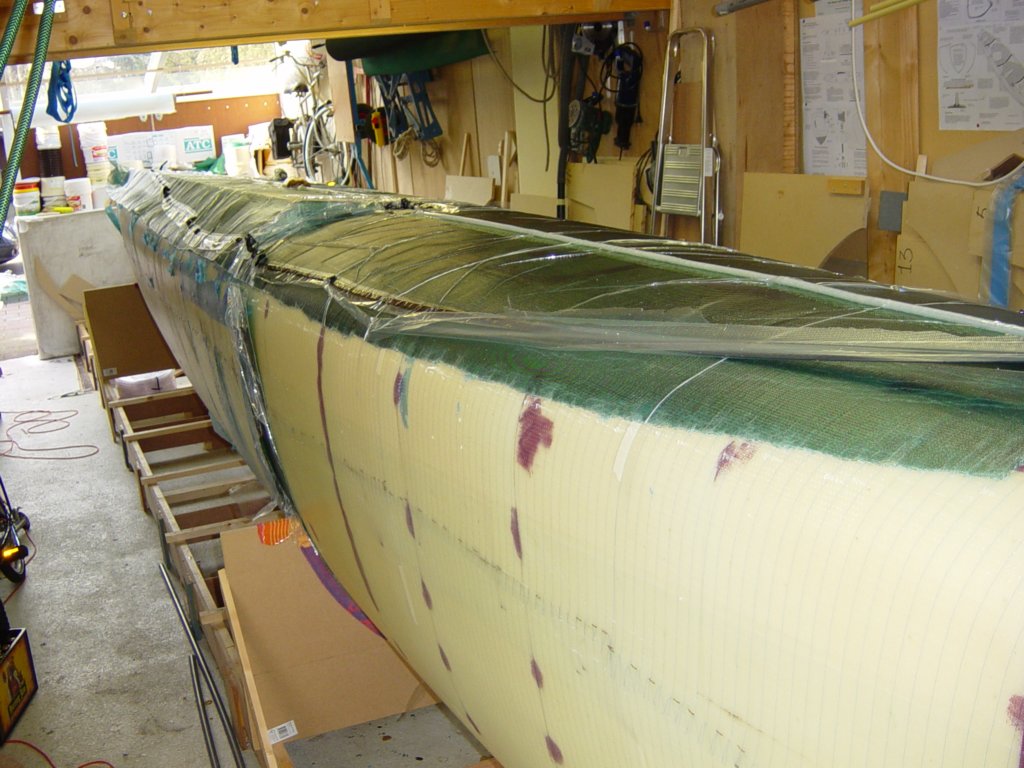
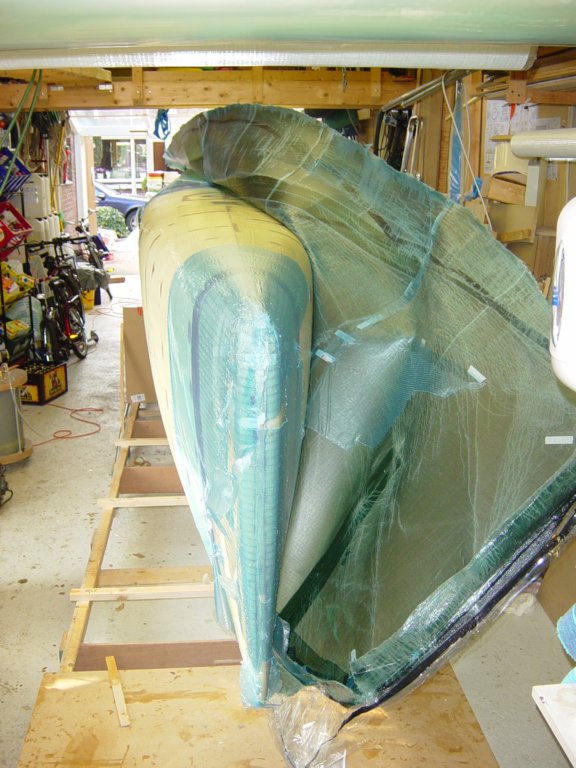
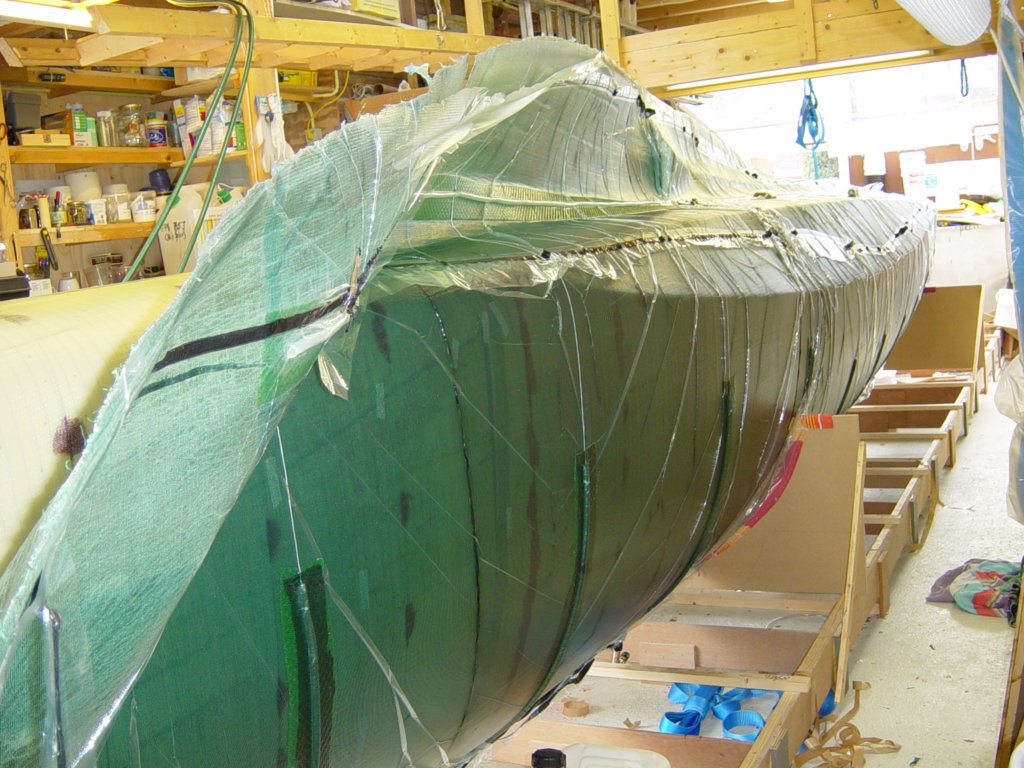
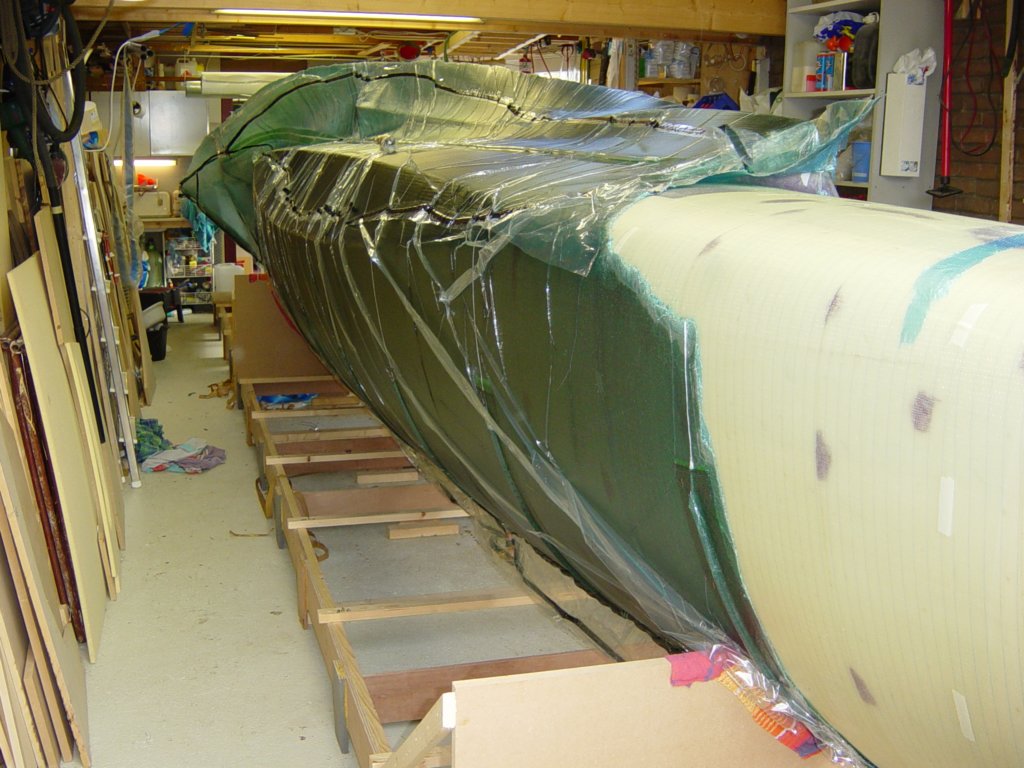
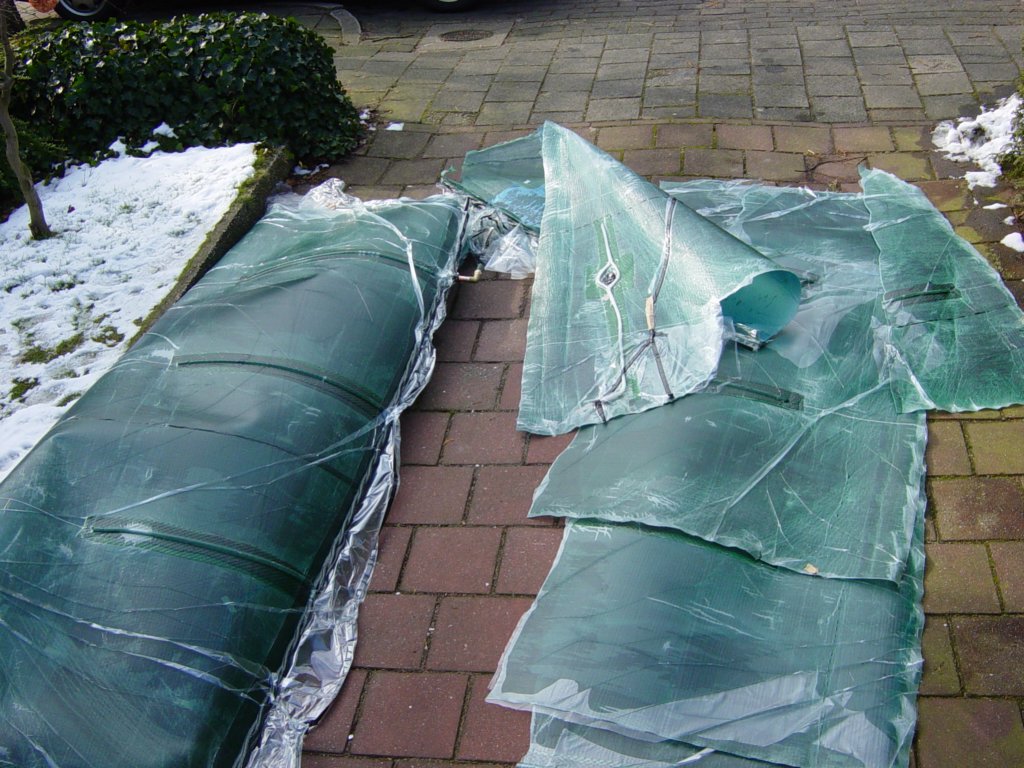
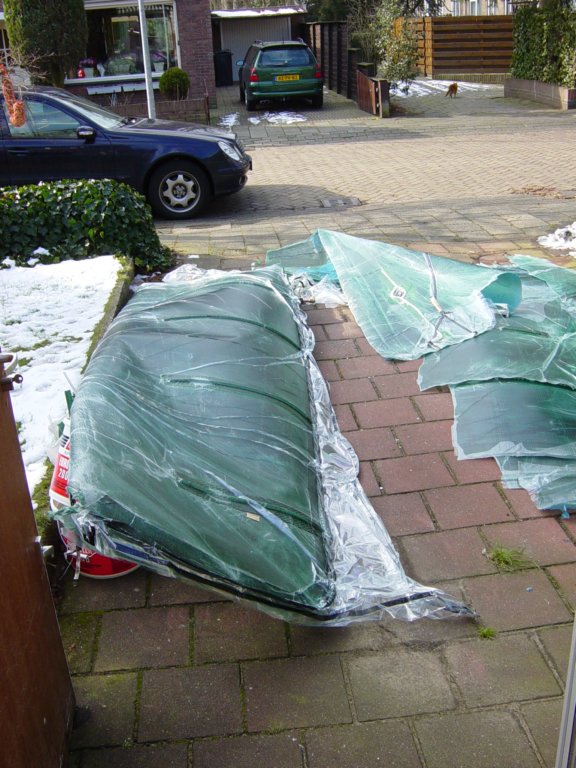
The final and decisive step for this hull: laminating the entire exterior in a single, controlled vacuum infusion.
External laminate in one infusion shot
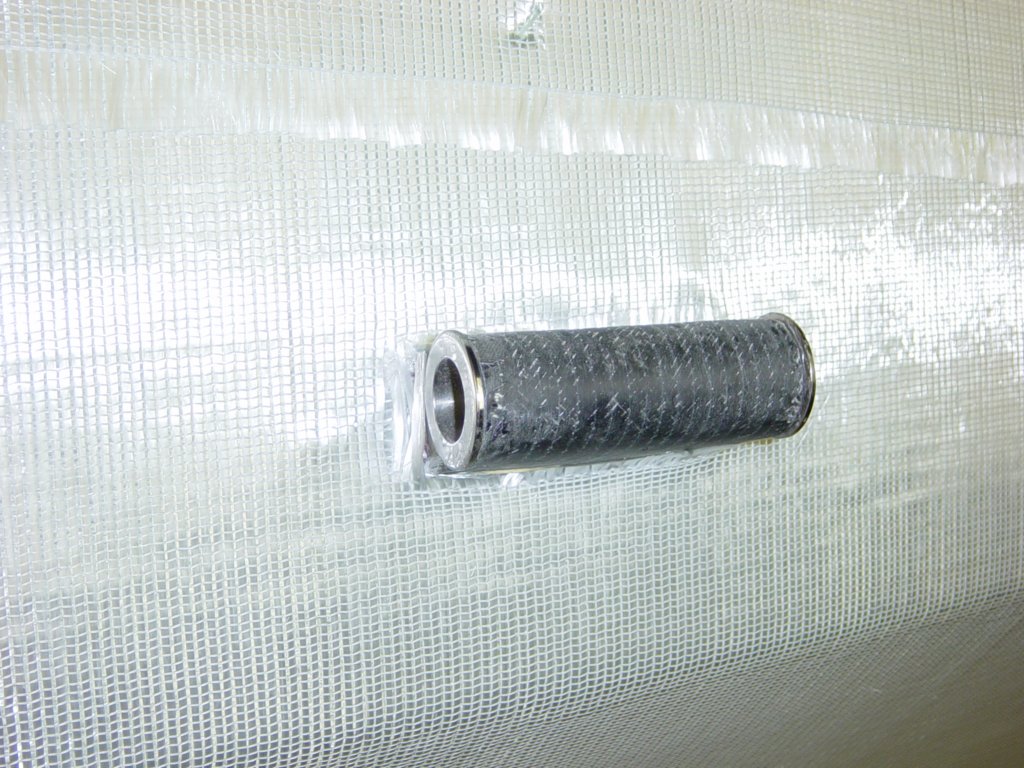
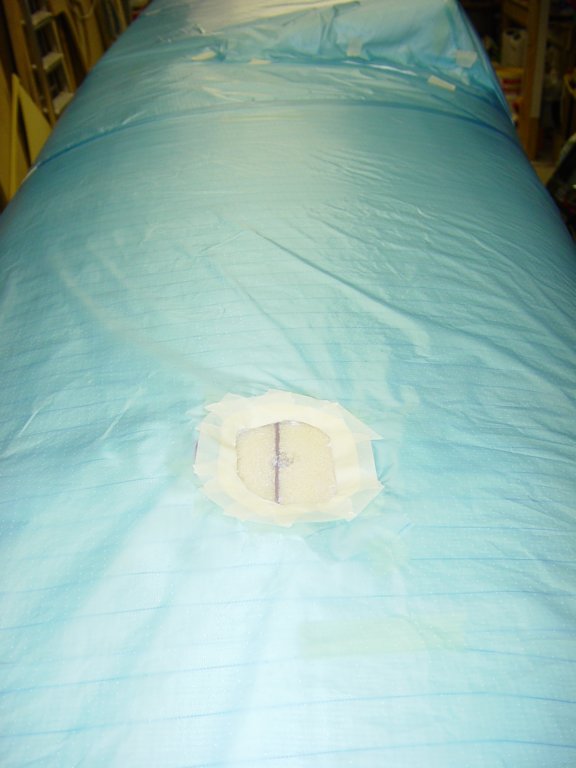
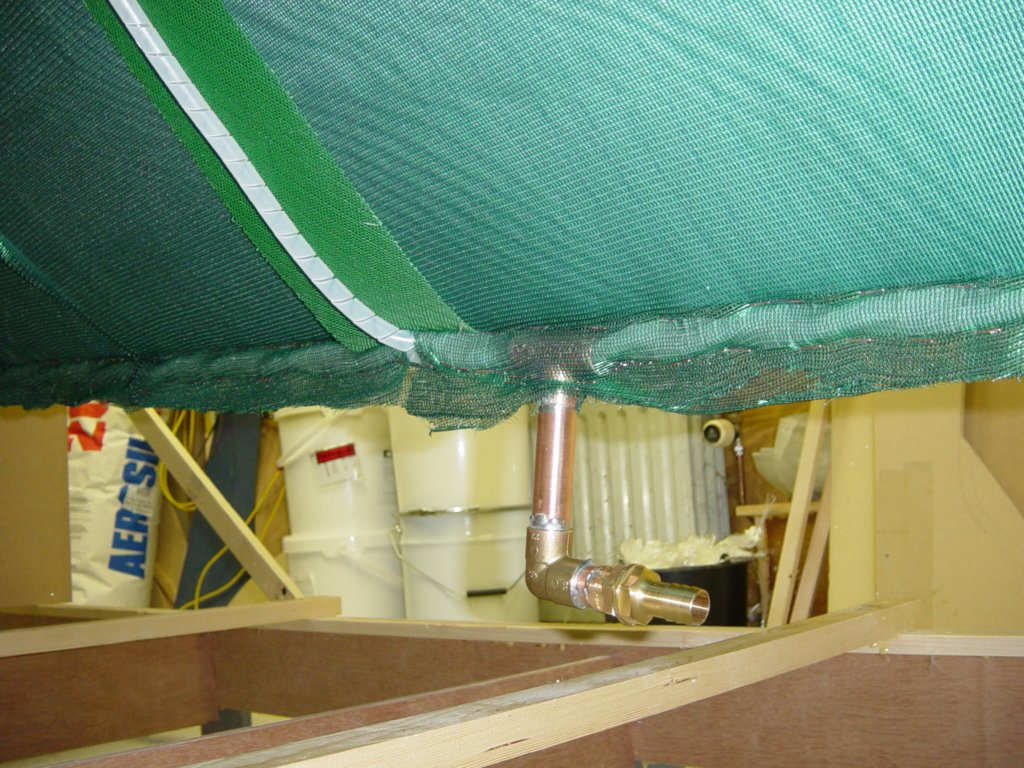
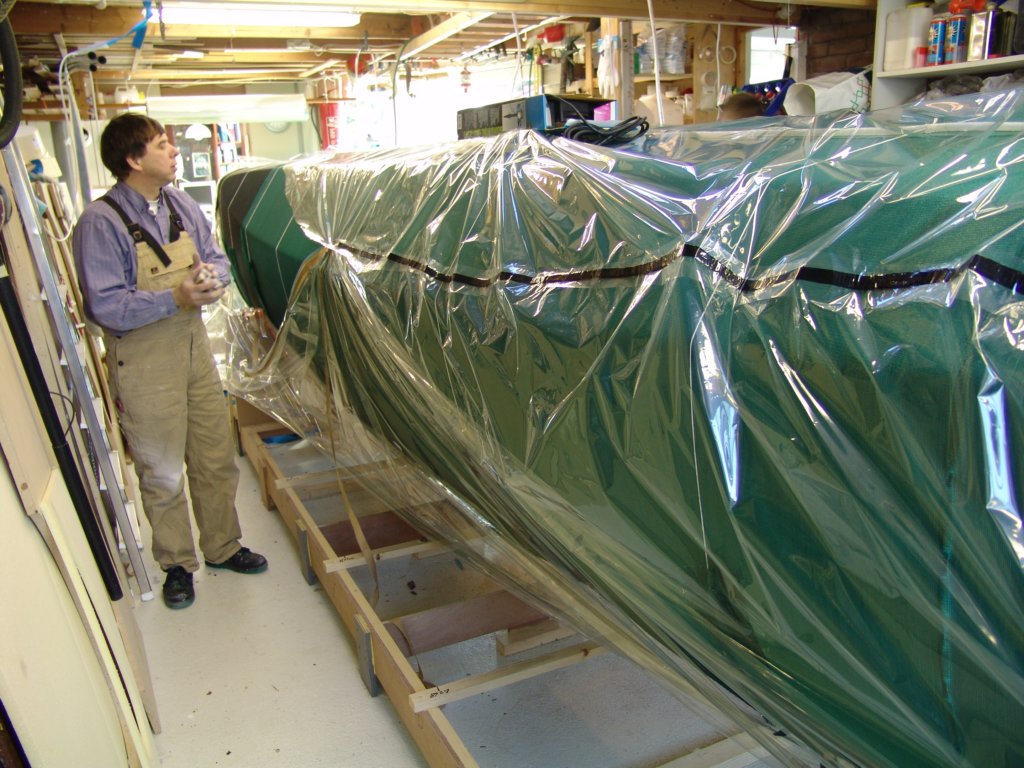
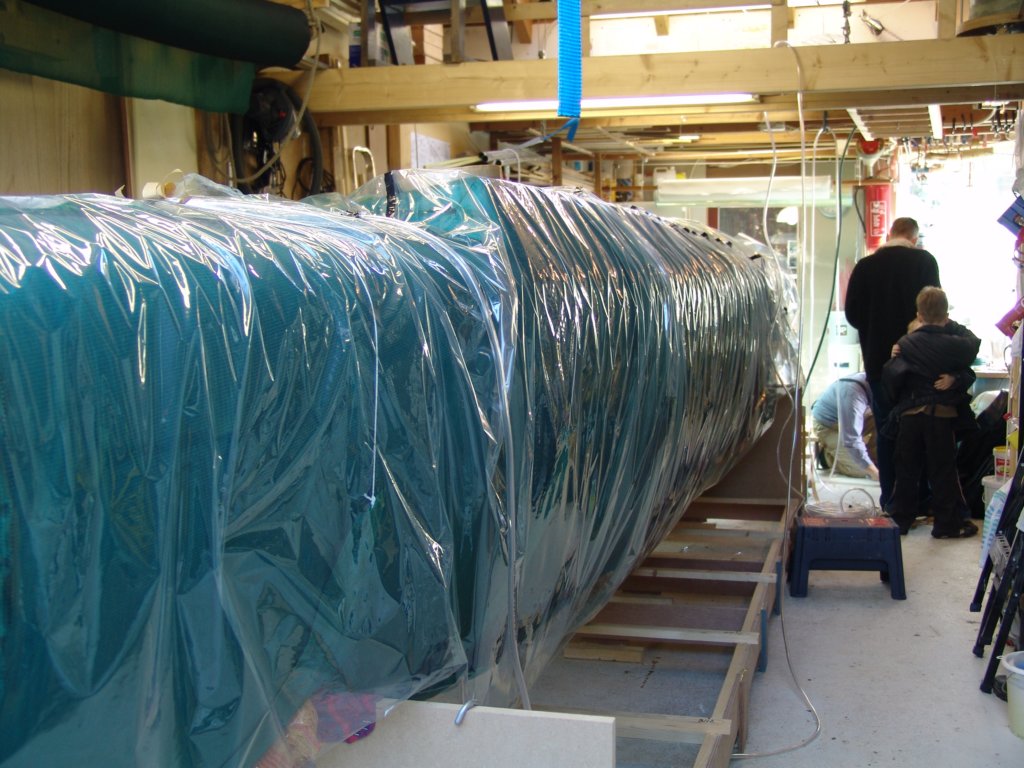
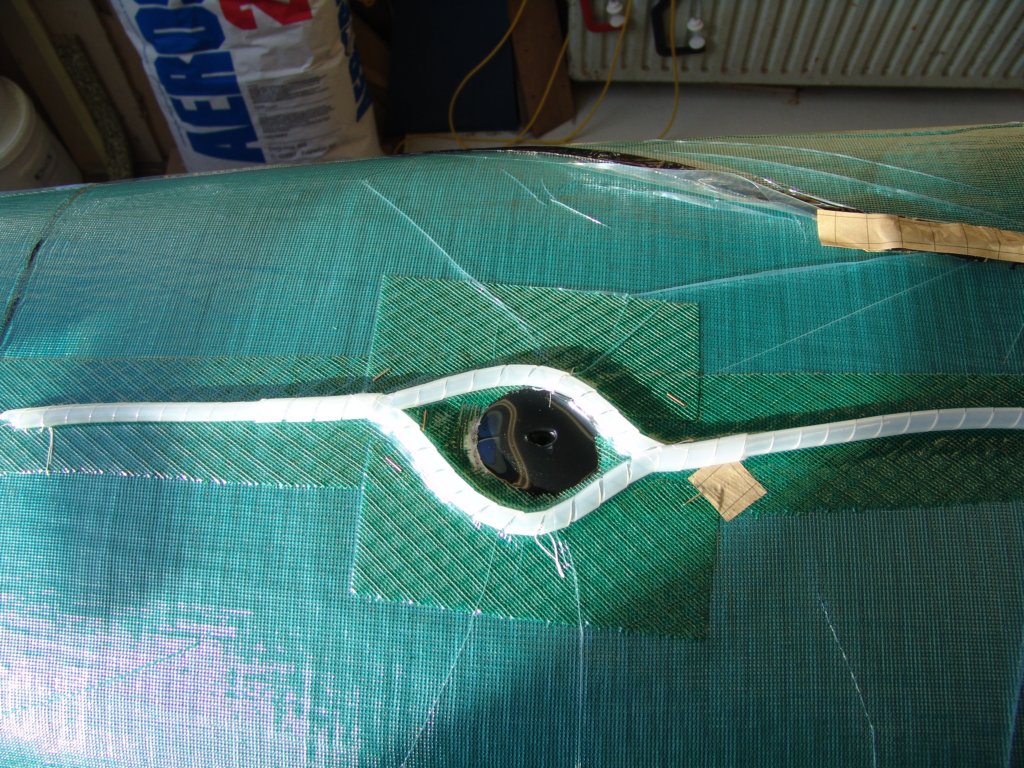
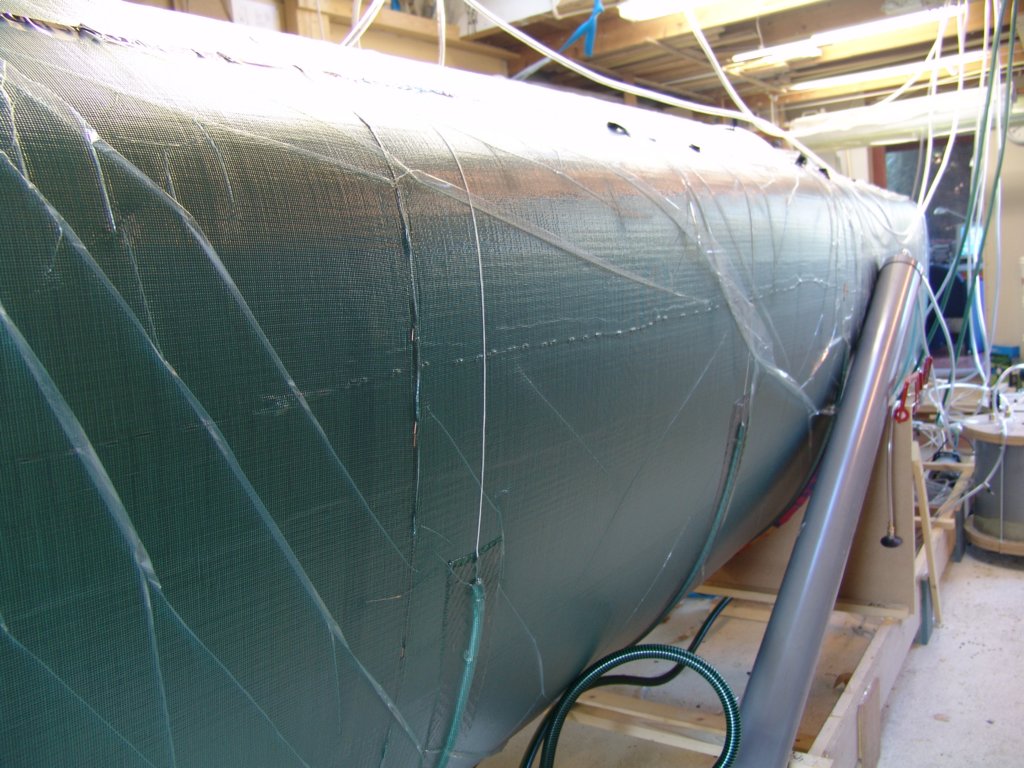
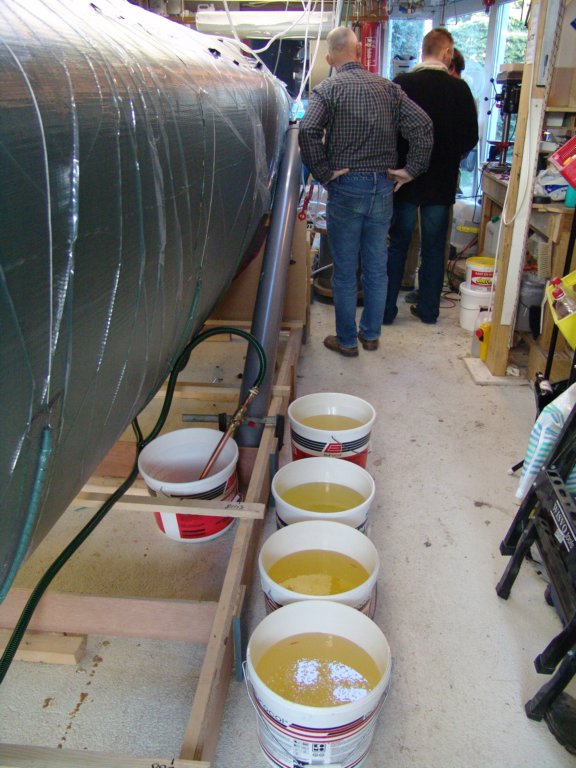
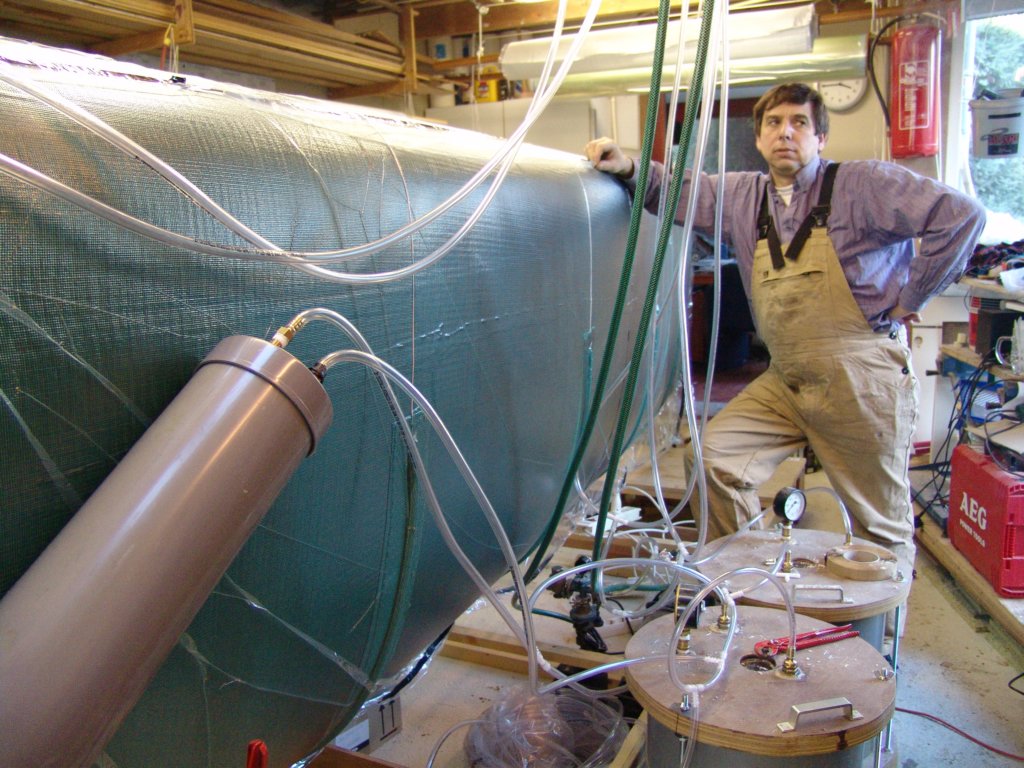
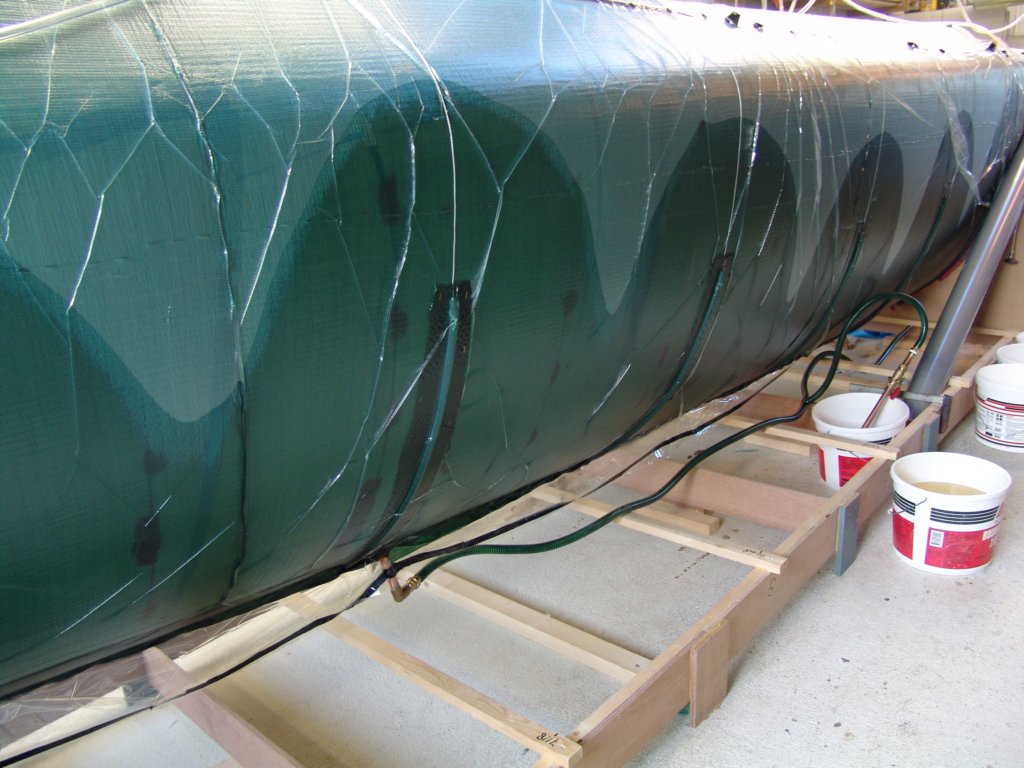
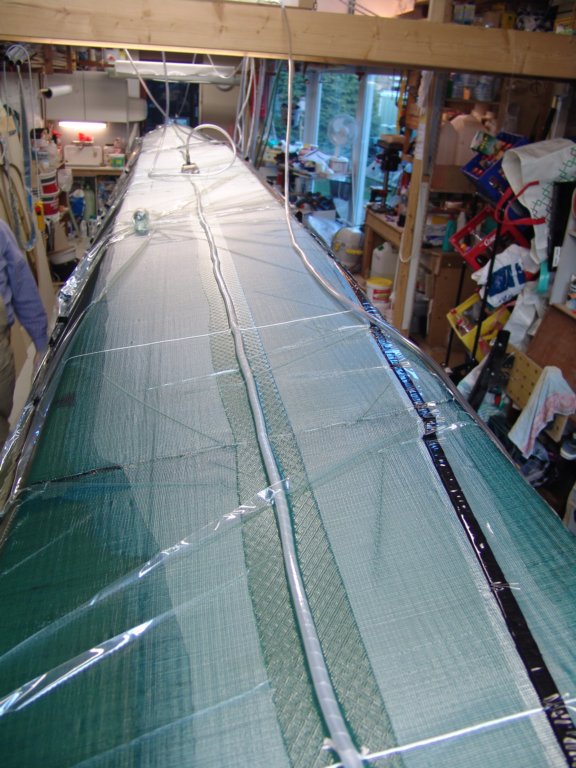
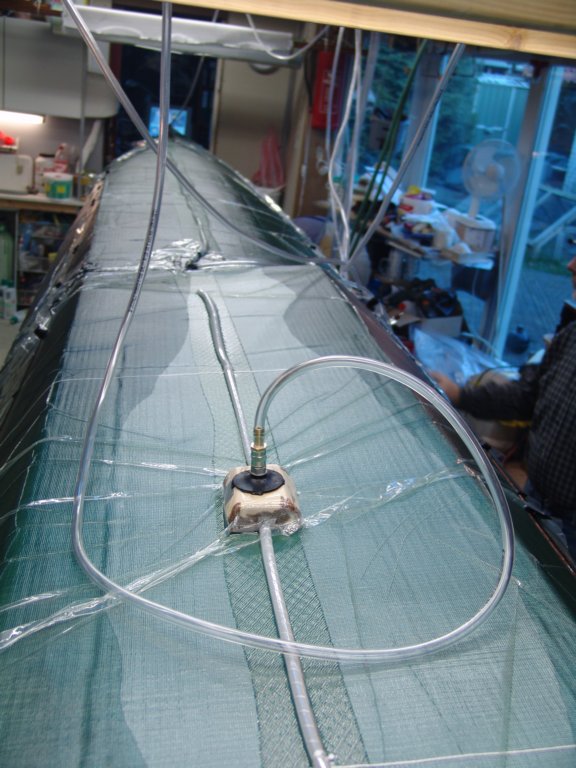
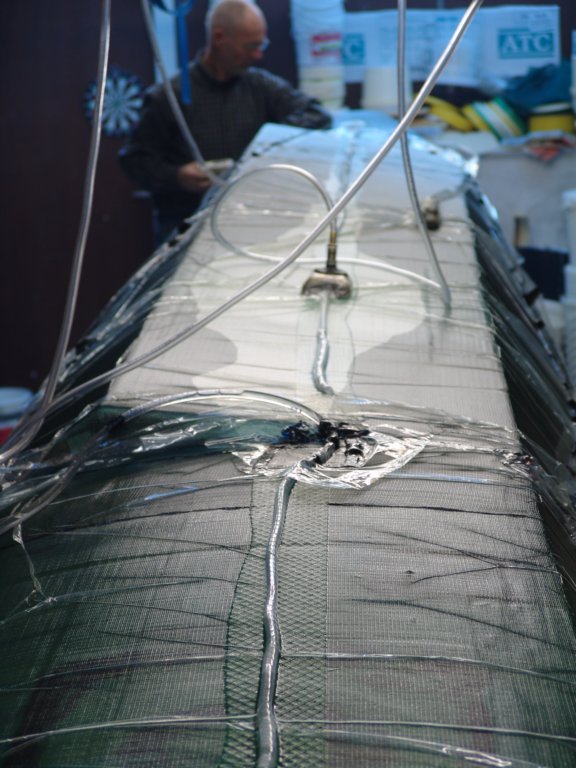
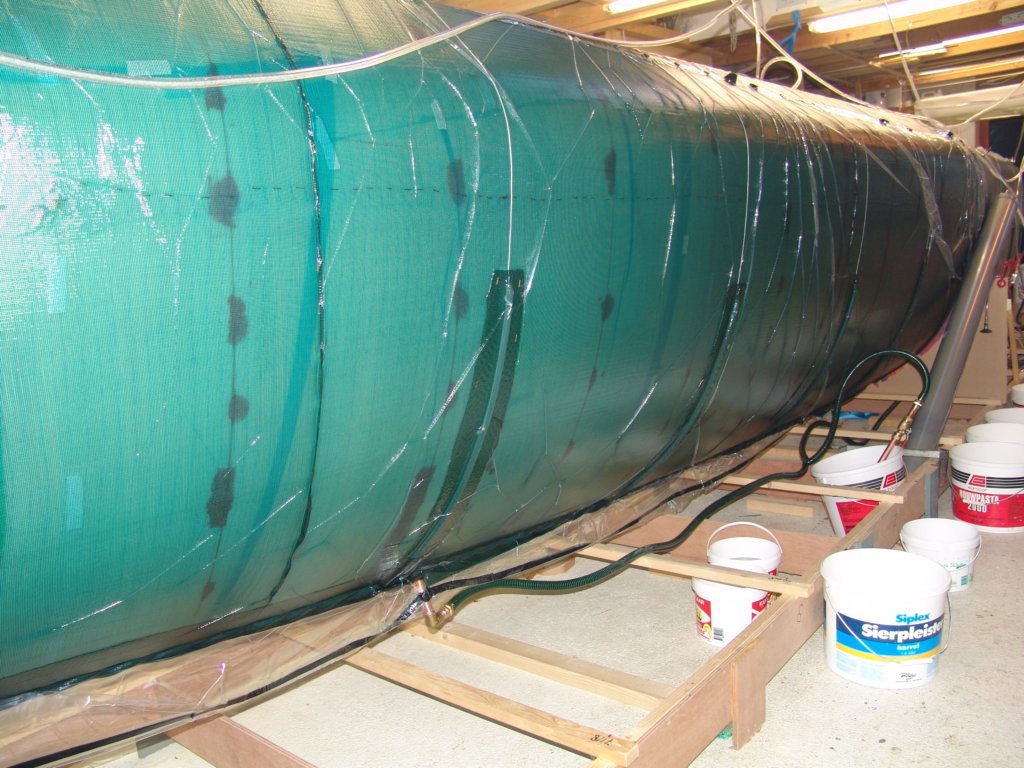
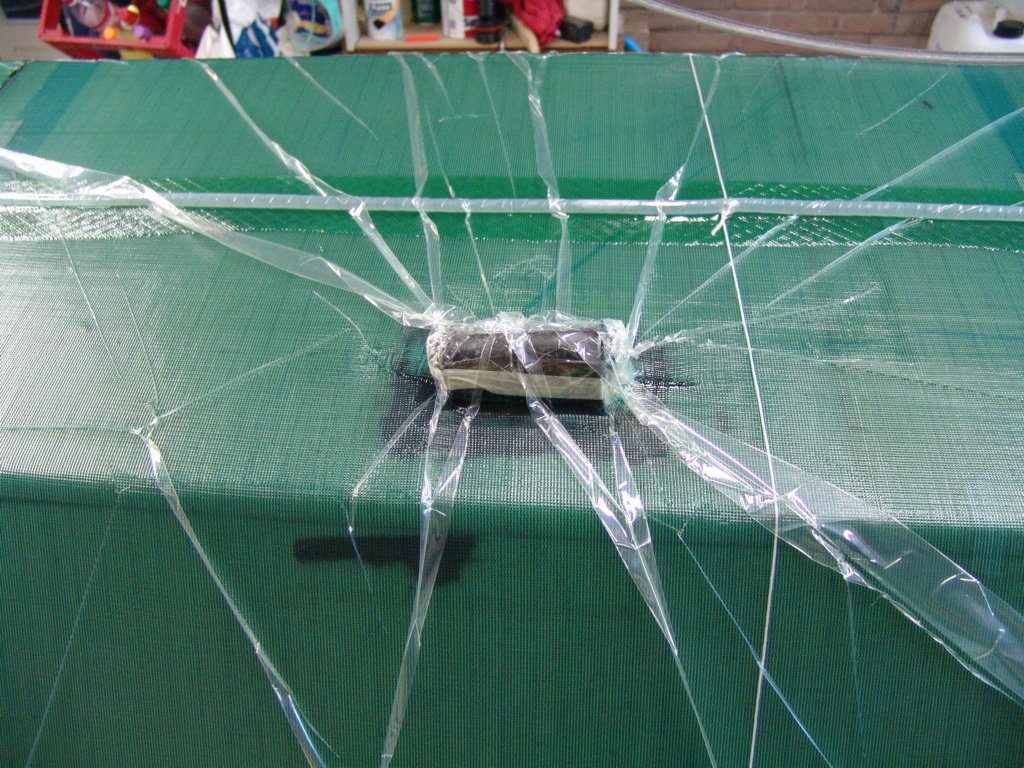
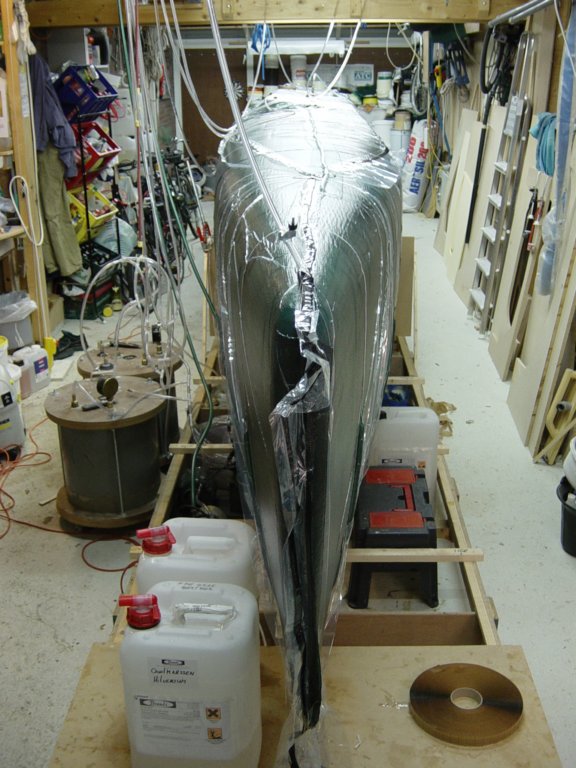
This is the final and decisive step for this hull: vacuum infusing the complete external laminate. The goal is to do this in one single shot. To prevent the hull from being compressed during infusion, the air inside the hull is connected to the outside world through a small hole. The calculated resin-flow prediction looks like this:

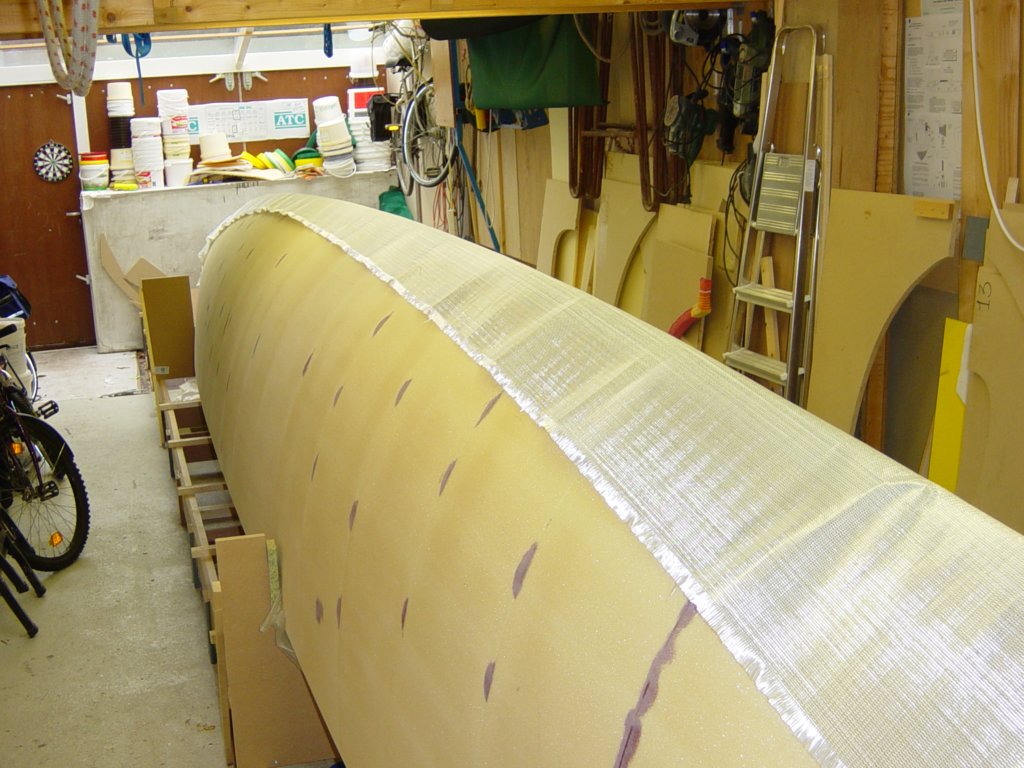
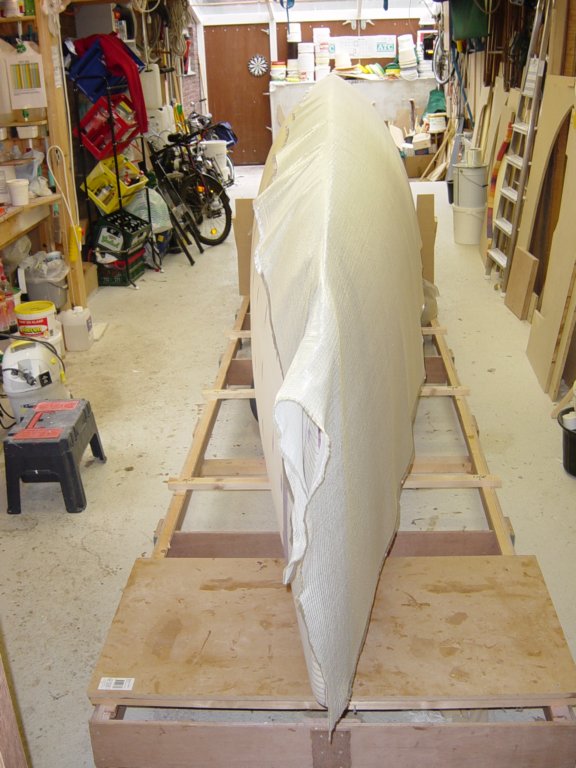
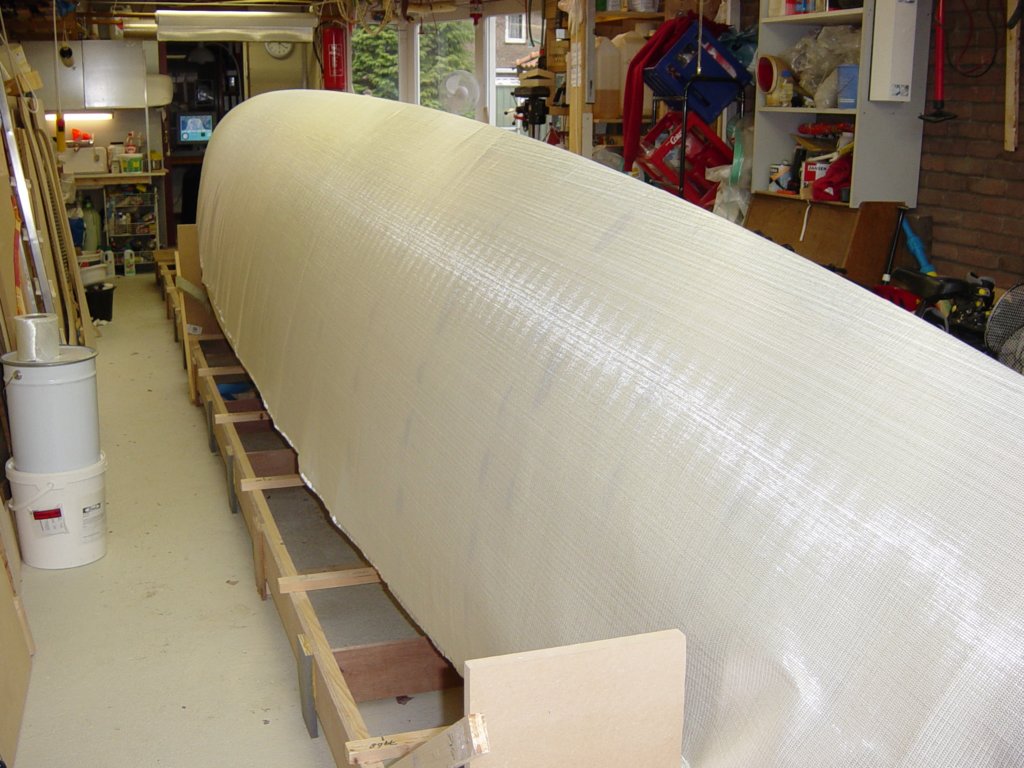
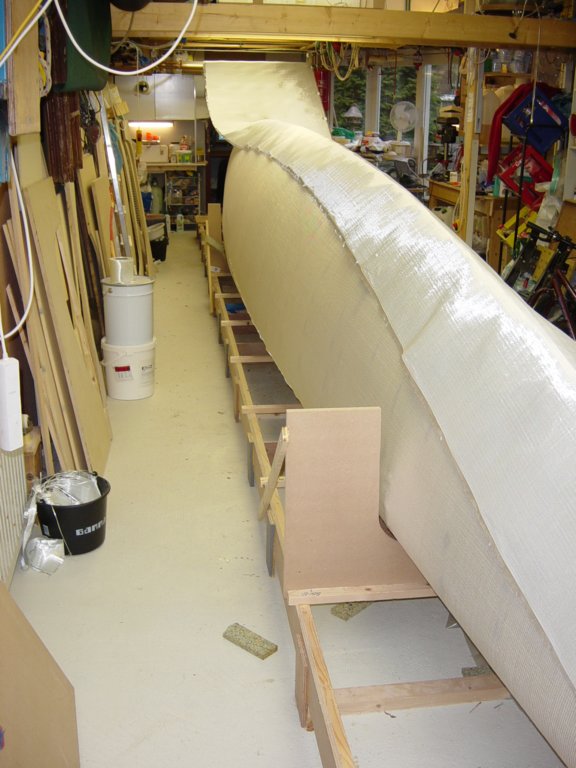
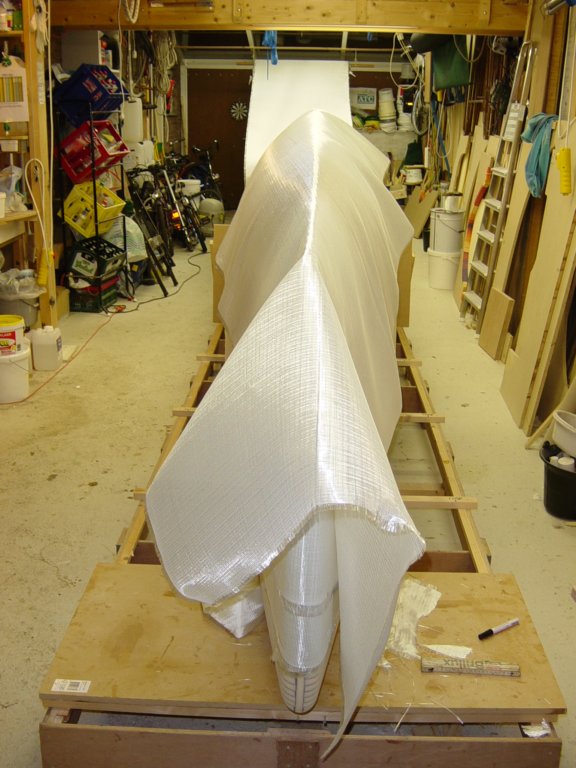
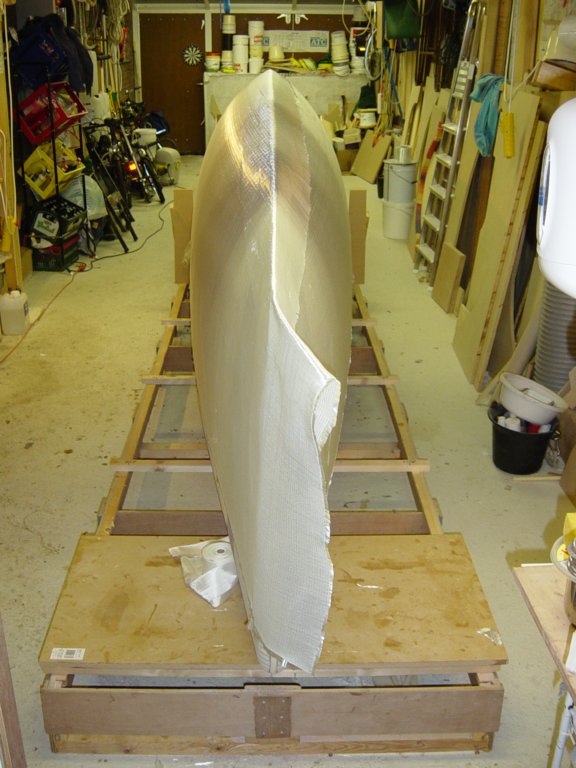
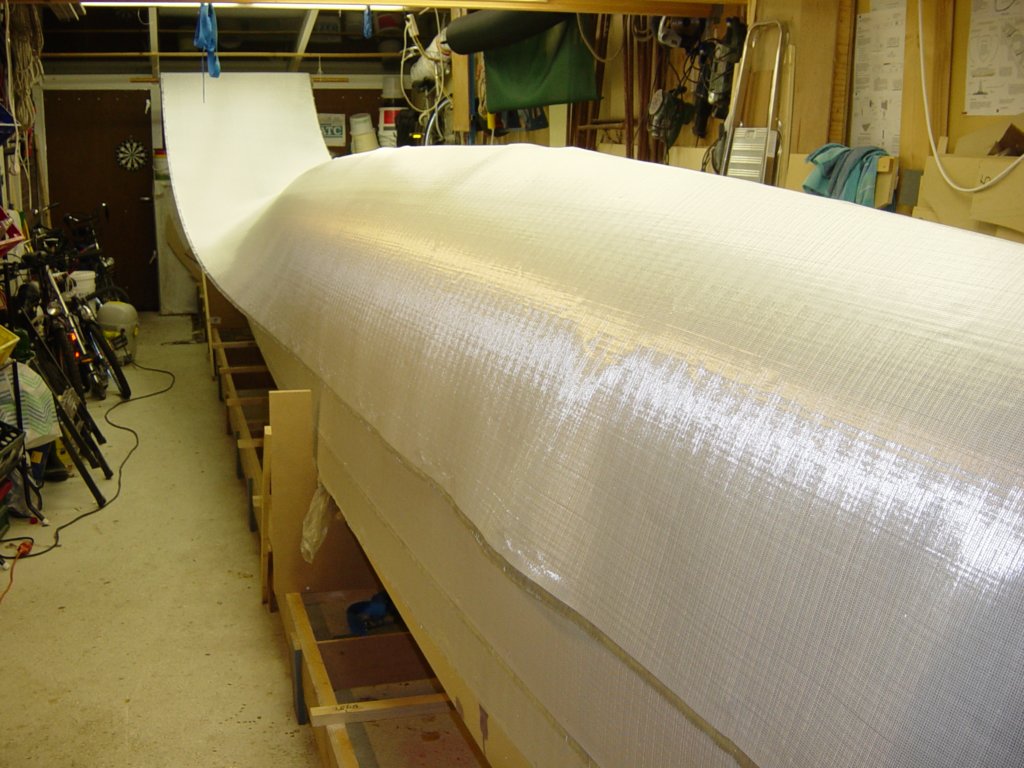
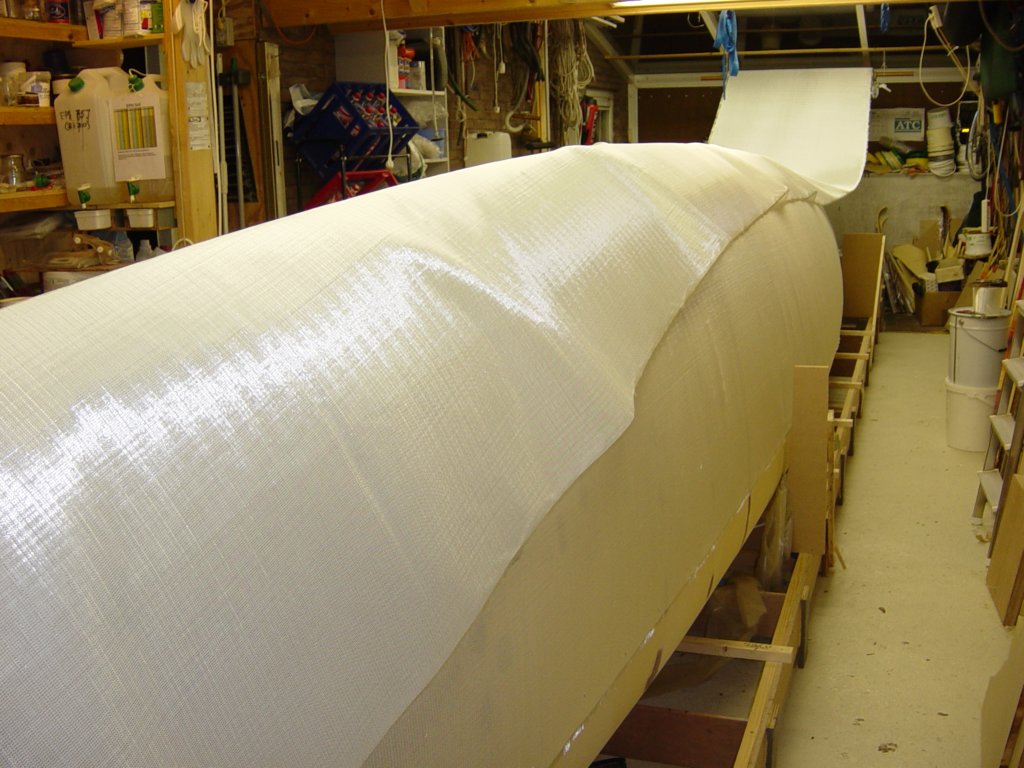
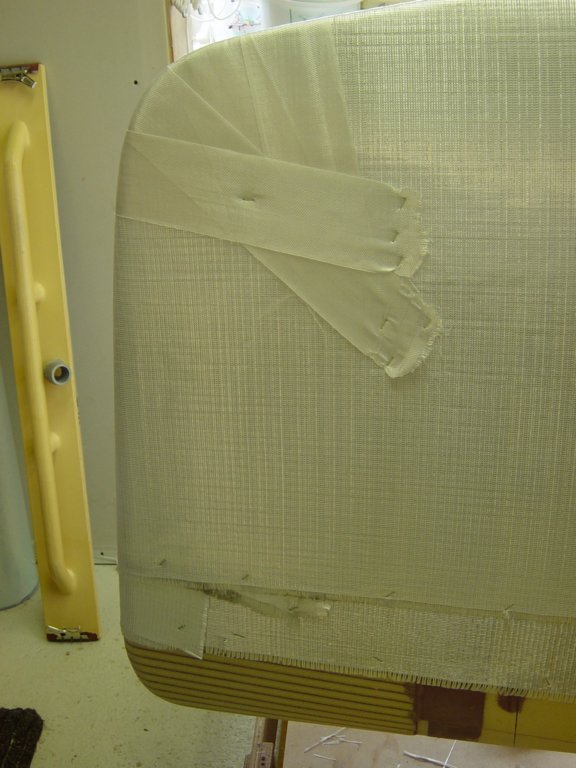
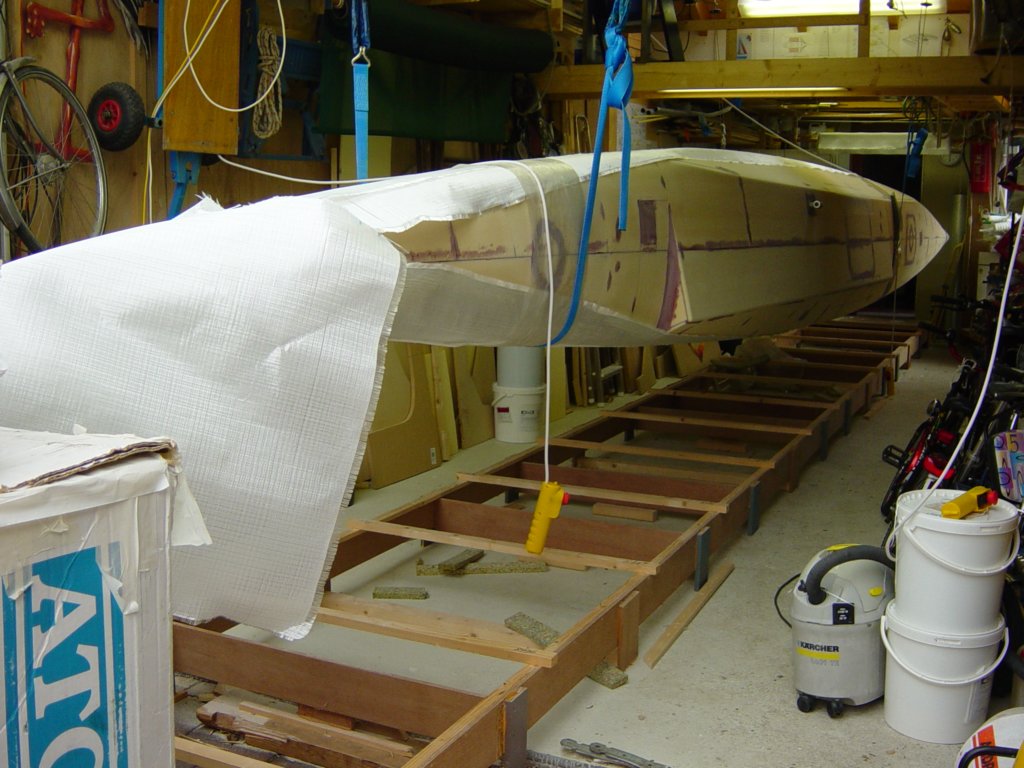
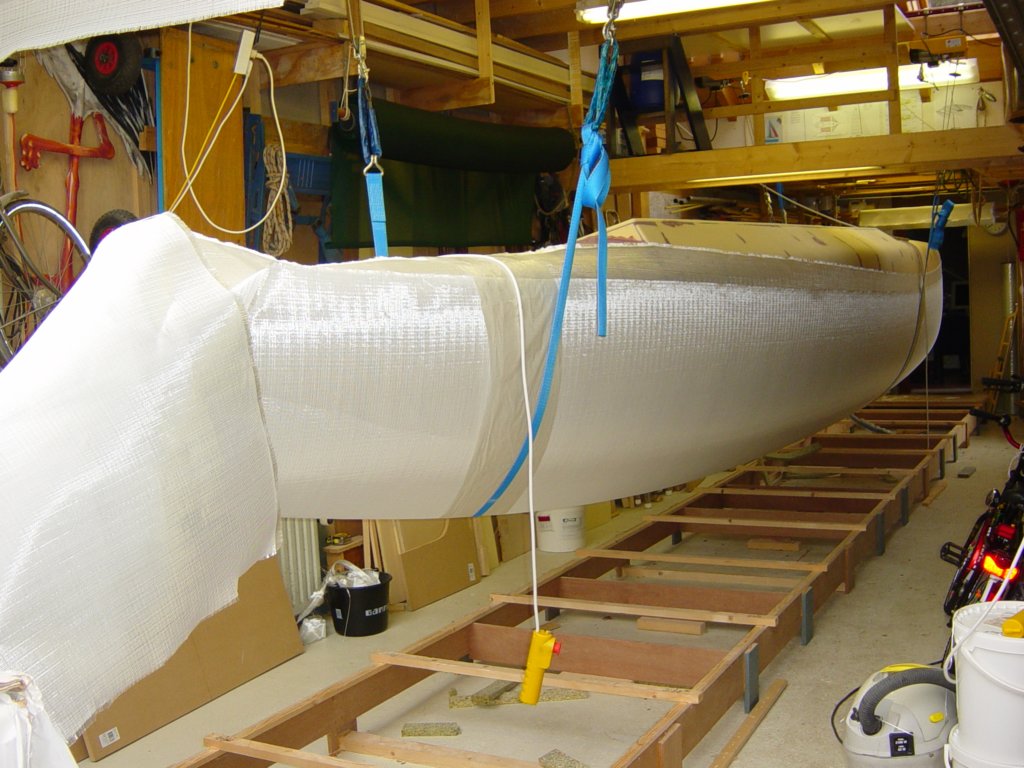
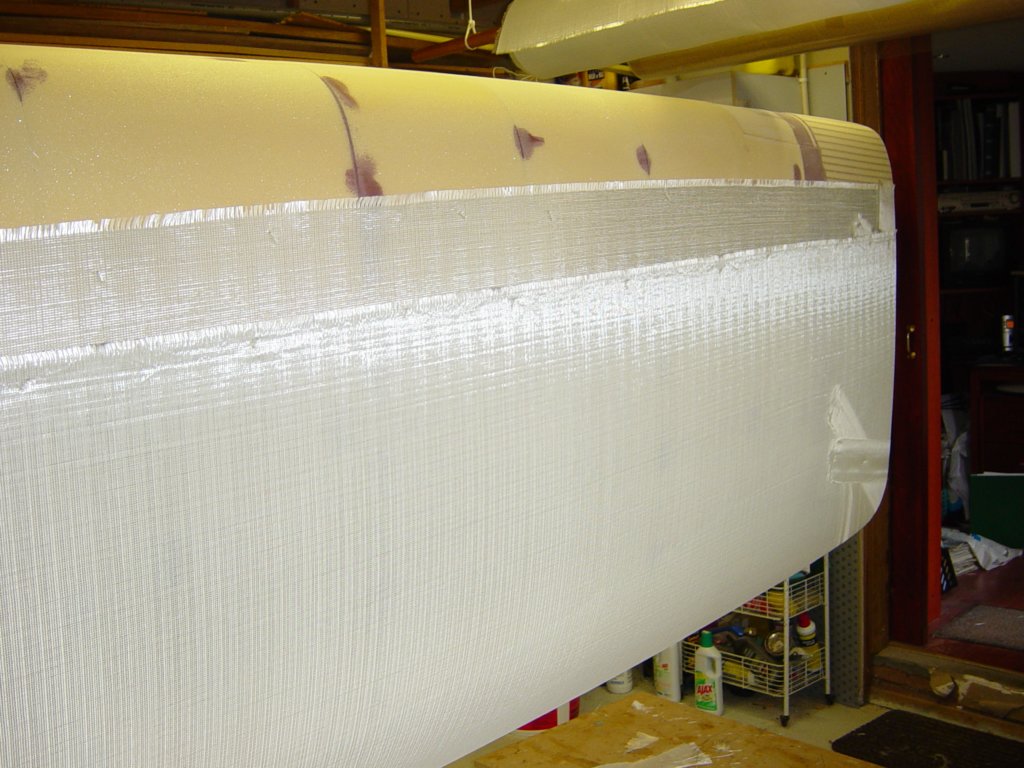
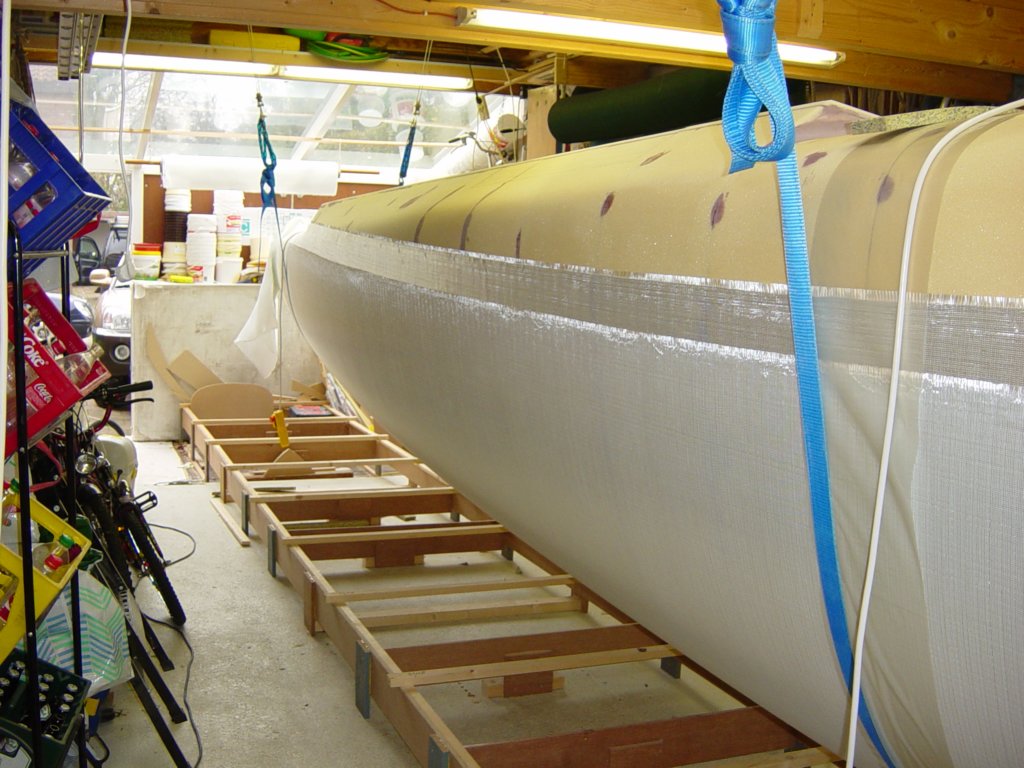
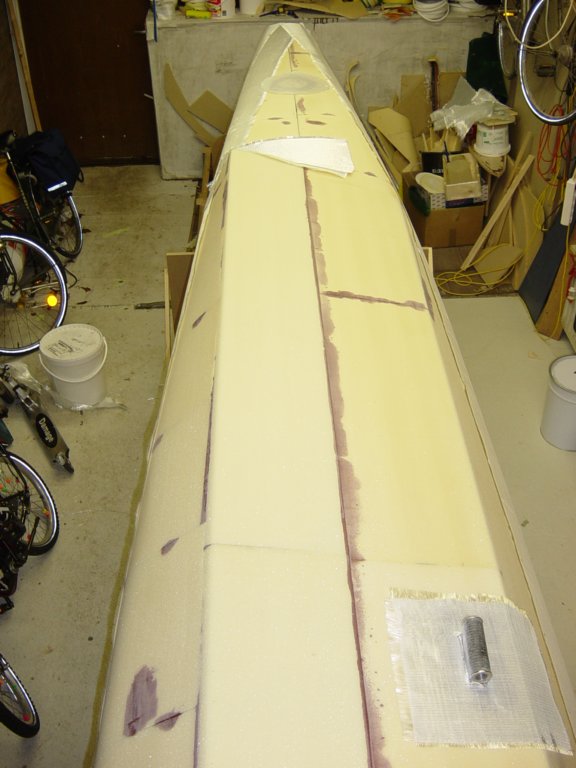
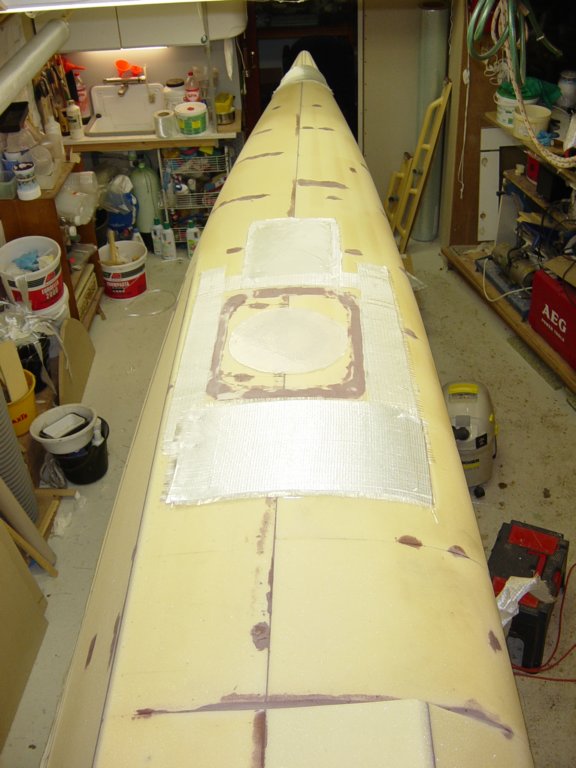
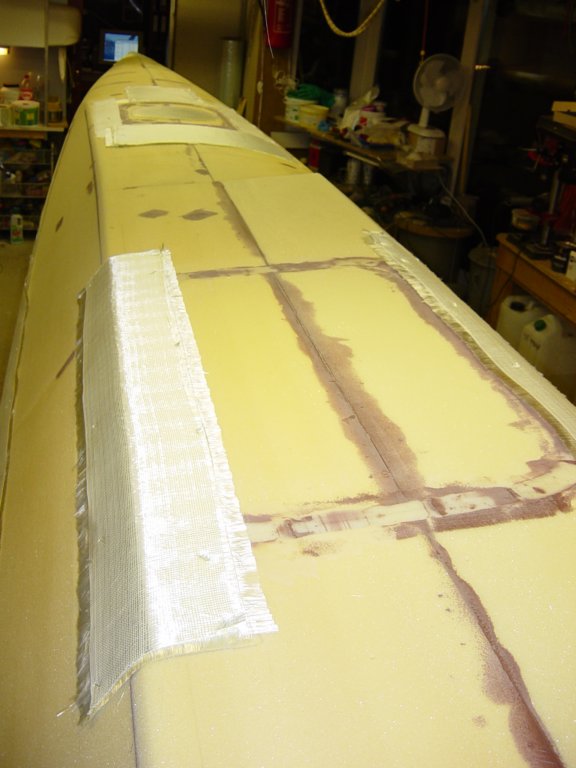
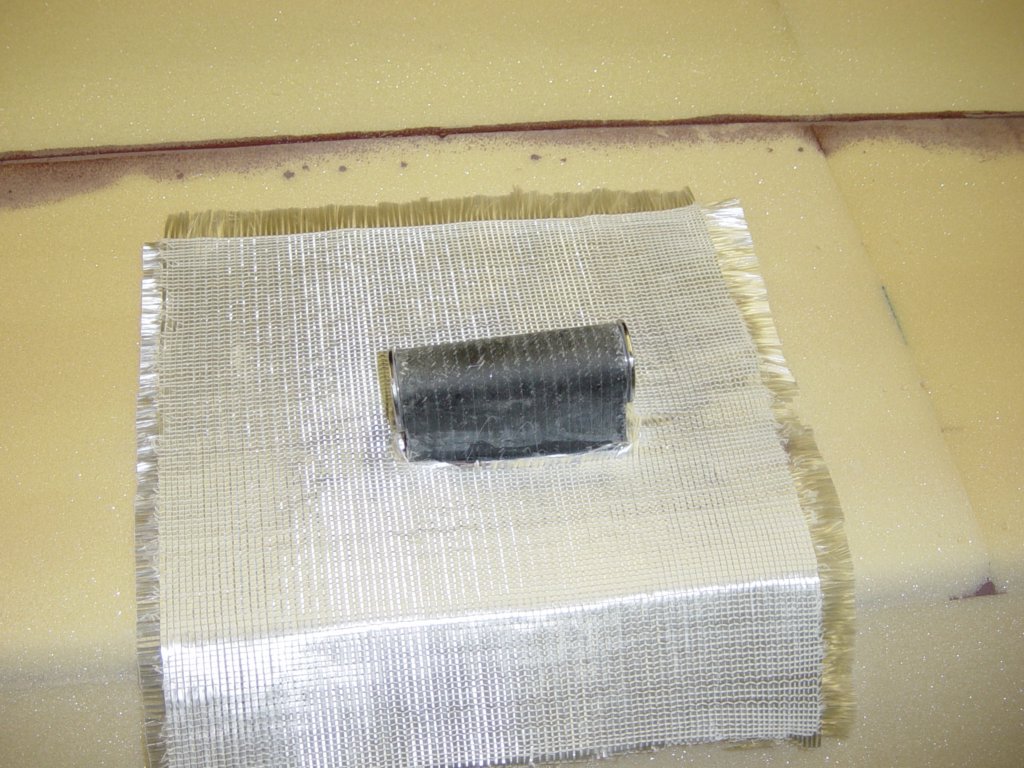
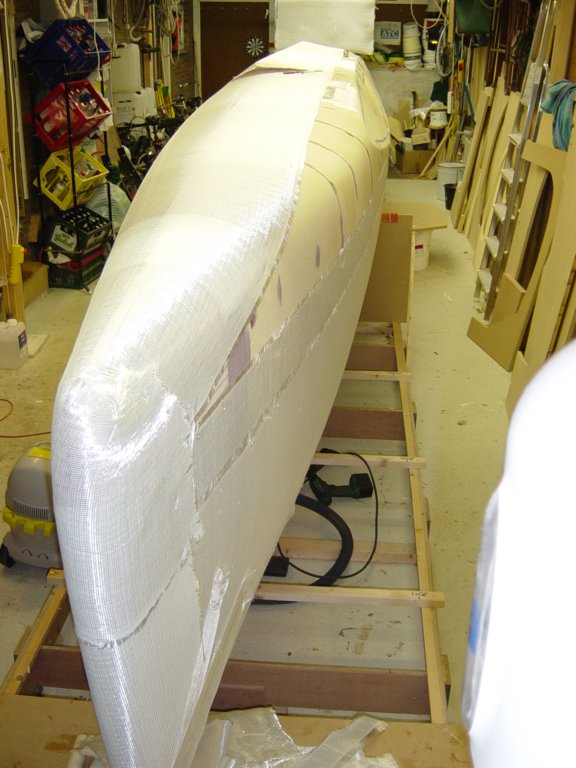
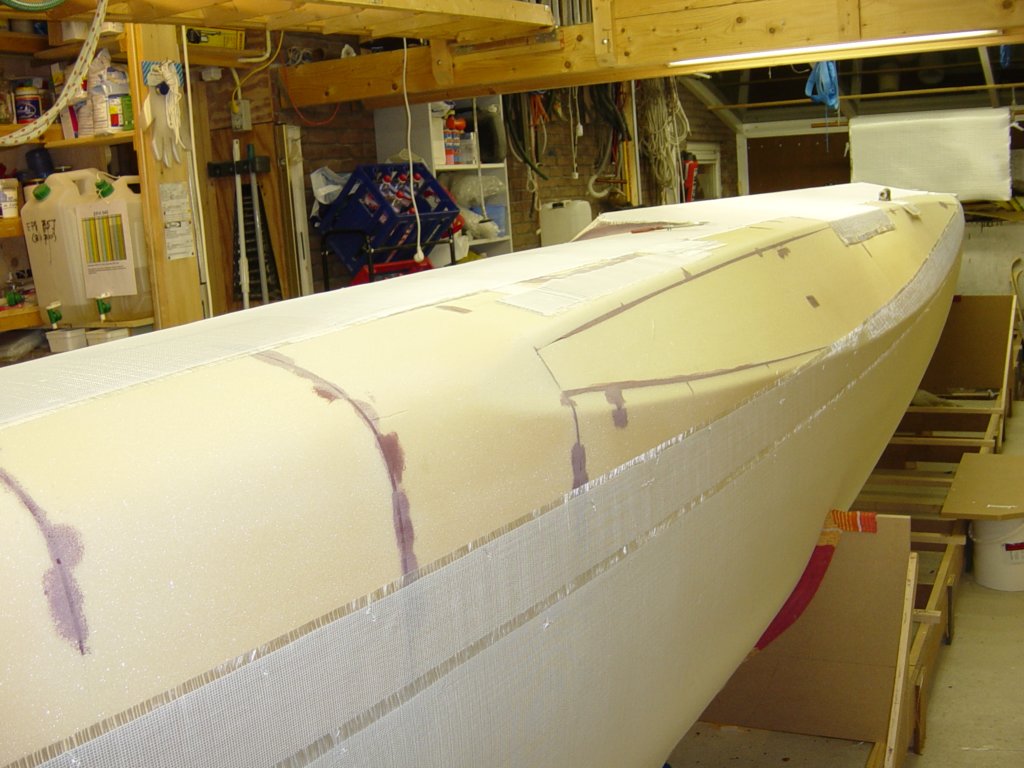
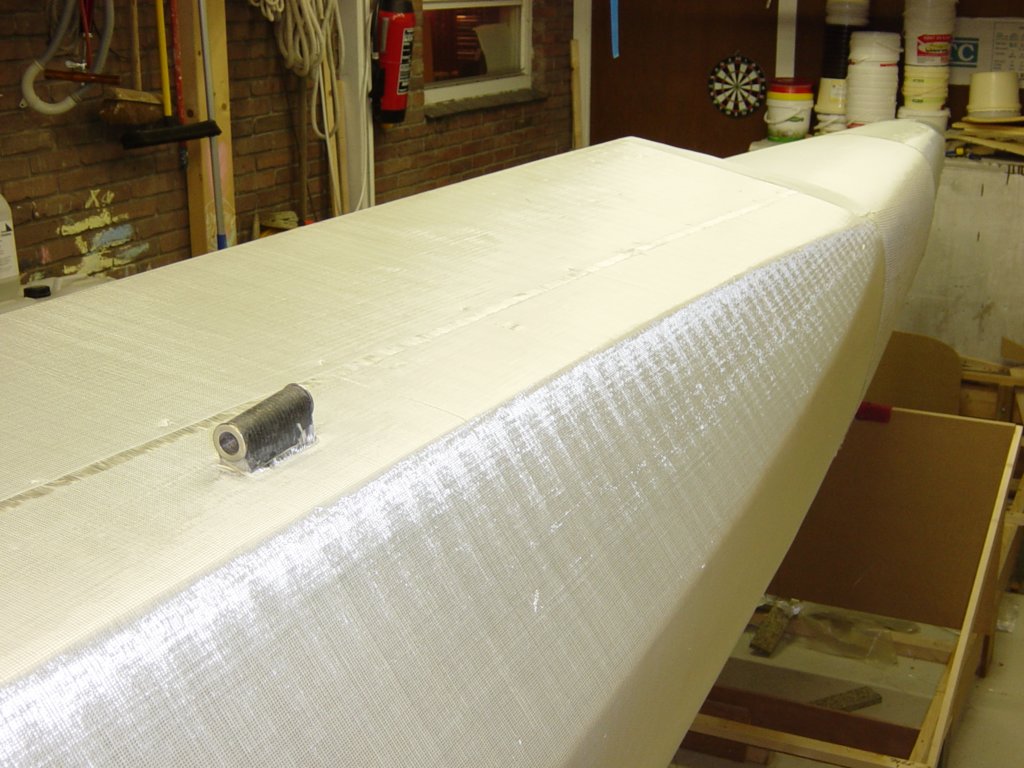
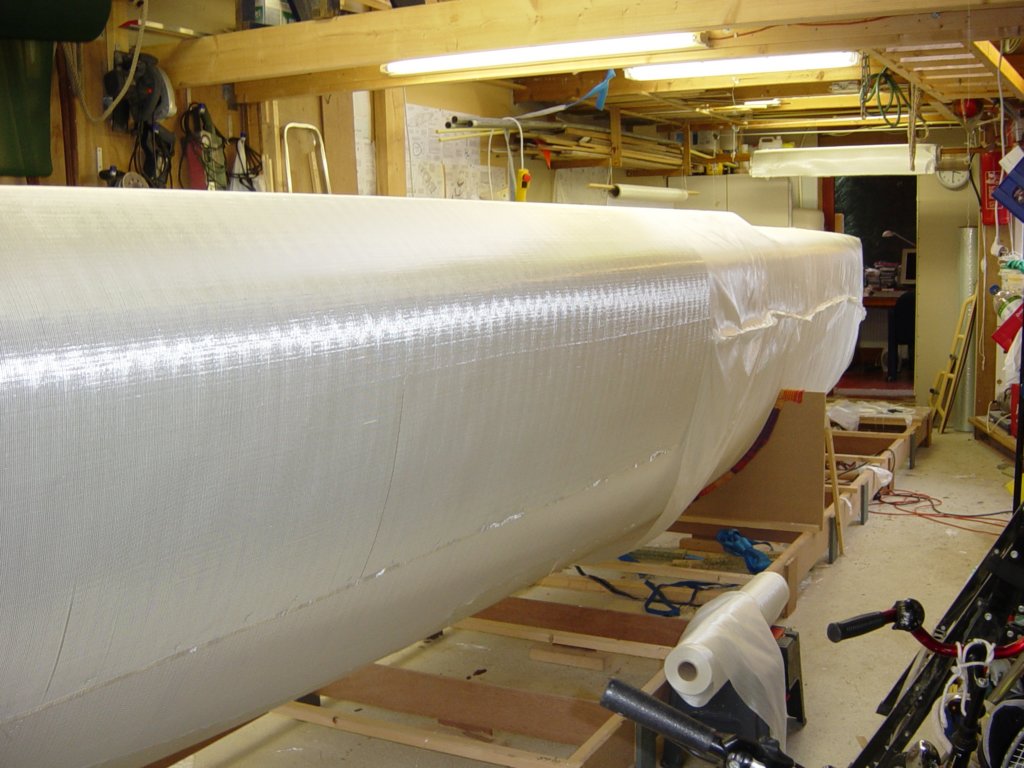
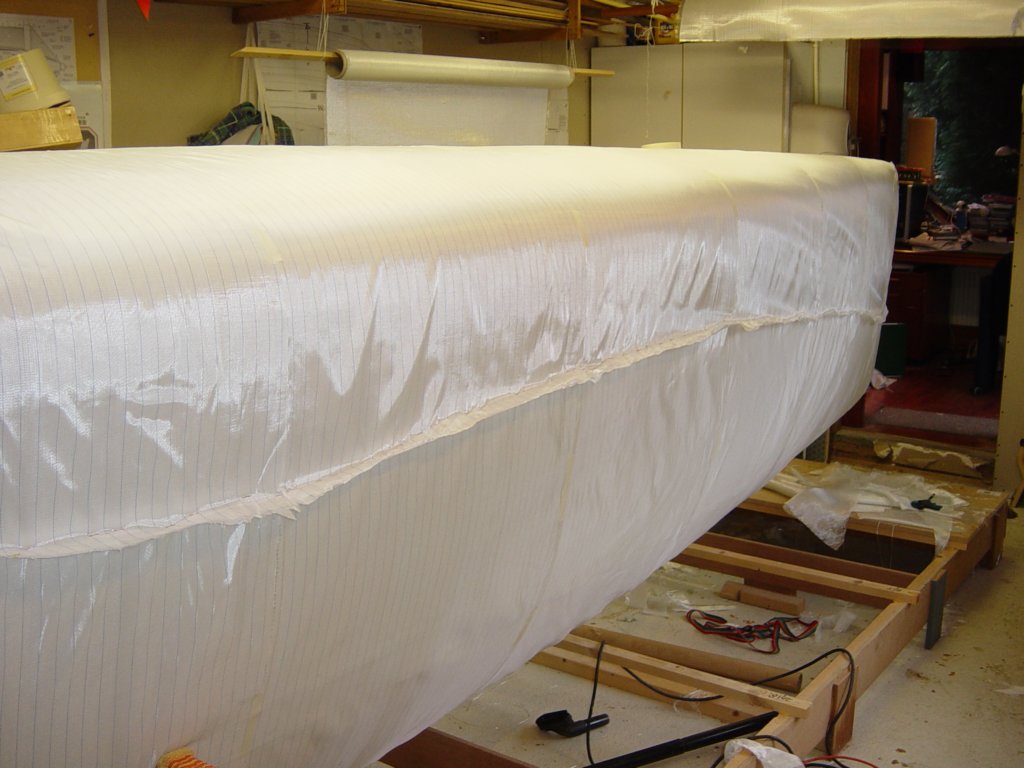
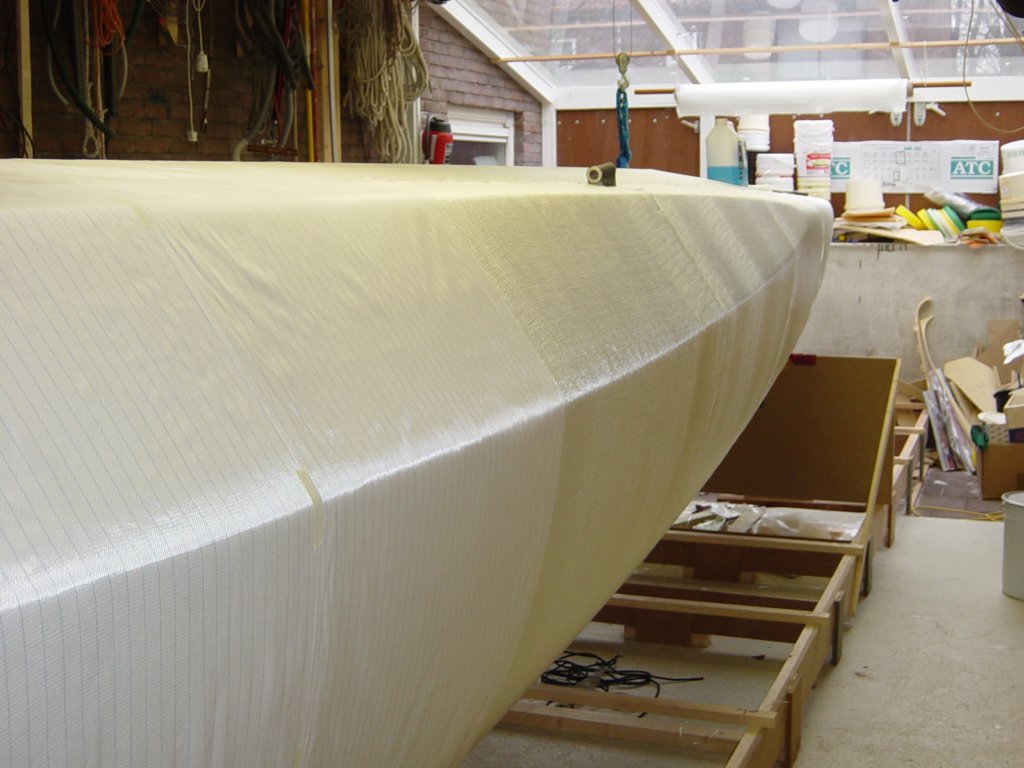
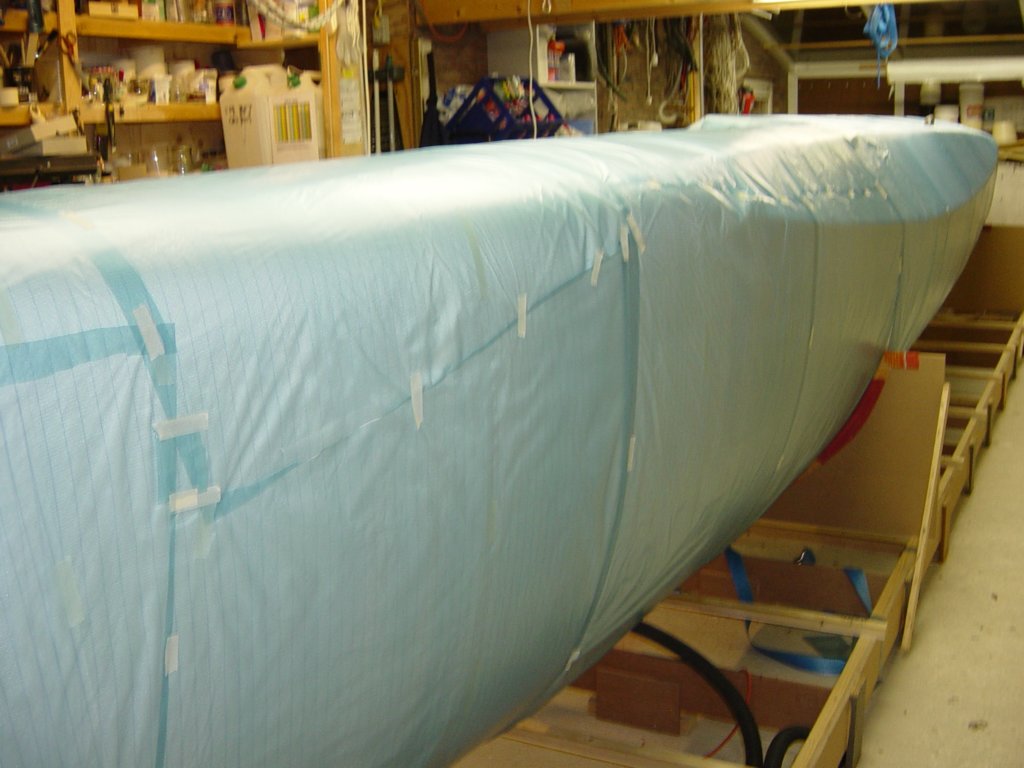
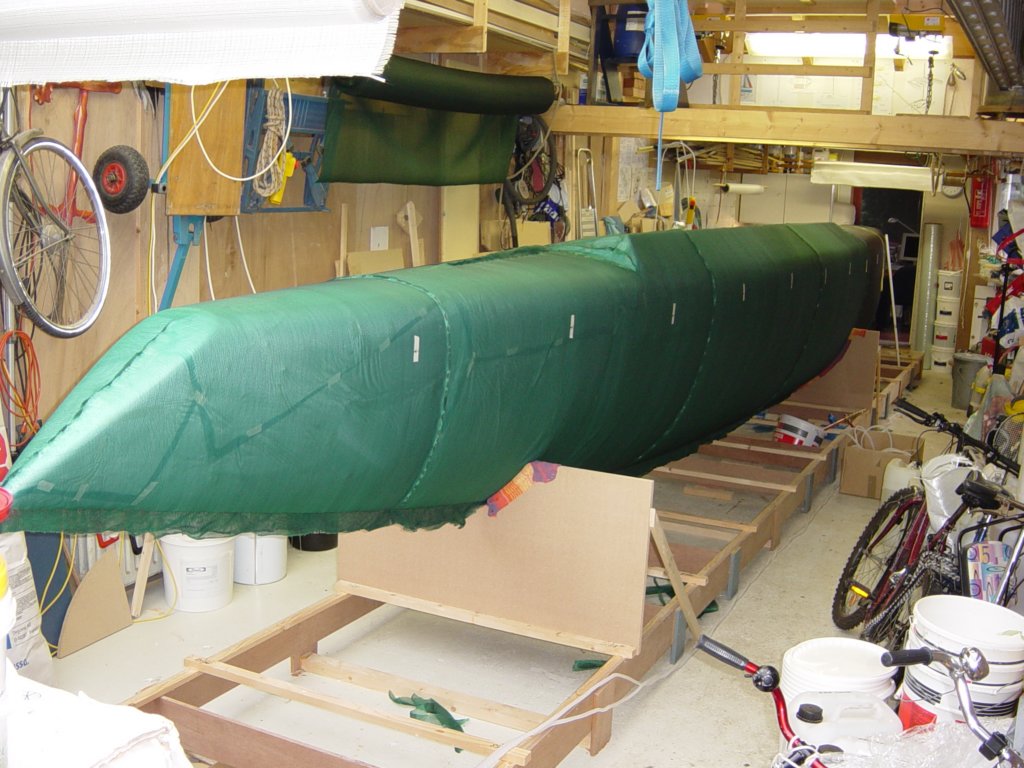
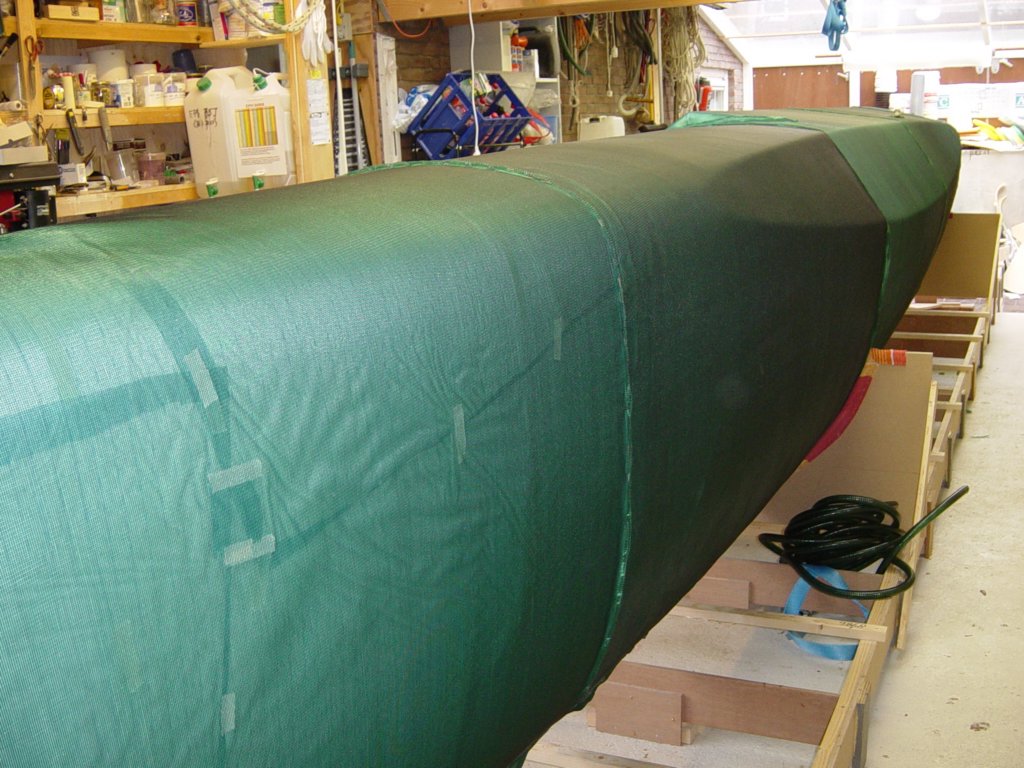
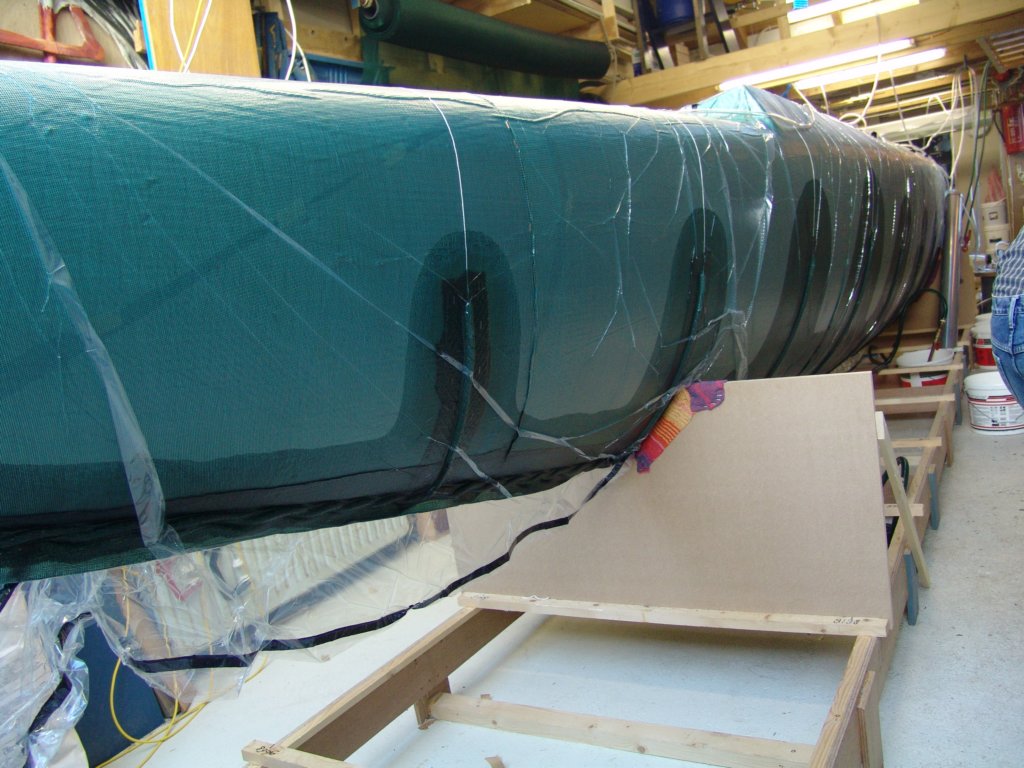
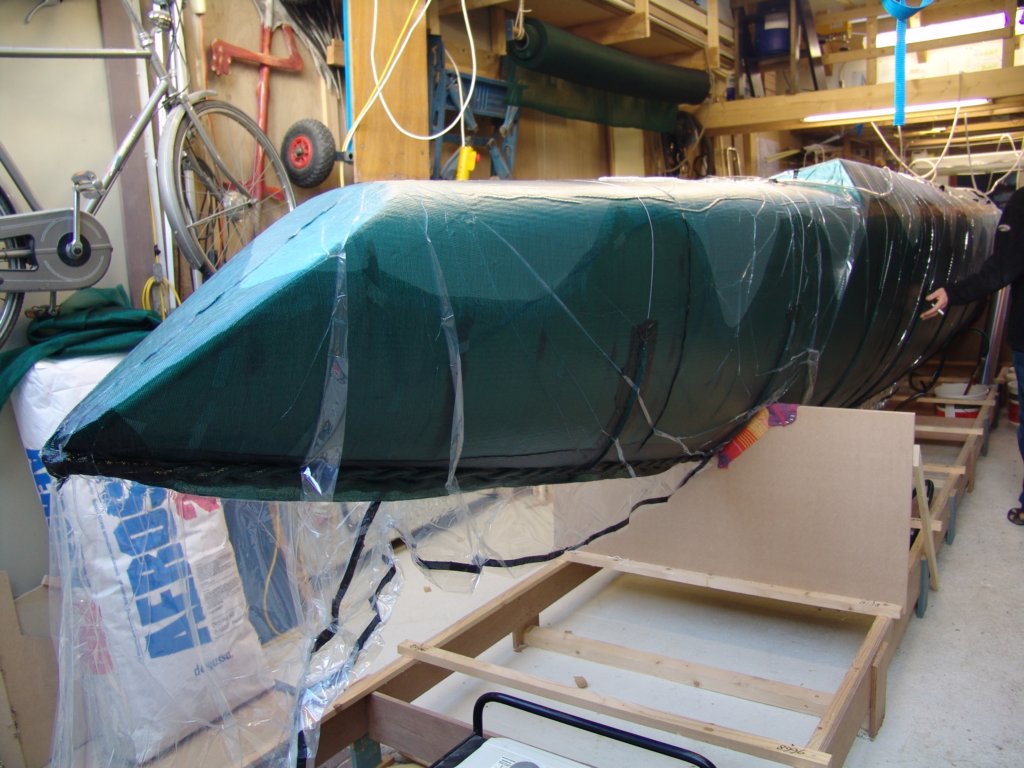
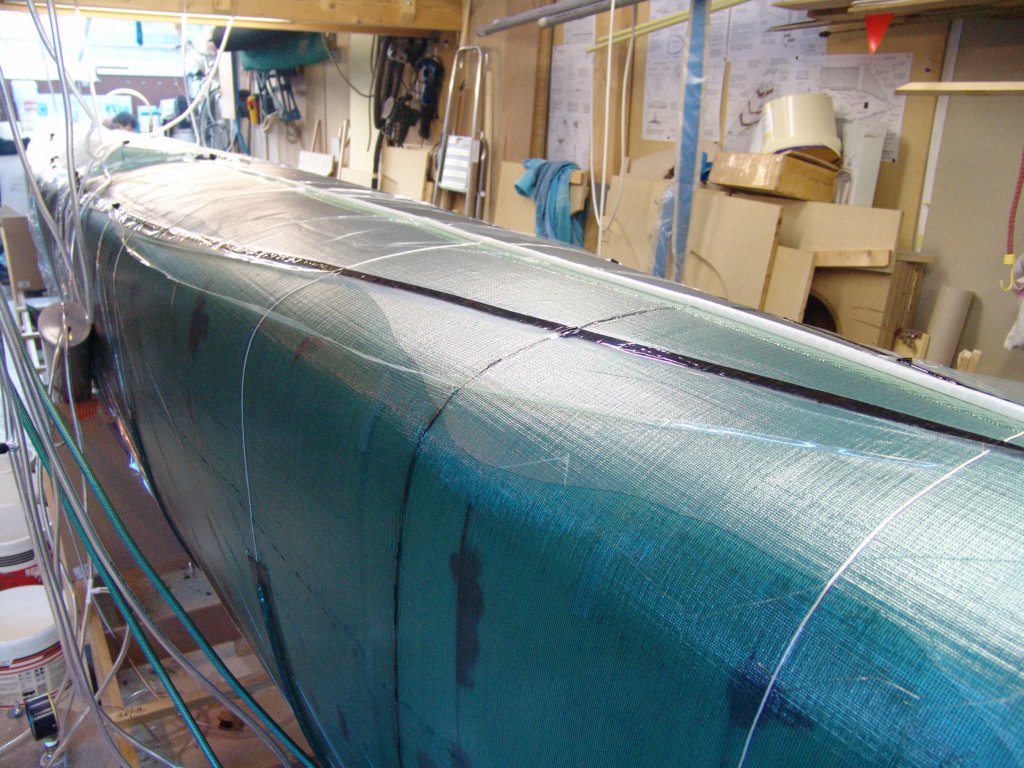
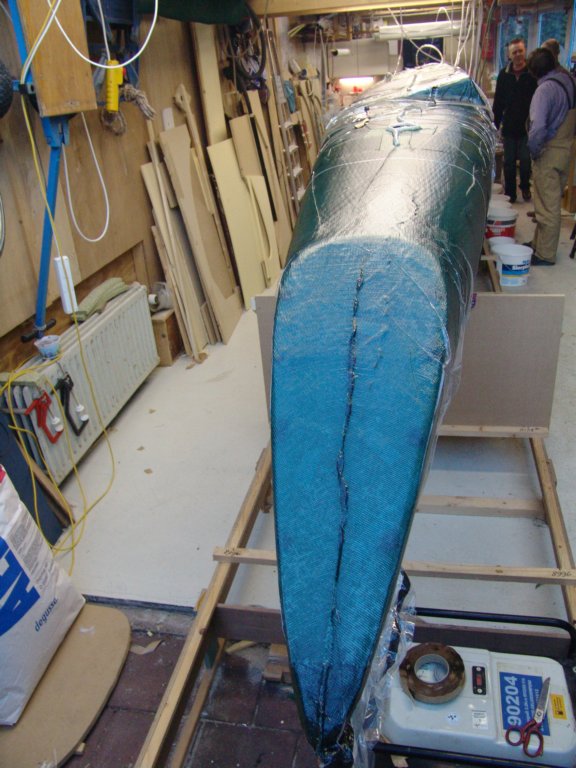
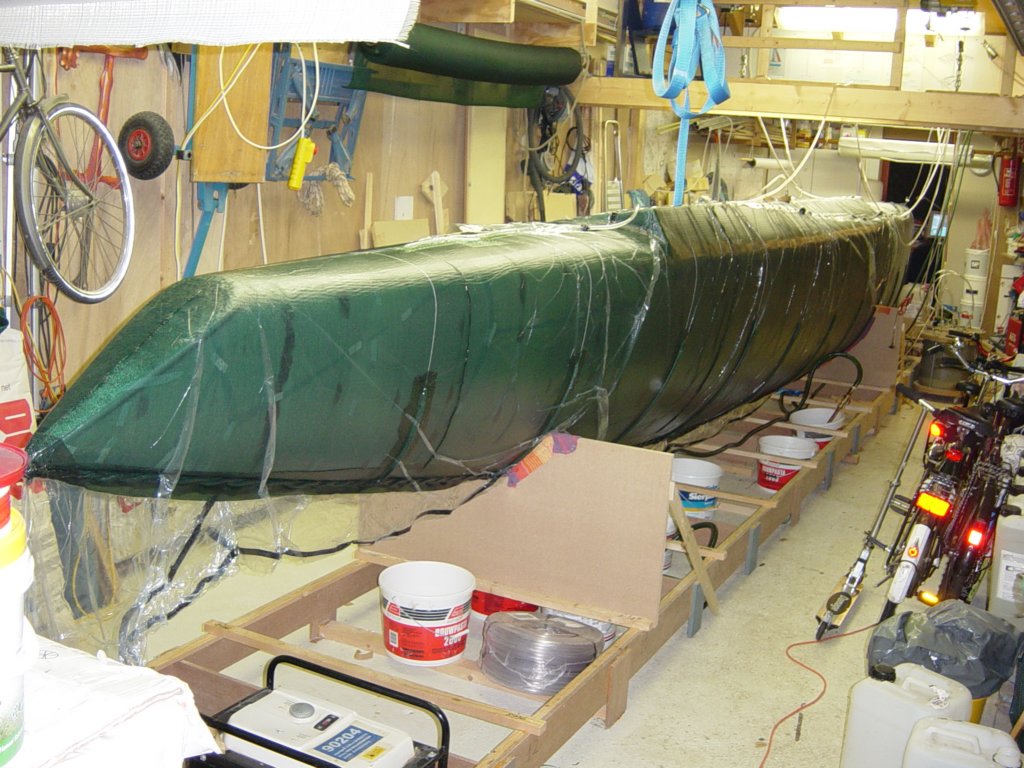
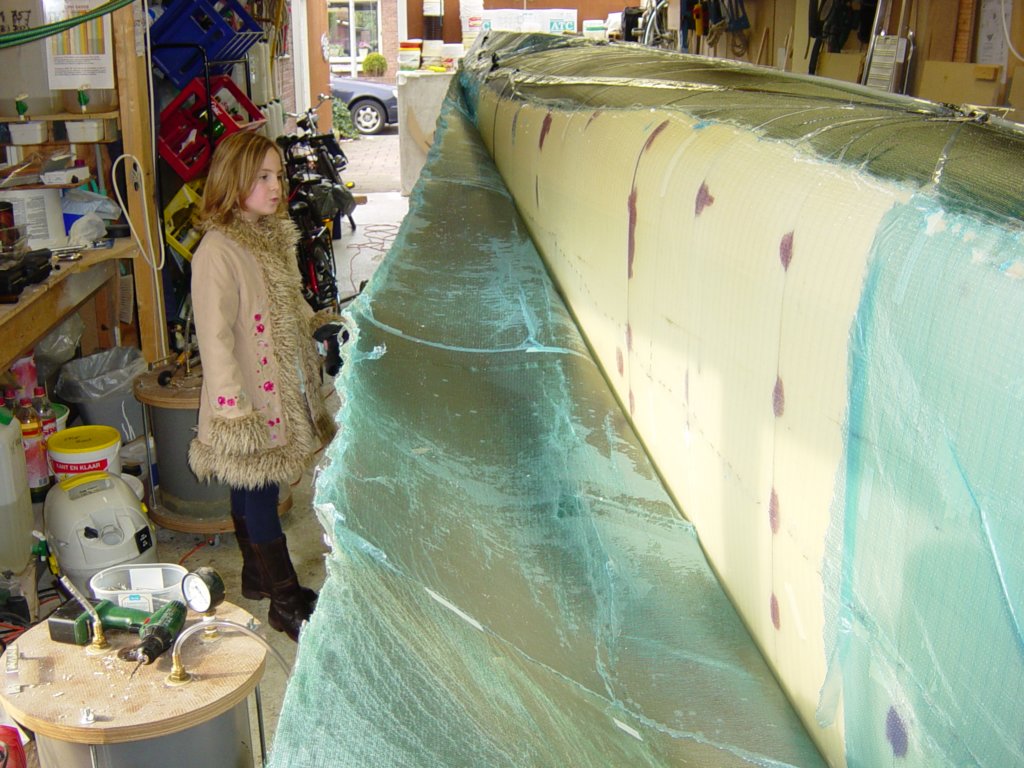
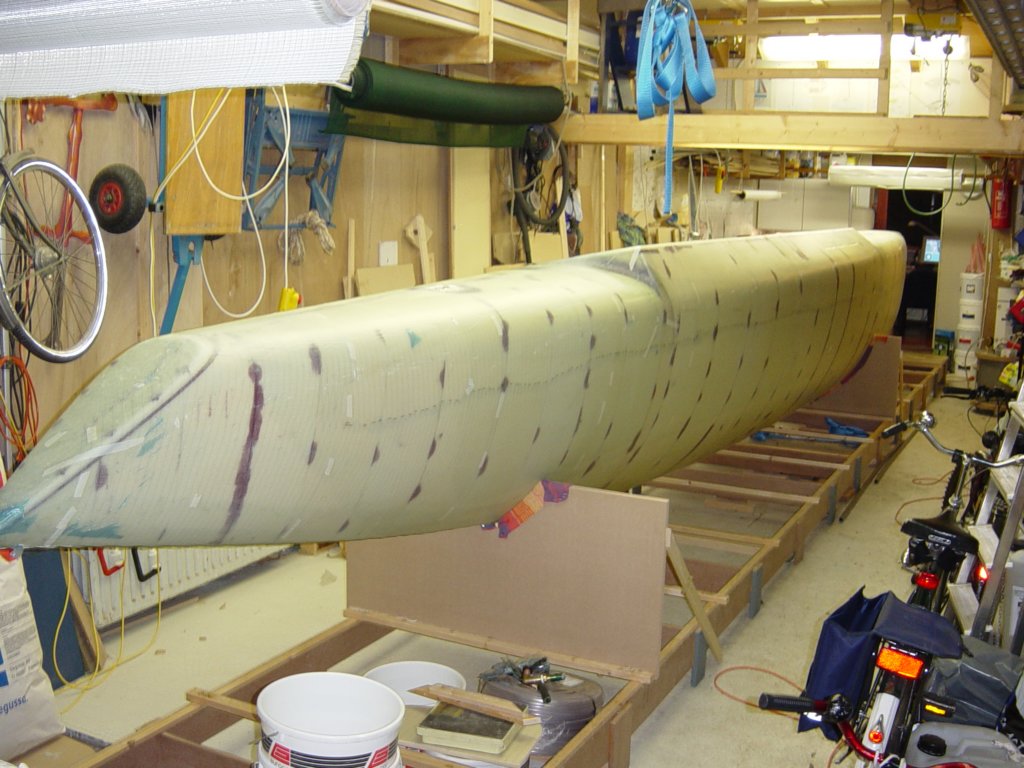
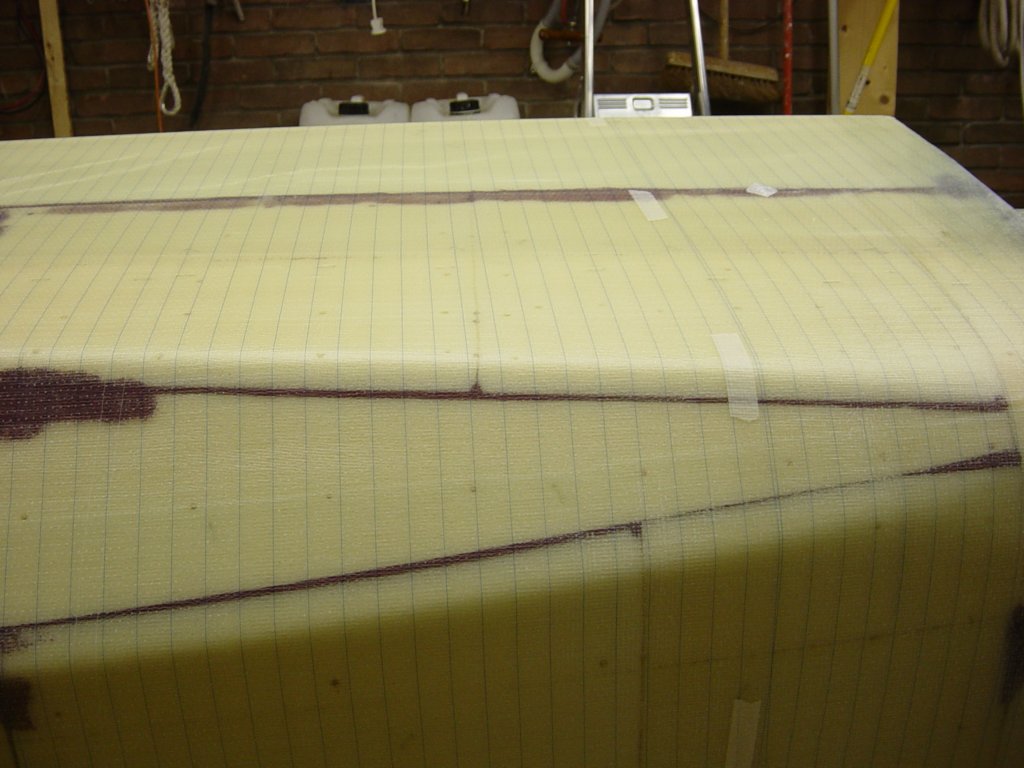
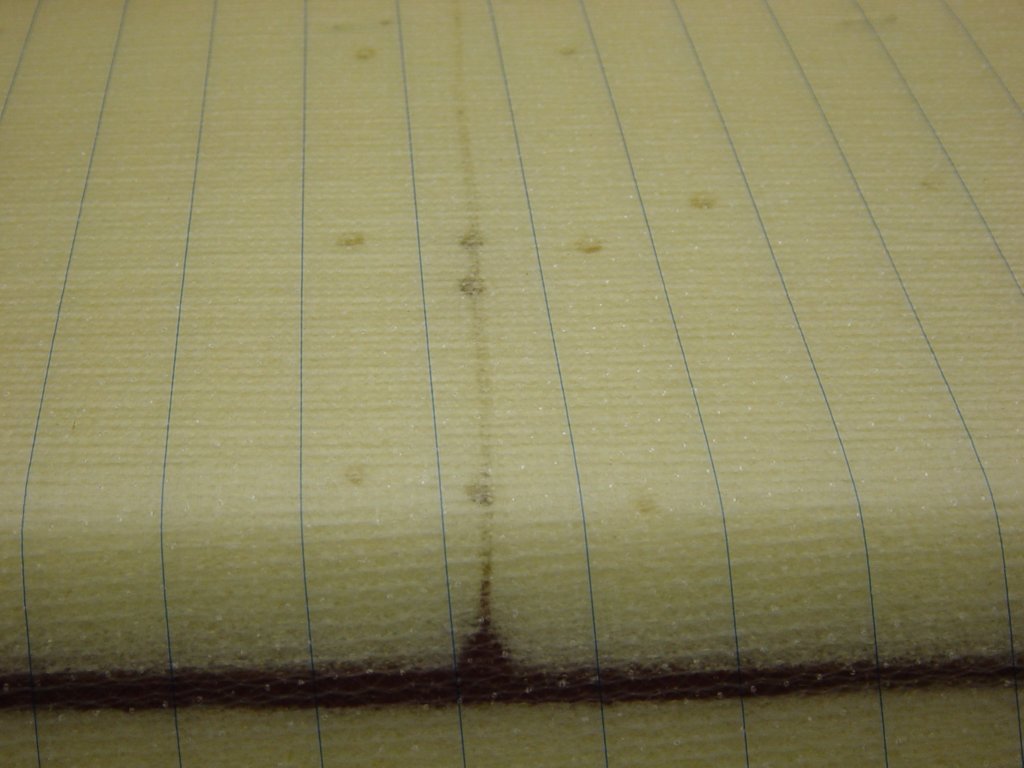
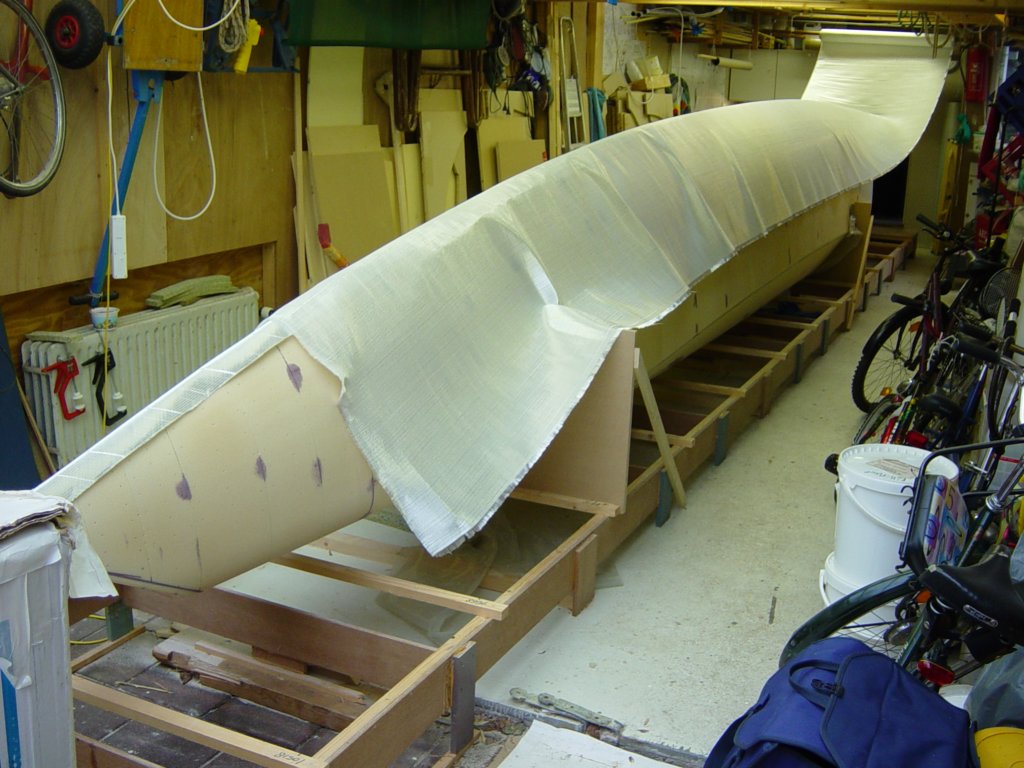
With the hull inverted again, the non-woven bi-directional glass fabric is applied in one continuous piece straight from the roll. With the fabric being more than 4 feet wide, most of the hull is already covered in a single pass. To prevent the laminate from sliding off while turning the hull, the fabric is temporarily fixed along the edges using synthetic staples. These nylon staples can remain in place. After rotating the hull, the deck laminate is applied, overlapping the laminate previously laid from the keel.
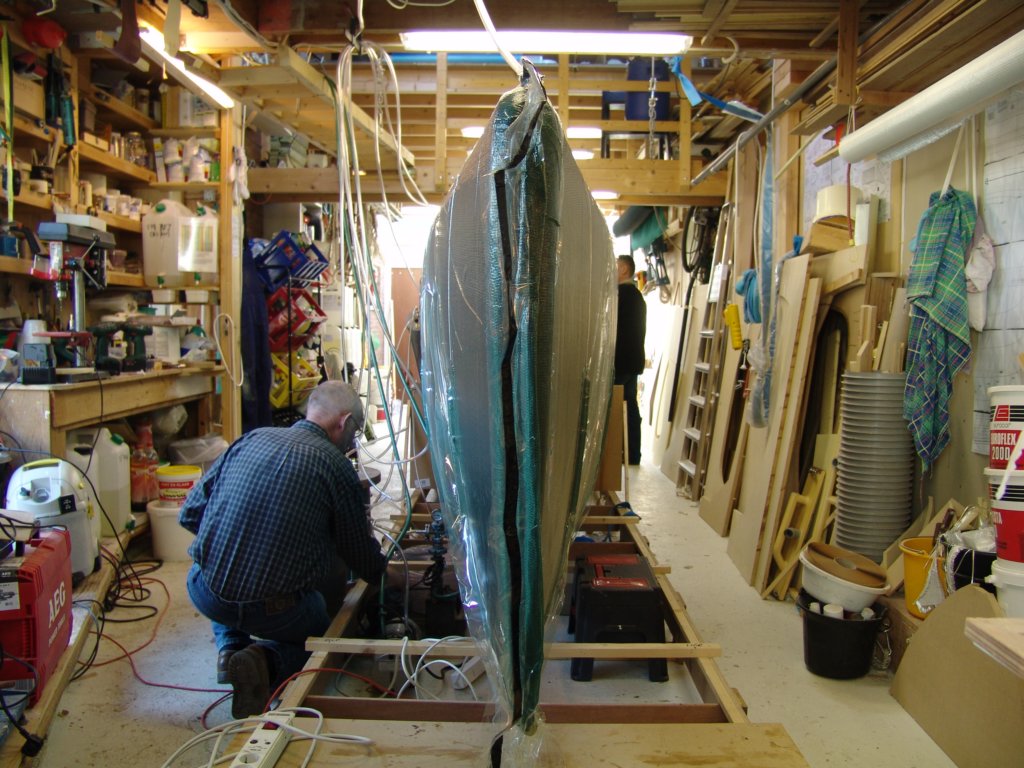
I received many questions about the areas where the hull rests on its supports. The concern is that the hull weight might locally compress the laminate and disturb the epoxy flow. In practice this is only a minor issue during the dry lay-up, when keeping the fabrics in position. During infusion the vacuum pressure is roughly 1 kg/cm² (about 10 tons/m²), which completely overrules the hull weight. The epoxy flow is therefore not influenced by the supports in any meaningful way.
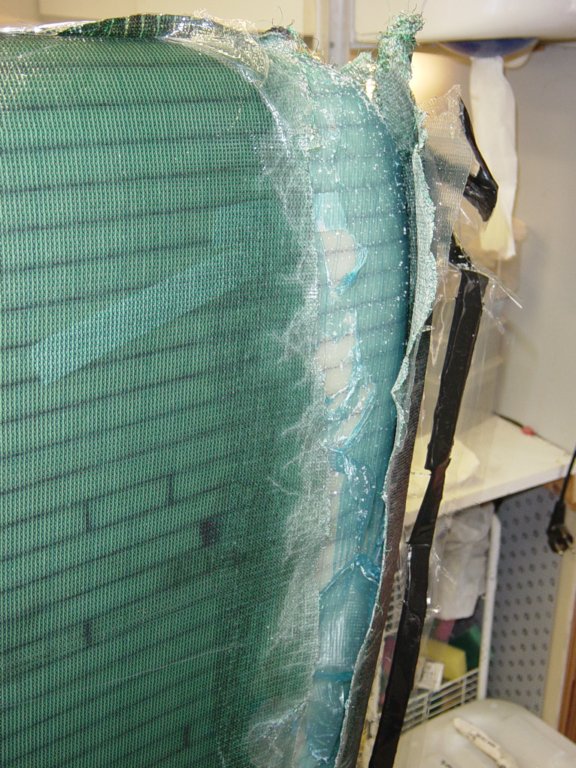
This photo gallery (70 images) documents the complete process: dry lay-up of the external laminate, bagging, one-shot infusion, curing, unpacking, and inspection of the finished hull surface.