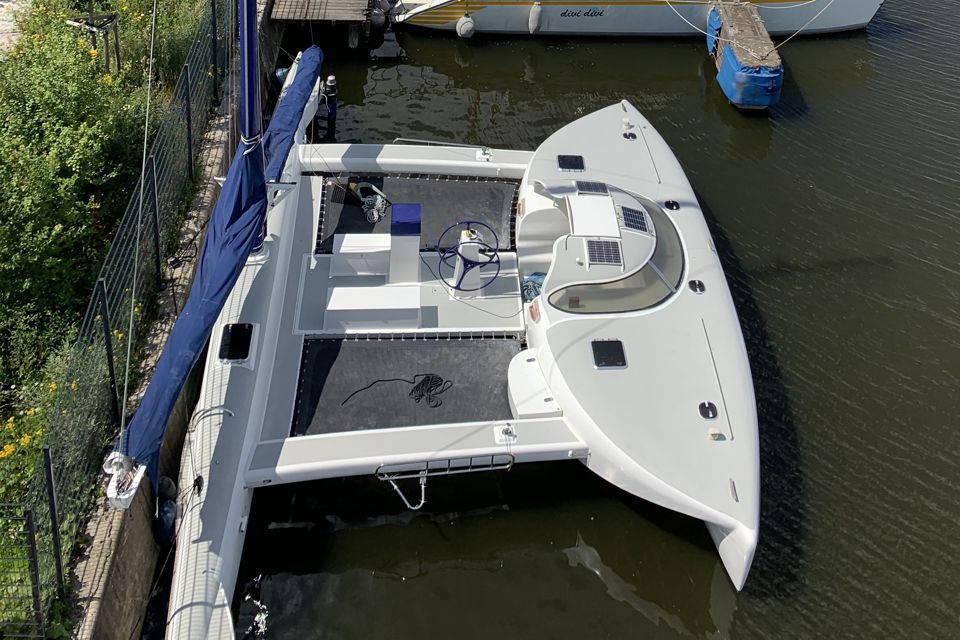
An overview of the proa concept, from traditional Pacific designs to modern interpretations, including my involvement with the proa Blind Date.
The Proa
A proa consists of one relatively large main hull and a much smaller outrigger. Traditional Pacific proas sail with the outrigger acting like a counterweight on the windward side. Rather than tacking, these boats shunt: the bow and stern exchange roles, the sail is reversed, and the steering paddle is moved to what has become the new stern. The mast is positioned near the centre of the main hull.
Many variations of the proa concept exist. More recent designs keep the outrigger permanently on the leeward side, or allow it to alternate between windward and leeward. These configurations make it possible to use a conventional rig and a normal rudder. The Dutch proa Blind Date, for example, carries the mast on the outrigger and changes direction by reversing the sailing orientation of the boat.
As a volunteer, I was involved for several years as skipper in the Blind Date project. This 15-metre-long proa is a Harryproa Elementary design by Rob Denney and was built in the Netherlands specifically to enable sailing for blind and visually impaired people.