A short overview of catamaran characteristics and the reasons why I ultimately chose a trimaran instead.
The Catamaran
A catamaran has two canoe-shaped hulls, connected by beams. Between the hulls there are nets or a solid bridgedeck. Larger catamarans often carry a cabin on the bridgedeck, while smaller designs usually place the accommodation inside the hulls.
Smaller catamarans are often sailed from the beach or on inland waters. They easily lift one hull out of the water and therefore sail with a noticeable heel.
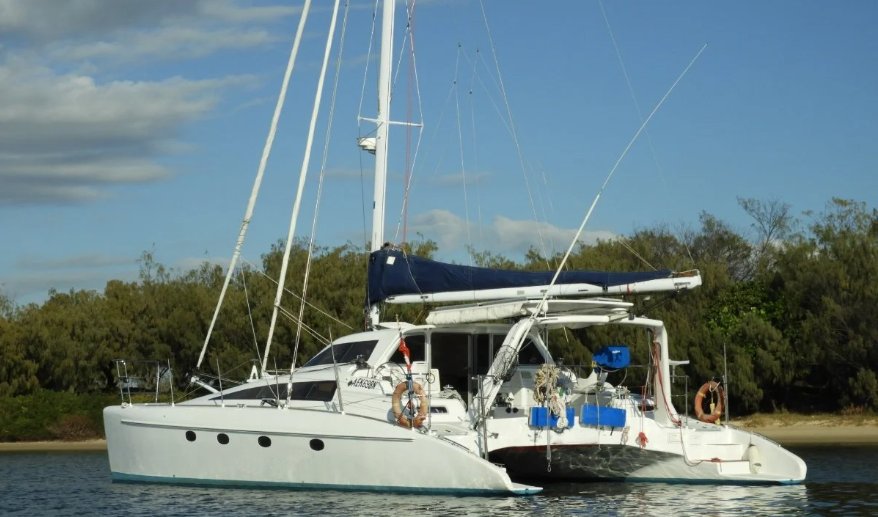
So, why not a catamaran for me?
A catamaran has many undeniable advantages: she heels less, is cheaper and quicker to build, offers more deck area, is less exotic and more readily accepted by the sailing community (and insurance companies), carries loads well, is easy to manoeuvre with twin engines, provides generous accommodation with increased privacy thanks to the two separate hulls, usually has a smaller overall beam, and—last but not least—has one hull fewer to scrub and paint.
My simple answer is this: in my opinion, a trimaran is more of a sailing boat. It offers the best all-round performance while retaining the excitement of fast sailing. A trimaran steers like a dinghy, tacks more positively, and delivers that distinctive “in-the-groove” feeling when sailing to windward.
Its motion, tacking behaviour, handling, absence of bridgedeck slamming, and the way the mast and standing rigging are supported all align more closely with my monohull roots. As a friend of mine once put it: “it’s a monohull with side wheels”. A trimaran combines the stability and speed of a (fast) catamaran with the manoeuvrability of a monohull under sail.